

Generative Design in Minecraft in 2026
We revisit the GDMC competition as it enters its 9th year

AI and Games is made possible thanks to our premium subscribers who support our work. Subscribe now to have your name in video credits, contribute to future episode topics, watch content in early access, and exclusive supporters-only content.
If you’d like to work with us on your own games projects, please check out our consulting services provided at AI and Games. To sponsor our content, please visit our dedicated sponsorship page.
In 2019 I published a video all about the GDMC: the Generative Design in Minecraft Competition - an annual event where academic researchers and hobby Minecraft modders are challenged to design procedural generation systems that can build villages and other cityscapes. Here we are in 2026 and the competition is still going strong, and it’s seen a lot of changes in recent years both in the tools used to make it, the types of villages people are building, and even some of the people involved in making it happen.
So I figured why not catch up with the GDMC competition once more as it enters its 9th year. I had a chat with Niels Poldervaart who is part of the organisational team and 2025 winner Isaac Braam about where things stand, what trends have emerged in the scene, and what to expect for this years edition of the event.
Follow AI and Games on: BlueSky | YouTube | LinkedIn | TikTok
About the GDMC
A quick recap for anyone not familiar, the Generative Design in Minecraft Competition tasks competitors to “[make] an algorithm that can generate, without human supervision, an interesting settlement for an unseen Minecraft map.” As we discussed in the original video, the task of creating a system - be it simple procedural generation or a more complex AI model - to build a Minecraft village without any idea beforehand of the terrain types and overarching landscape, is an incredibly challenging one. With judges assessing the villages based on their functionality but also aspects of aesthetics and storytelling, and how they adapat to the local terrain. I mean they’re still running this thing after 9 years, so it’s clear they still think it’s worth exploring and not a solved problem!
On that note, the GDMC competition started out as an academic project, and to this day they still announce the winners at the annual IEEE Conference on Games - I was sitting in the audience when they were revealed in August last year! Plus academic researchers continue to use it as a platform for procedural generation research. And let me stress for an academic competition to continue to run for close to a decade is no small feat. Competitions such as this don’t tend to get huge numbers of entries, and often the organisers are grad students. So when they move on these events tend to die out, so to have it endure is quite the novelty.
Since the video we published back in 2019 I’ve been checking in on it periodically. I was a judge for a couple of years, and then would livestream some of my time spent judging. In 2024 we had the lead organiser Christoph Salge give us an update for the AI and Games newsletter - which I assume you have all signed up to already over at AIandGames.com - and then he also presented about the competition at the very first AI and Games Conference later that year.
So I figured it was high time we check in again, given a lot has changed in the past year or two, and see what kinds of settlements people are able to generate.
Tommy: I think that’s critically it. It’s like it’s not a solved problem by any I can see Isaac just nodding his head like yes, absolutely not. I guess one of the nice parts of it is the open-endedness of it?
Niels Poldervaart [GDMC Organiser]: Correct, and for me the the power of Minecraft specifically is it’s a very popular game of course [and] that helps with attracting people, but also of course an extremely moddable and extendable game, and the constraints of Minecraft itself. I think that makes it a really good sandbox to play around with for like novel PCG techniques.
Isaac Braam [2025 Winner]: I think we’ll get to this later, but yes, it isn’t solved yet. And I feel like every team is essentially doing an if-statement or a match case. Like this is a cool place for maybe a Viking settlement or a ninja settlement, but because we don’t have this generator solved yet it has to be made on a case-by-case basis. You need to program it out and do all the aesthetics and the little nooks and crannies around the edges.

A New Set of Tools
So how does it continue to thrive? Well for one thing the tools that are available have gradually changed and became more malleable. The competition originally relied on MCEdit, which is a save game editor for Minecraft. While it proved useful, it proved a challenge to keep the competition in line with later version of Minecraft’s Java edition, and after the original MCEdit paused development, the team opted to look for other tools.
While participants can use MCEdit’s spiritual successor Amulet, the competition has moved more towards using their own in-house tooling. A custom HTTP interface was built that allows for reading and writing into a Minecraft world, and this means that through a simple REST API you can now more readily write code that can then quickly start building at a given location - with wrappers written for it in Python and C#. After Niki Gawlik built the original version, Niels ported this into a mod that can be loaded up in Minecraft mod tools, and works to keep it as up to date as possible as new versions of the game are released. Having been involved both in the tooling and as a previous participant, this led to Niels becoming a part of the organisational team.
Niels: Christoph [Salge, GDMC lead organiser] basically asked me because of my involvement with making the tooling that most of the participants use. I also feel that making like a tool that is well documented and easy to get started with is really important to reduce the hurdle to actually get going. Especially if you’re maybe not super familiar with like the inner workings of Minecraft specifically, and want to make something where you don’t really need to have all that knowledge.
The Problem is Not Solved
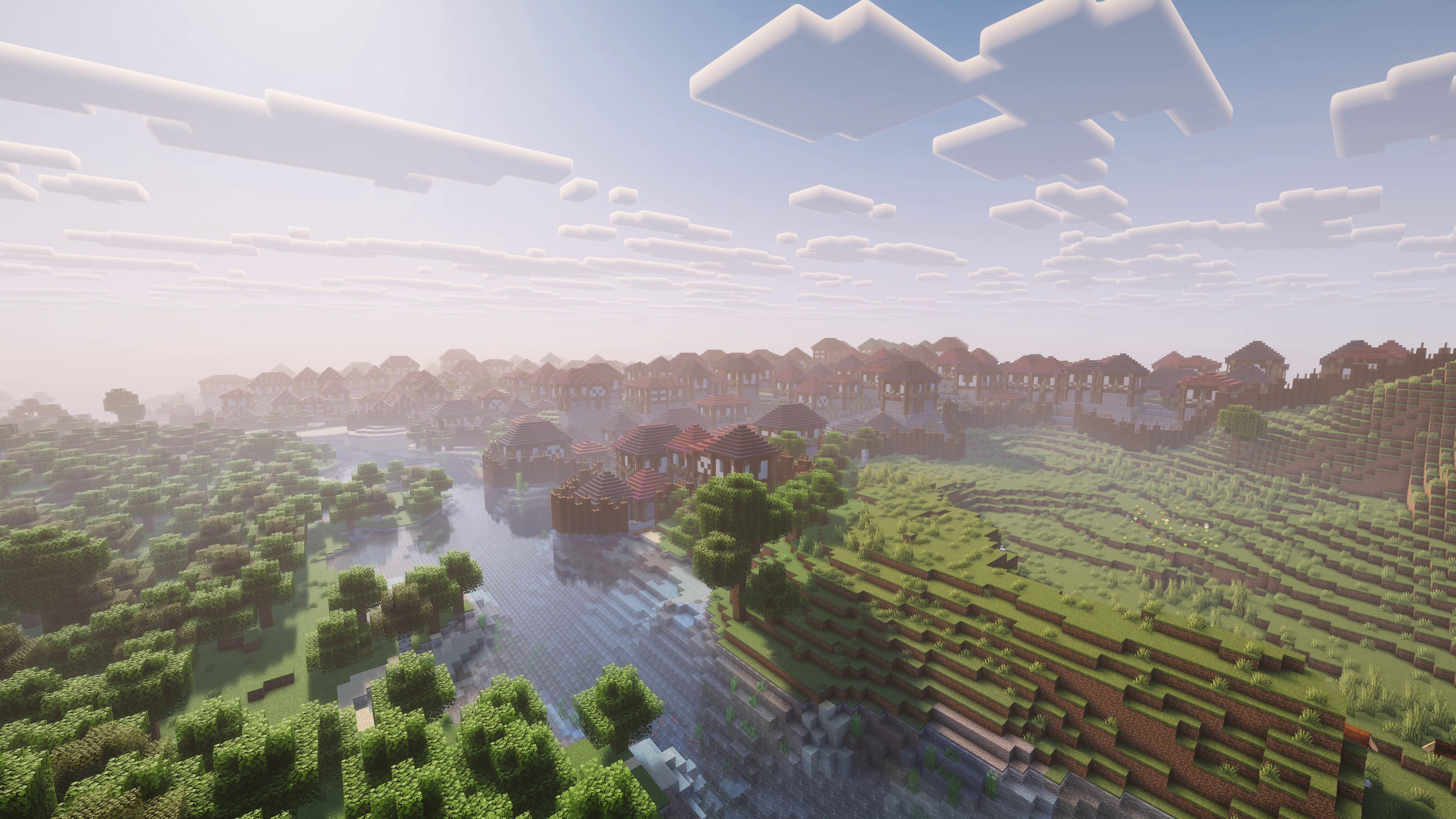
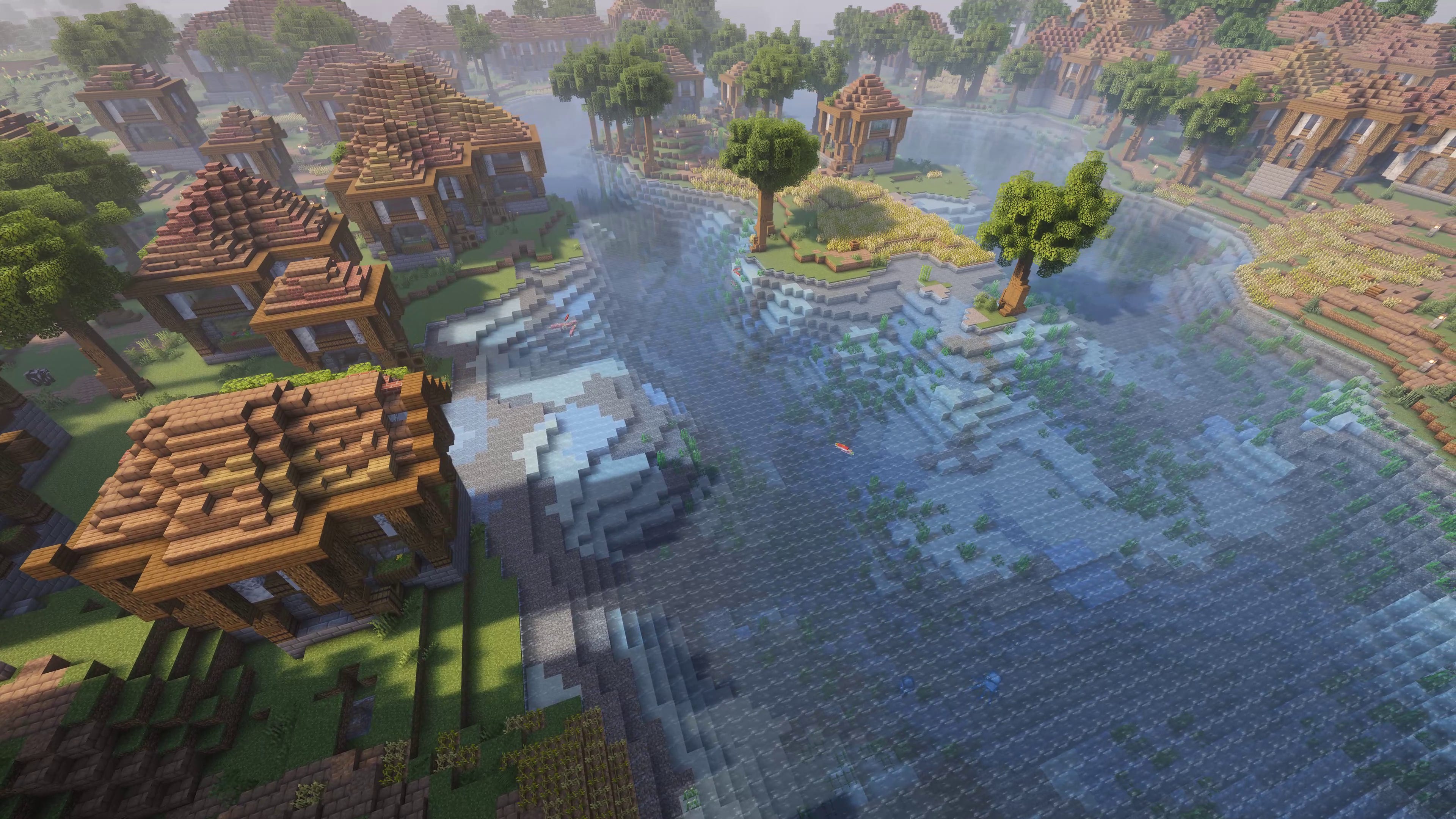
Looking at the submissions that came along in 2025, it’s clear there’s been significant improvements in the resulting settlements, even though there is still a long way to go. The complexity of the buildings and some of the architecture has improved drastically since the early days. This in part given the collective knowledge of how to start building combined with the improved tooling over the years.
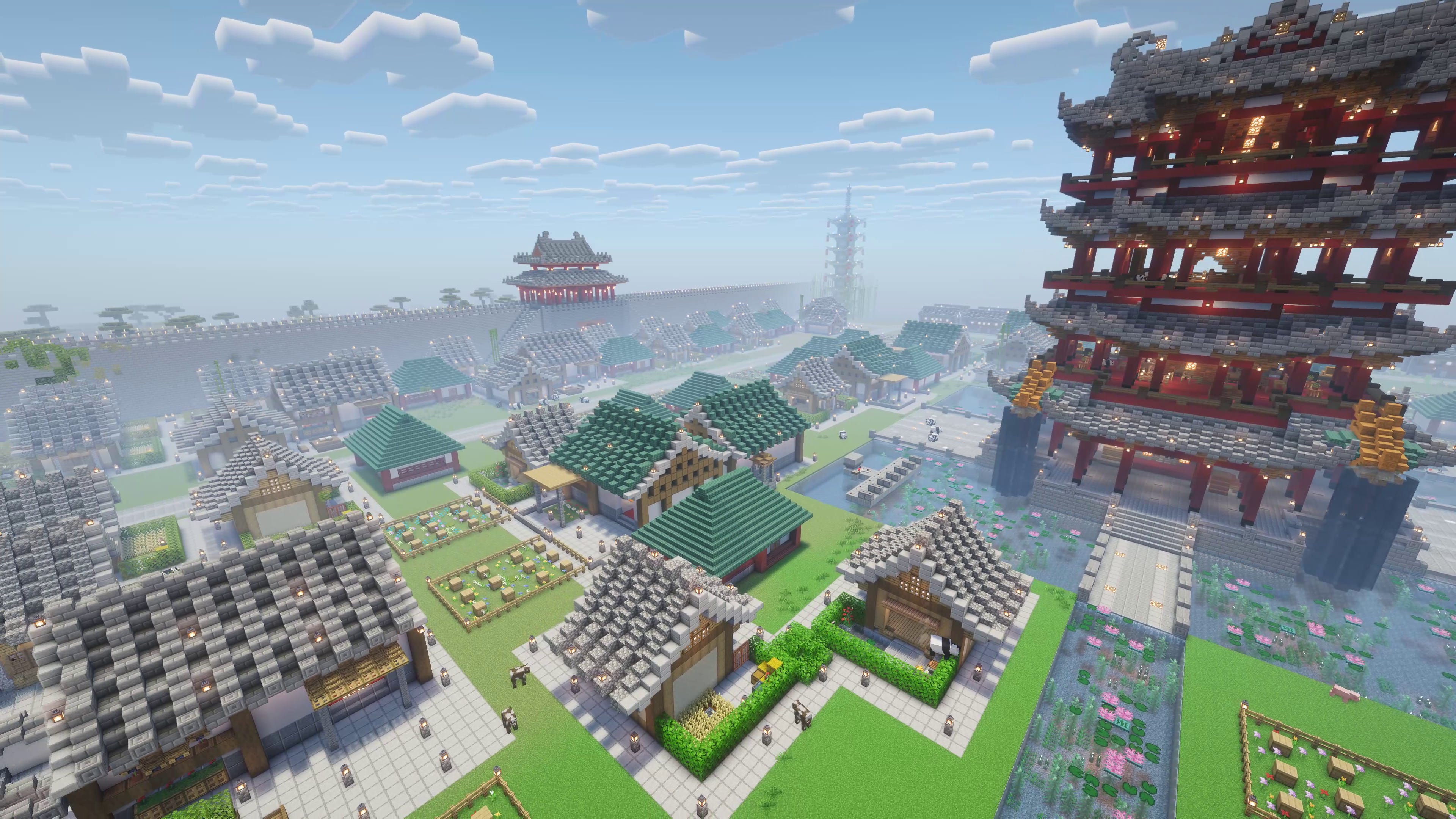
But also it helps that teams continue to come back and try to improve on what they’ve done before. The team Panda_Revival, who scored 3rd in both 2024 and 2025 have continued to experiment with some weird and wonderful panda-themed entries, but often with a lot of code re-use. So they’re building on cool things they figure out year on year. After last years iteration where they had a post-apocalyptic underground Panda colony, this year they moved back up top with a full city full of temples, and apartments complete with sleeping spaces, gardens and kitchens.
While this code re-use is a common occurrence, the actual algorithms being used fluctuates a lot within the community. With the likes of generative grammars - like those we’ve covered in games Unexplored - to constraint systems like wave function collapse that we covered in our episode on Townscaper. Despite the hype surrounding Generative AI - and no doubt some confusion in the name, with people thinking this is an event all about Gen AI systems - it’s had very little impact on the competition thus far. As event co-founder Christoph Salge reported to us on the AI and Games newsletter back in 2024, use of generative and machine learning models have thus far scored rather poorly with judges.

However, the one area that Generative AI has had an impact is in the Chronicle Challenge: where the designers are tasked to find a way to build story and narrative into the space. For 2025 the Chronicle winner was Shadow Wizard Monkey Gang (who also scored #2 overall), given they generate books for the player to read using large language models that provides background and information on each place it builds by feeding biome and geometric features into the prompting.
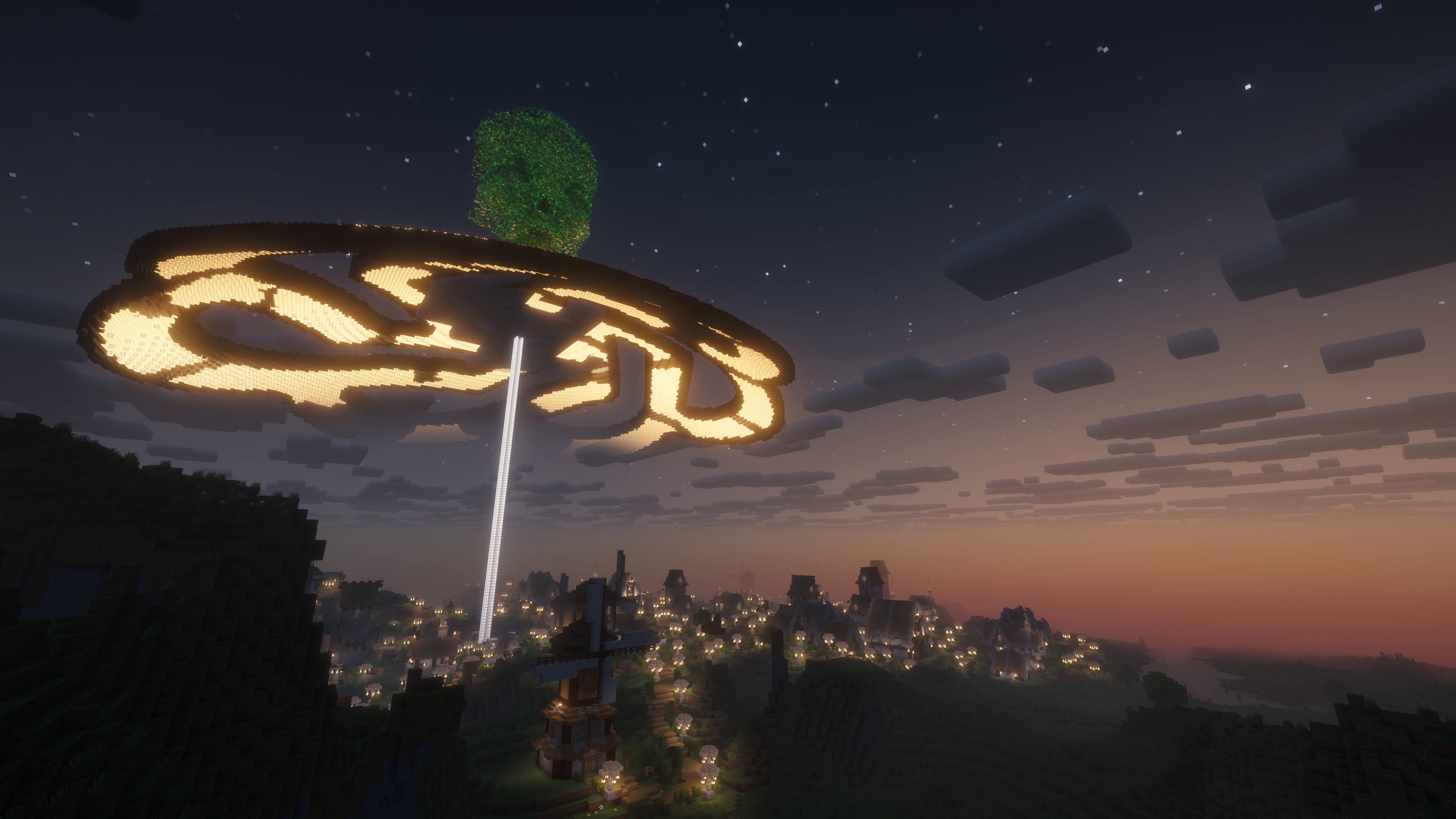
So chronicle challenge aside, it seems like traditional procedural generation techniques continue to rule the roost. Often with unique geometric features that make them stand out, with walls, roadways, and even small but charming decorations. Or in the case of Niels submission in 2024, an underground library that contains metadata of all academic research papers published on Arxiv, leaning on existing real-world data to support hte level generation process.
Isaac took the crown in 2025 under the moniker Guassianly Filtered, which creates a very rich and nicely arranged cityscape. And um.... a giant UFO and alien skull floating about it? Complete with a functioning lift!
Isaac: What I did was I settled on this method which replicates the way water particles attract each other. So you start with a lot of paths between the houses, by using A* [search algorithm]. So they were very fast paths to each other, but what we humans like to do to save on concrete and building materials is to not have two paths next to each other. Instead we combine them into one path and then branch off. So what I did was every part of the path just became a water molecule with strings to the last water molecule in this path, and they would attract each other. Then you would get very nice natural looking paths.
The part where I cheaped out on you could say is the generation of the buildings: I just made a very nice set of buildings. But I think generation settlement challenge can be split into the two big parts: the buildings and the city planning. And I think the building part is by far the hardest part and the unsolved part of the challenge because a building is really hard to define. You need to have a lot of scenarios and they’re all if-statements [in code]. So this part was very hard where people would put so much time into. So I did that by hand and then concentrated all my energy on the other aspects like city planning and the narrative.
Next to the pathing, I had a very nice algorithm for choosing the optimal locations where I just put gaussian filters - a lot of gaussian filters - to kind of smooth out the height map and see where are the optimal building positions. Then I took those optimal building positions and I put another gaussian filter on the ground to kind of make the ground a bit nicer than it already was.
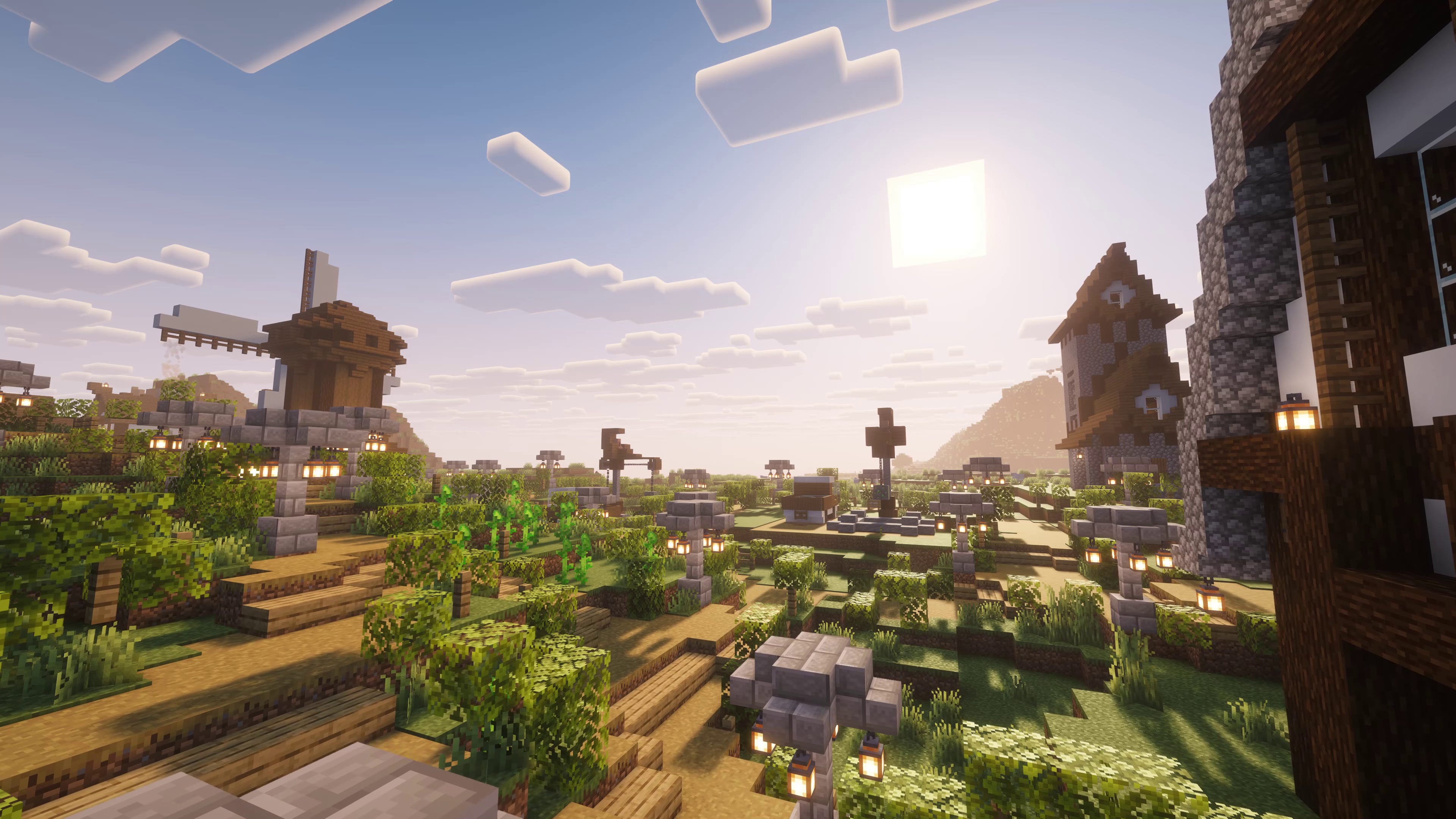
I think a lot of people were surprised when I watched back the evaluations and I spoke to them. They were like, “Wow, your positioning is so good. It looks so natural.” But I did change it to look more good and more natural. Yeah. And then I added a nice narrative which I sadly couldn’t finish due to time constraints. But my narrative was like you have this idyllic village and then they made this LLM which did all the thinking for them but then it made itself a machine which in the end went up to the sky.
I kind of wanted to make the village more apocalyptic because they were suffering from this LLM making their life ‘easier’. Yes. But all these ashes from this computational power would make the village suffer a bit. Also my buildings were in a nice clear pallet, so it had white concrete and stone, so you could see a nice gradient of ashes, which I will improve on for next year. So, you can have these buildings that are still the same, but they would get changed in a post-processing manner by this natural or not natural AI disaster.

The 2026 Edition is Live Now
So yes at the time of writing the competition is live for 2026, with a deadline of July 1st. It’s open for anyone to participate, and if you’re interested be sure to visit the GDMC website in the description. While we recorded our conversation at the start of the year, it was clear that even then Isaac had an idea of how we planned on retaining his title:
Isaac: I have an idea that might solve it. It’s a very bold statement and I say it might, but it’s um… the only step I need to get right is going from a 3D image to a Minecraft building. So you have 2D image generators, and then you have a 2D image generator to a 3D object which you can put into Blender for instance. Then you have a 3D house maybe for your settlement and then the only step is to translate it to Minecraft blocks. Okay. And then you get a truly adaptive system because then you can be like ‘ah there is a mountain here what should we built on it ChatGPT?’ and then it could be like ‘ah a lighthouse’ or you want a Viking village or a fishing village and an LLM can plan out the city.
Then [we could] make an image of these buildings, these images to 3D objects, and these 3D objects to Minecraft blocks. The only difficulty in this pipeline…
Tommy: The only difficulty? Okay. [laughter]
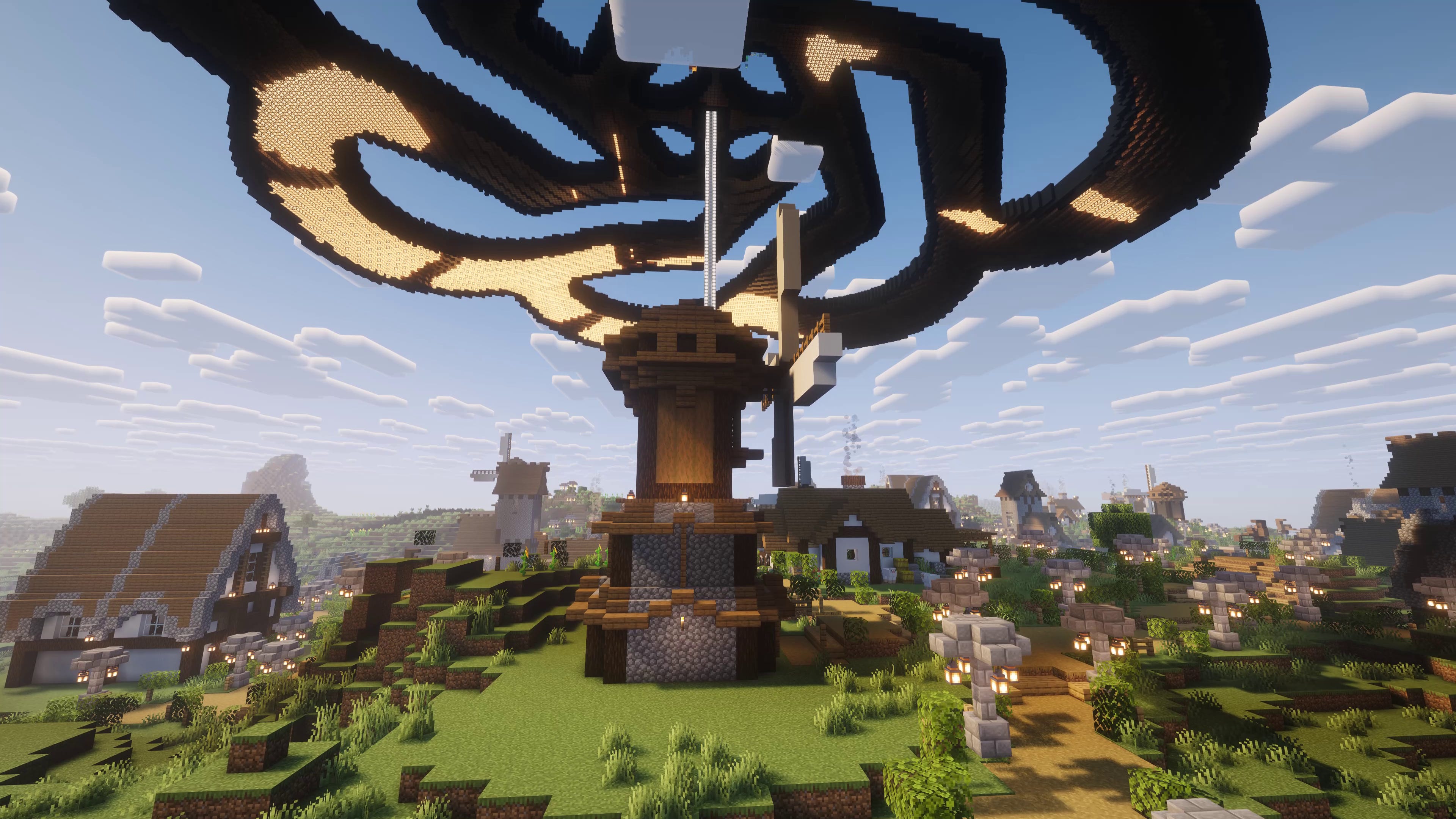
Isaac: Well, I’ve gotten the other parts working in a demo environment. But the most difficult - not the only difficult, the most difficult - part is the 3D object to the Minecraft build, because you have a scaling problem. These 3D objects, they don’t translate neatly to Minecraft houses because often have straight walls and these generators are not known for making straight walls because they average by design. So, they kind of smooth things out, but buildings have smooth surfaces with bold aesthetics, and it wouldn’t look that good.
So, you need a translator function that smooths out walls, makes the door the size of an actual Minecraft door where you can also have discrepancies. So, there’s this translation step still that needs to be solved, but then you could have a really cool - and really expensive - generator. [laughter]
Closing
Thanks once again to Niels and Isaac for sitting to chat with me. As stated, this years GDMC is happening right now, and you can find out more about it either directly from the GDMC site and Wiki, or via their Itch.io page as well. All the links at the bottom of the page.
Best of luck to all involved, and fingers crossed we get to hear and see more about the GDMC in the future.

Links to The GDMC Competition
GDMC Site: https://gendesignmc.wikidot.com/
2026 Event on Itch.io: https://itch.io/jam/gdmc2026
2026 Homepage: https://gendesignmc.wikidot.com/wiki:2026-settlement-generation-competition
The GDMC Discord: https://discord.com/invite/ueaxuXj