

How Forza Rebuilt Their Drivatar AI System
The 'Bowie Knife99' phenomena is the result of ongoing balance changes.

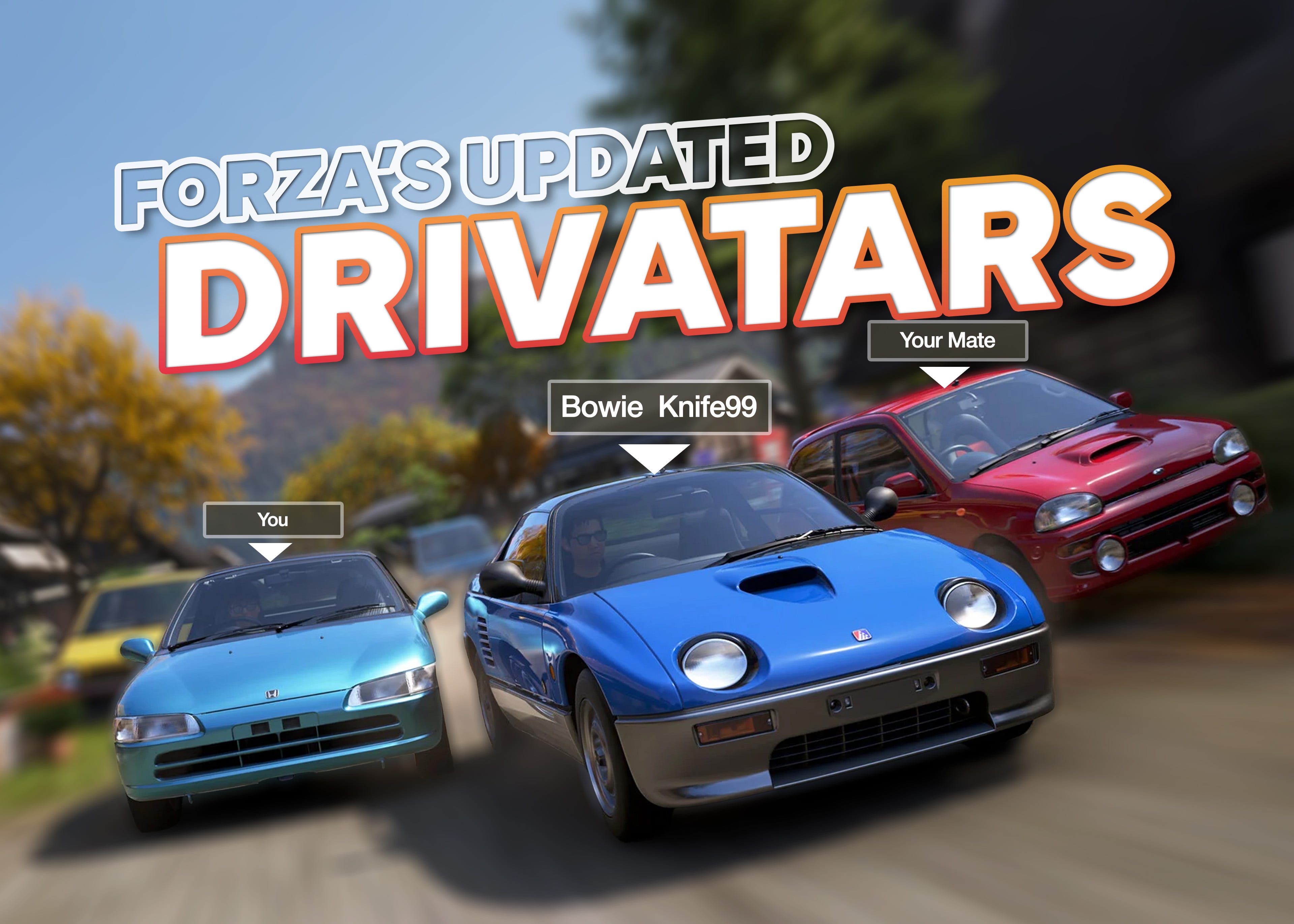
Since it’s release on PC and Xbox in May of 2026, Forza Horizon 6’s community have been caught in the drama behind ‘Bowie Knife99’: an AI controlled driver (or Drivatar) that has caused chaos for players. It’s been the subject of a lot of online discourse as people share their experience of how they’ve dealt with what seems to be some sort of AI-powered chaos merchant.

Drivatars are a topic I’ve covered previously on AI and Games, and I figured we should come back and revisit it, given we’re now seeing the effects of changes made to the Drivatar system and how a lot of what I discussed in my original video, has now been rendered obsolete.
Follow AI and Games on: BlueSky | YouTube | LinkedIn | TikTok
The Rise of ‘Bowie Knife99’
Forza Horizon 6 dropped on May 19th and credit to the folks over at Playground Games, they have delivered another banging entry in the series, with this latest edition having you scream through the streets of Tokyo, all the way to cruising around for collectables in Sotoyama. But within a week of the game dropping, the Forza community had found their new nemesis: bowie knife99, a super-aggressive Drivatar bot that would come crashing into you out in the open world if you’re playing offline, or would outsmart and outflank players during races. Even doing crazy things like smashing into opposing traffic or cutting corners so aggressively that it feels like it’s being driven by some 12 year old on a sugar high. Clips of this Drivatar went viral on the socials, and became canonised if you will when the official UK Xbox Twitter account called out bowie knife99 on social media.
So yeah, it’s a super-aggressive Drivatar, and for me that’s pretty freaking cool. Especially given how the games industry is drowning in endless discourse about Generative AI’s perceived value, how nice is it that a game has came out and we’re all talking about an in-game AI in a way that’s turning into something of a virtual watercooler moment? An AI player that has a personality so meme-worthy it becomes part of the discourse of the game.
And this is where it gets interesting to me, because both the appeal and frustration of Bowie Knife99 - and in fact the AI drivers at large in Horizon 6 - is that they are breaking a lot of established rules about how Drivatar’s historically worked in Forza. And this stems from some fundamental changes to how the system has been worked in more recent entries of the series.

A Quick Recap
You might recall we covered how Drivatar’s work way back in episode 60 of AI and Games on YouTube in 2021. That video covers a lot of ground, but I’ll quickly summarise the key points for this conversation.
The Drivatar system since Forza Motorsport 5 has been built by training them in the cloud using deep learning techniques by assimilating data from human players and then training AI models that seek to reproduce how a particular racer approaches the racing line: a perfect path for racing through the ribbon that has crafted by designers. The game has an underlying AI controller that knows how to race against the line perfectly, and then it adjusts its performance based on data it has of how a particular human would approach the same or similar problems. This stems from the same tech they’ve used since the first ever Forza Motorsport on the original Xbox in 2005, in trying to reproduce how a player takes different turn types on race ribbons and ultimately tries to determine how you would drive the car in a given situation - even if you’ve never driven that car or that race track.

Now when the developers at Turn 10 (the creators of Forza Motorsport) originally built this technology it meant they had this capacity to now more readily create AI drivers for players to race against. When you booted up Forza Motorsport and Horizon titles, the built-in Drivatars you could race against - that didn’t have you friends names on above their heads - were actually based on the developers themselves.
Hence they worked to build systems that tweak and adjust the Drivatars so it provided a less rage-inducing experience. They build overrides to prevent Drivatars cutting corners or smashing into other racers. They ignore input from training that would create toxic or unexpected behaviour like driving backwards. But also they worked to address how quickly they adjusted to new information. This ultimately worked to shave off the rough edges so that Drivatars are only really aggressive towards you provided the Drivatar is in your friend list. That way you can psychologically project on a friend’s behaviour, and not feel the rage as a result of a random bot whose origin you don’t know. Plus they then nerf or boost the drivers courtesy of rubber banding, and that’s by messing with the capabilities of the cars themselves, rather than tweaking the AI behaviour.

Shifting Gears
Now since my video in 2021, the developers have gone on to make sweeping changes to the underlying AI systems. 2023 saw the release of Forza Motorsport 8 on PC and Xbox Series S and X - for context, this is the game that they rather awkwardly branded as just ‘Forza Motorsport’ but I’ll be referring to as 8 for the rest of this video. And it was during the development of this game that they started making changes to how the underlying system operates.
Turn 10 explained that for Motorsport 8, they went back and revised how their AI systems work to address a fundamental design problem: in that the system wasn’t proving as effective as they’d hoped in creating an immersive experience that reflected the cleaner approach they wanted for Forza Motorsport. They wanted racers that remained competitive but avoided cutting corners and colliding with other drivers, and to do that they pretty much threw out the Drivatar system as it previously worked. The AI controller is no longer customised to replicate your friends behaviour, instead they’re trained completely independently, and then they simply dress up a Drivatar with your friends name and livery on it to make you think it’s still them in charge.
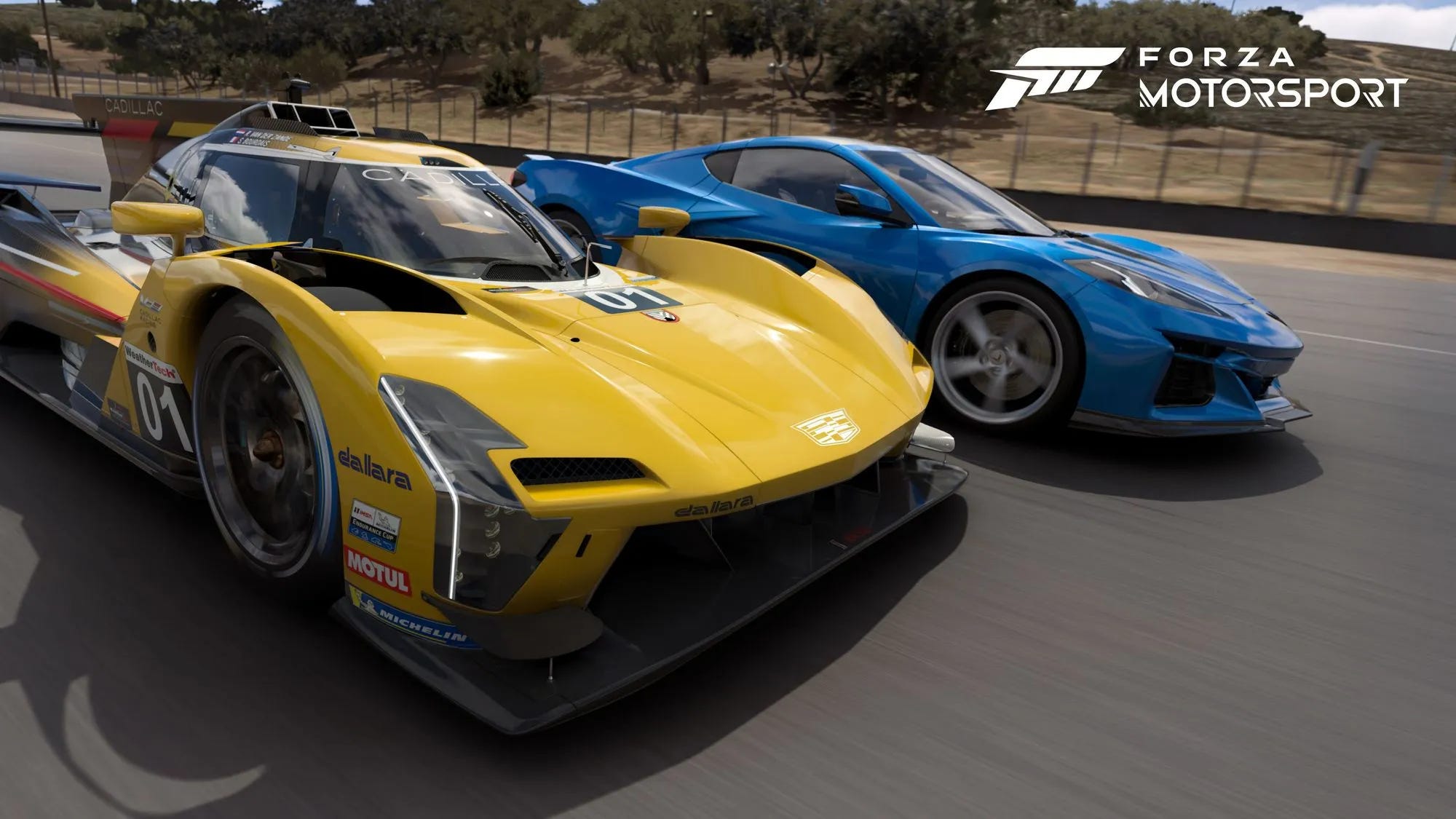
The big reason for this change was that the AI controller in the existing system was struggling with some of the key aspects of how to race professionaly. They developers sought to create an AI racer that knows how to apply the brake gradually as it approaches a turn, or to take corners with an adjusted amount of throttle and allow for more effective drifting. The problem was that the system as it was implemented treated acceleration and braking in the Drivatar system as binary. They were simply on or off, rather than reflecting how a racer can press the foot on the pedal - or in the case of an Xbox controller the left and right triggers - from zero to max. This meant they were often quite dumb in practice - particularly in the likes of Forza Horizon 4 and 5 - and it meant the rubber banding had to do a lot more work to compensate for their lack of intelligence. This also had a knock-on effect on the online meta, given performance ratings of a player’s custom tuning of a car was determined by having Drivatars race in that config thousands of times in the cloud. Turn 10 stated that in order “to create AI opponents as fast as the fastest human drivers, we had to do it without any cheats, hacks, and rubber banding”.
Rather than try and reconfigure the existing system The solution was to develop a new framework that is rather similar in nature to that seen in Gran Turismo 7’s Sophy AI. We covered this back in 2022, and discussed how Polyphony Digital in collaboration with Sony AI had trained racers entirely using deep reinforcement learning to ensure that they corner, pass, and brake in ways that respect the etiquette of Gran Turismo’s playstyle. So they’re still training neural networks that learn to race the track, but they learn entirely from scratch rather than trying to fit their behaviour to the data of an existing human player.
In previous Forza’s the AI controller had access to one of around 3 racing lines the designers conceived, and then AI controller attempted to follow it. Starting with Motorsport 8, Turn 10 changed the system so that not only does the neural network have access to the throttle, brake and sterring in a more continuous and freeflow fashion, but now the cars are free to find their own racing lines, and then seek to maximise their performance against them. in Forza Motorsport 8 each car configuration had access to around 19 different racing lines on each track, and these are discovered and refined over 26,000 laps on each circuit in the game. This is then tiered based on difficulty as well, where each racer has 8 different difficult settings, which relies on the existing infrastructure of applying boosts (or nerfs) to the cars, be it in grip, acceleration and top speed.
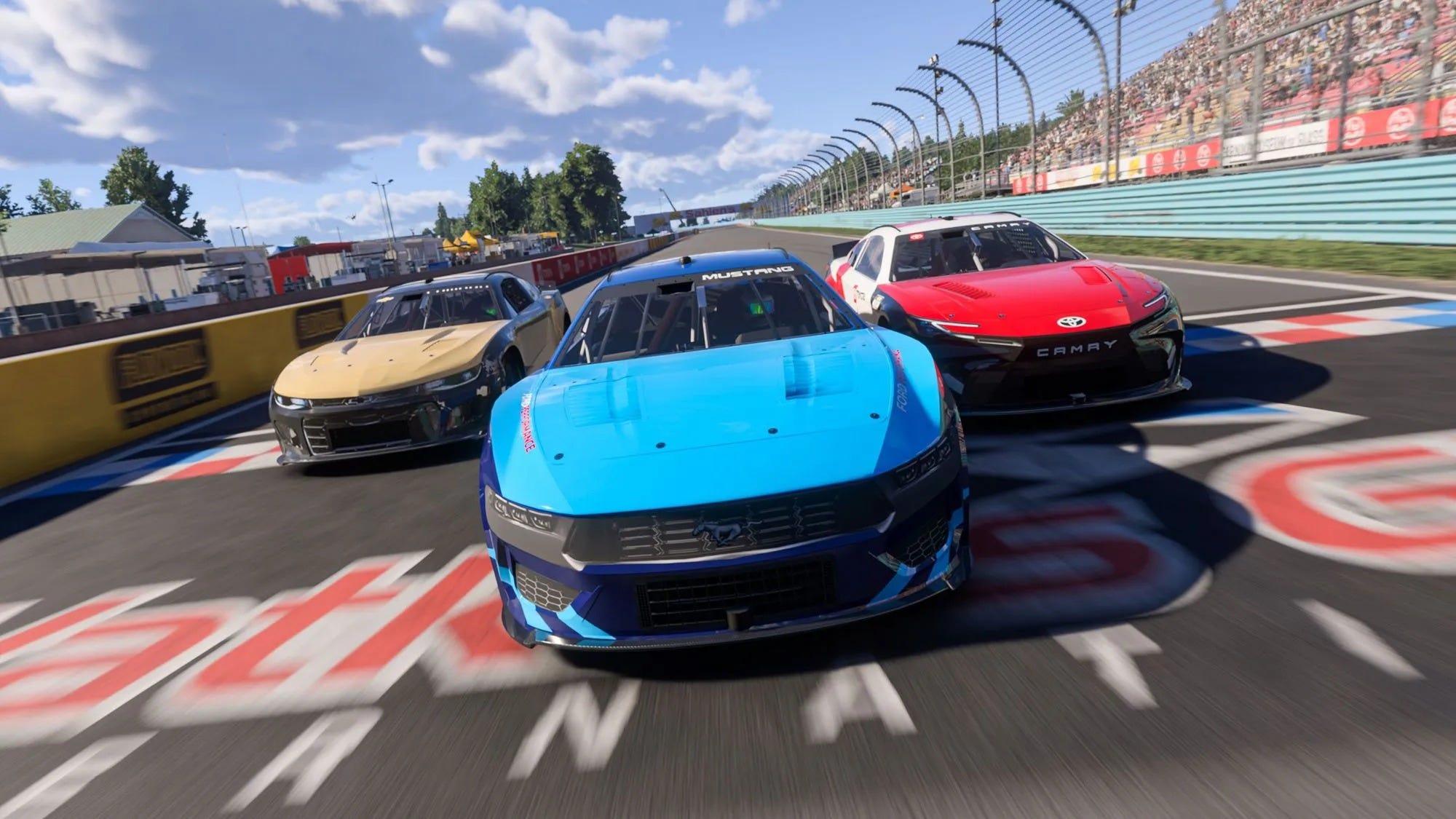
This was subsequently improved over time, with tweaks to the passing so it doesn’t veer off the track, adjusting braking behaviours so they don’t break too harshly. Plus they worked to improve the ways in which cars follow or even veer off of their predetermined tracks, and allow them a bit more freedom. This made sense as more tracks were being released, notably the introduction of NASCAR in November of 2024, given that requires a different approach to building the race lines.
This was further embellished to deal with when cars are caught up in traffic - not open world traffic like in Horizon - but simply when cars get bunched up in Forza Motorsport. At launch it was difficult for a car to continue on its intended race lines - given it will just start bashing into other cars. So it shifts to a dynamic raceline that means it drives more sub-optimally, but it does so in order to create the desired racing etiquette. This was continually tweaked to improve utility of the vehicle, improve defensive positioning and passing and also limit how often they collided with other cars or veered off the track. To optimise it further, the racing line system was also adapted in 2025 to have a custom setup for traffic scenarios, again with multiple racing lines it can follow, and it swaps between them based on the traffic conditions. So the system knows to swtich between different sets of racing lines based on current context.

So What About Forza Horizon 6?
So with this modified Drivatar system in place, what does this mean for Forza Horizon 6? Well, if anything it highlights three interesting talking points:
We can debunk any myths that Bowie Knife99 is a human player, because none of the Drivatars are even remotely human anymore.
Just like Forza Motorsport 8, the developers will need to continue working on tweaking the AI system such that it operates in the ways the developers intended.
We can say with some certainty that Bowie Knife99 is a symptom of this need to continue to tweak and refine the behaviour.
Now this last point is conjecture on my part, but I suspect the transition from the ‘beauty’ of Forza Motorsport etiquette to crashing into each other at 200 miles an hour while flying across a meadow of cherry blossoms. It’s meant a lot of work is needed to adjust the systems. I suspect that tweaking for aggression and all round bullshittery is a little hard to encapsulate and manage than the opposite. And it’s not just Bowie Knife99, players have observed other Drivatars and notably open world cars have been more prone to collide with the player, and generally just mess with your racing.
It speaks to why there was an override layer in the system that we discussed back in our original Forza analysis. Because it’s one thing for aggressive and toxic gameplay from randoms online, but it’s another thing entirely when the call is coming from inside the house. Hence there’s a need to try and mitigate how aggressive the Drivatars can be, because left unchecked they could turn Forza Horizon into Max Max: Fury Road - actually no never mind that sounds amazing.
In fact as I was putting the finishing touches to the video script on June 15th, Playground dropped a patch for Horizon 6 that “Fixed an issue with Drivatar race start behaviour.” and “improvements to the difficulty balancing”. Nice and vague right there. But I suspect this will be an ongoing process, much like in Forza Motorsport 8, as Playground Games seek to get that balance right between fun racing and a wee bit of open world chaos.

**De FSM a NVIDIA ACE:** La IA en videojuegos evolucionó de enemigos predecibles y rutas fijas a mundos procedimentales (*No Man's Sky*) y NPCs realistas (*The Last of Us II*). El futuro se centra en agentes autónomos con diálogos dinámicos y memoria real gracias a modelos generativos.