

How the 'Beast' Works in Amnesia: The Bunker
We chat with the developers at Frictional Games about how it all works.

The 2023 horror game by Frictional Games relies on the monstrous ‘beast’ to keep players on their toes.
Relying on traditional game AI systems, the monster had to work around engine limitations while giving designers an opportunity to lean into systemic design.
While it carries many similarities to Alien: Isolation’s xenomorph, it achieves aspects of gameplay that remain unique to this franchise.
AI and Games is made possible thanks to our premium subscribers. Support the show to have your name in video credits, contribute to future episode topics, watch content in early access, and receive exclusive supporters-only content on AI and Games.
If you'd like to work with us on your own games projects, please check out our consulting services provided at AI and Games. To sponsor our content, please visit our dedicated sponsorship page.
Trapped in a bunker with no memory of your arrival, Henri Clement has escaped the horrors of the western front, only to face an even more terrifying reality. An entire French garrison has been slaughtered by an unknown creature. It clambers behind the bunkers walls, lashes out from gouges in the concrete, and will use the darkness to its advantage in its in its never-ending pursuit to tear you apart.
For this episode we dig into the inner workings of Amnesia: The Bunker by Frictional Games. I had the pleasure of chatting with the game’s creative lead Fredrik Olsson, alongside design lead Max Lidbeck as we discussed how this AI-controlled adversary actually works. We dig into the origins of the game’s development, the secrets of the monster’s design, and how we had an influence in the creation of ‘The Beast’.
Follow AI and Games on: BlueSky | YouTube | LinkedIn | TikTok
Monstrous Origins
Released in 2023 for PC, PlayStation and Xbox, Amnesia: The Bunker is both the fourth instalment of the beloved horror franchise, and an interesting evolution of its core design. While previous entries of the series had been largely linear and often scripted, the ambition for The Bunker was to move towards a more freeform and non-linear experience, with procedural generation employed for the the placement of key items and the values of locker combinations, combined with more systemic flourishes. All of this introducing novelty with each playthrough - with unpredictable layouts, emergent gameplay and making it much harder to find a guide to help you beat the game! Given this concept was quite the deviation from previous entries, it was in fact originally conceived as a DLC expansion to the 2020 release Amnesia: Rebirth.
Fredrik Olsson [Creative Director, Amnesia: The Bunker]: Both me and Max, we worked on Amnesia: Rebirth before this.
I came into the studio in 2015 just after SOMA, and nowadays I’m one of the co-owners of the studio together with the founder, Thomas [Grip], who’s been heading up the previous projects. So I wasn’t planning on becoming a creative lead during Amnesia: Rebirth, but things took a side turn and we had to bring someone into the creative lead role halfway through or one-third through the project, and everyone kind of voted for me. So that’s *laughs* how I ended up in that.
So that was a project that I came late into, so I had to stick to a lot of the setups that was already made. It’s a very story-driven game, and a very linear game. My personal interest lies more in player agency, player reward, and those kind of things. So that’s where I’m coming from.
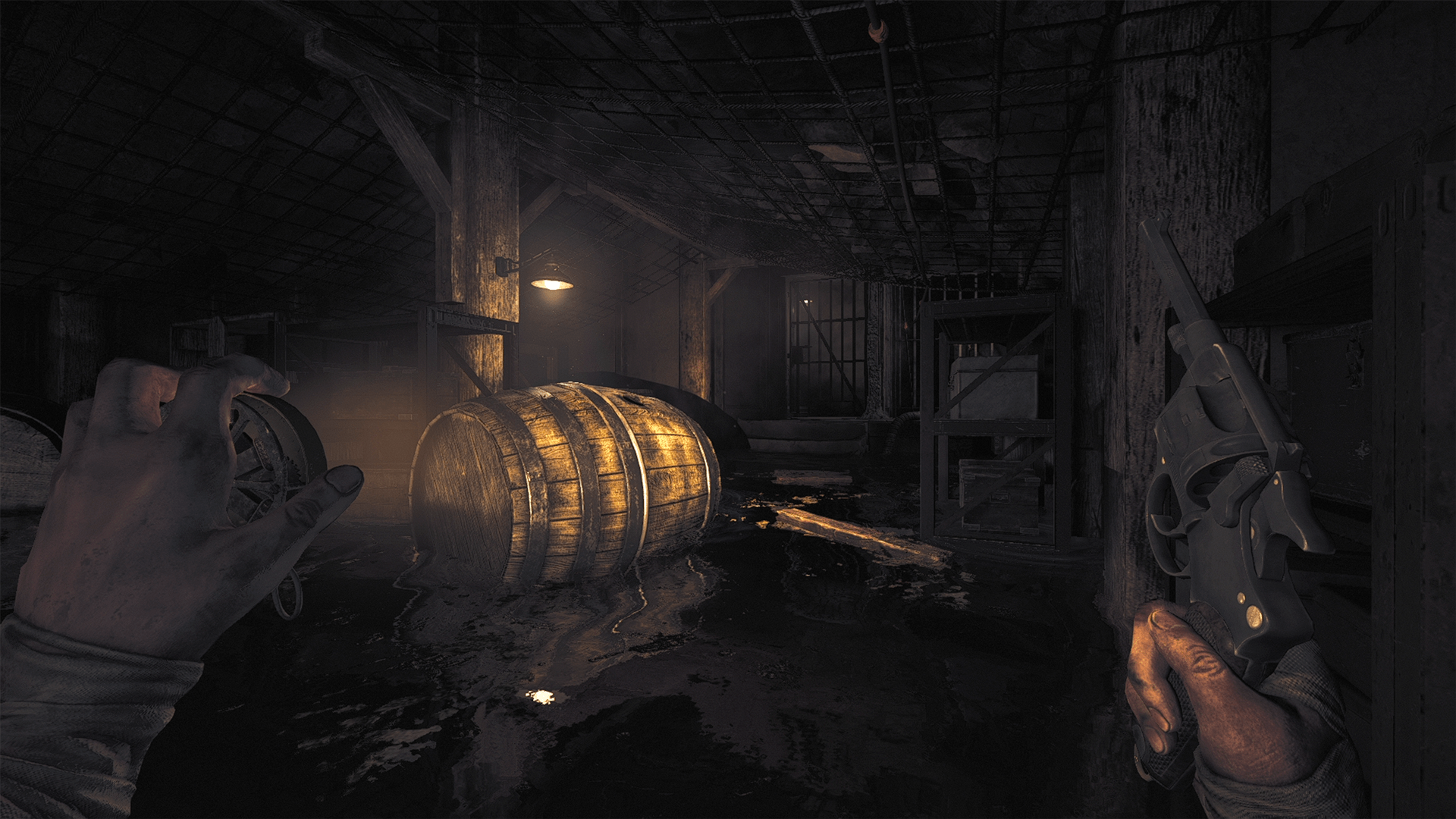
So once we finished Amnesia: Rebirth, I felt like I wasn’t really ready to leave Amnesia and go work on a new project. That was the plan. So I pitched to Thomas that maybe we should make a DLC for Amnesia: Rebirth, and this time let’s have a gun. Let’s have a monster. Because we had talks during Amnesia: Rebirth of stalking monster entities going around, but we realized the linear nature of that game didn’t allow for a lot of that kind of gameplay.
And so what we had to do was kind of go away from it, have more of these kind of set encounters that you have in Amnesia: Rebirth. And so I had this idea of something that we wanted to play more with, and at the same time I think it might have been the writer, Ian [Thomas], that said when he was writing for Amnesia: Rebirth, he said some, “We should make a World War I Amnesia.” And that kind of stuck with me, so I pitched this idea:
“Let’s have a gun, stalking monster. We have infinite light, but very loud light, and we let it play out in a World War I bunker.”
And I think also the generator was an idea because I wanted to go away from the sanity mechanics that we have played on for a long time with Amnesia, and instead have something to substitute it with, something that had a logic effect on gameplay. The generator in the bunker does very much, so since the monster doesn’t like the light, it behaves differently when the generator is on.
So I guess that’s how it came to be, and because everyone liked the idea and we said, “Let’s put a small team on it. Let’s do a DLC,” but me and Max and Rasmus [Gunnarsson] the art lead, we started working on it. But from very early on with the first prototype [we] realised that this is nothing like Amnesia: Rebirth. We can’t tag it on as a DLC for Amnesia: Rebirth. It has to be its own thing.

The ‘Beast’
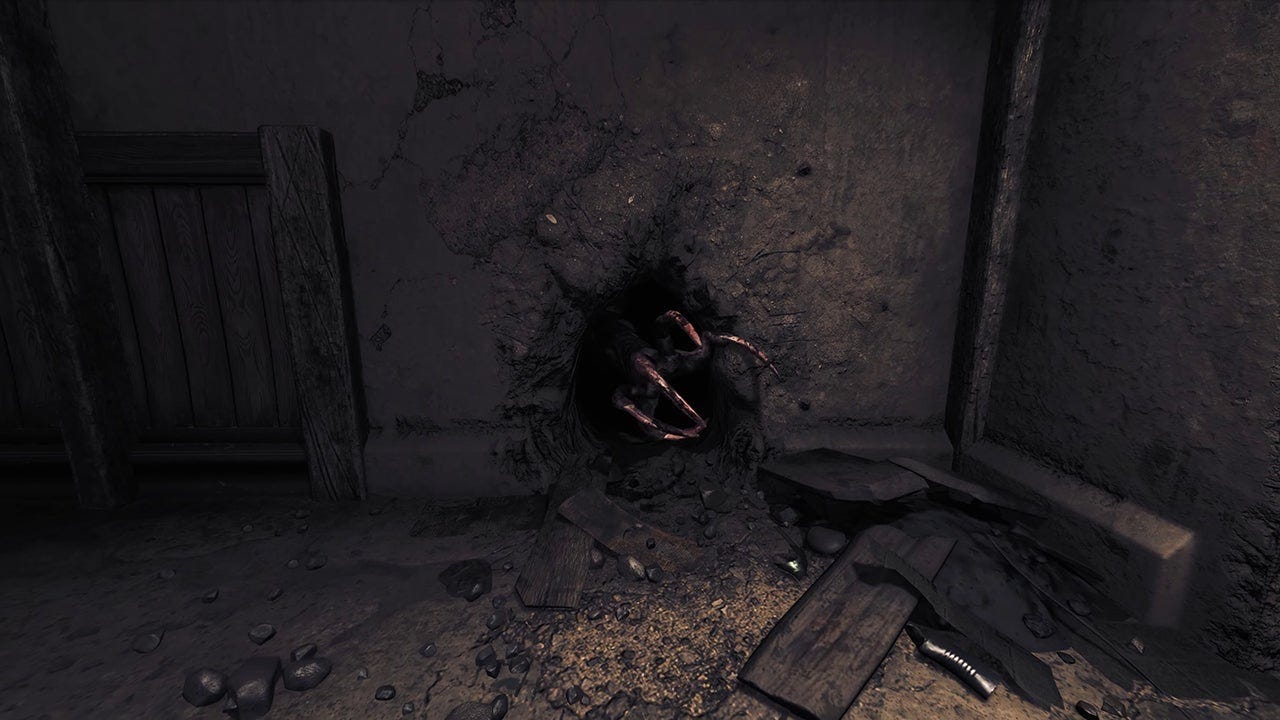
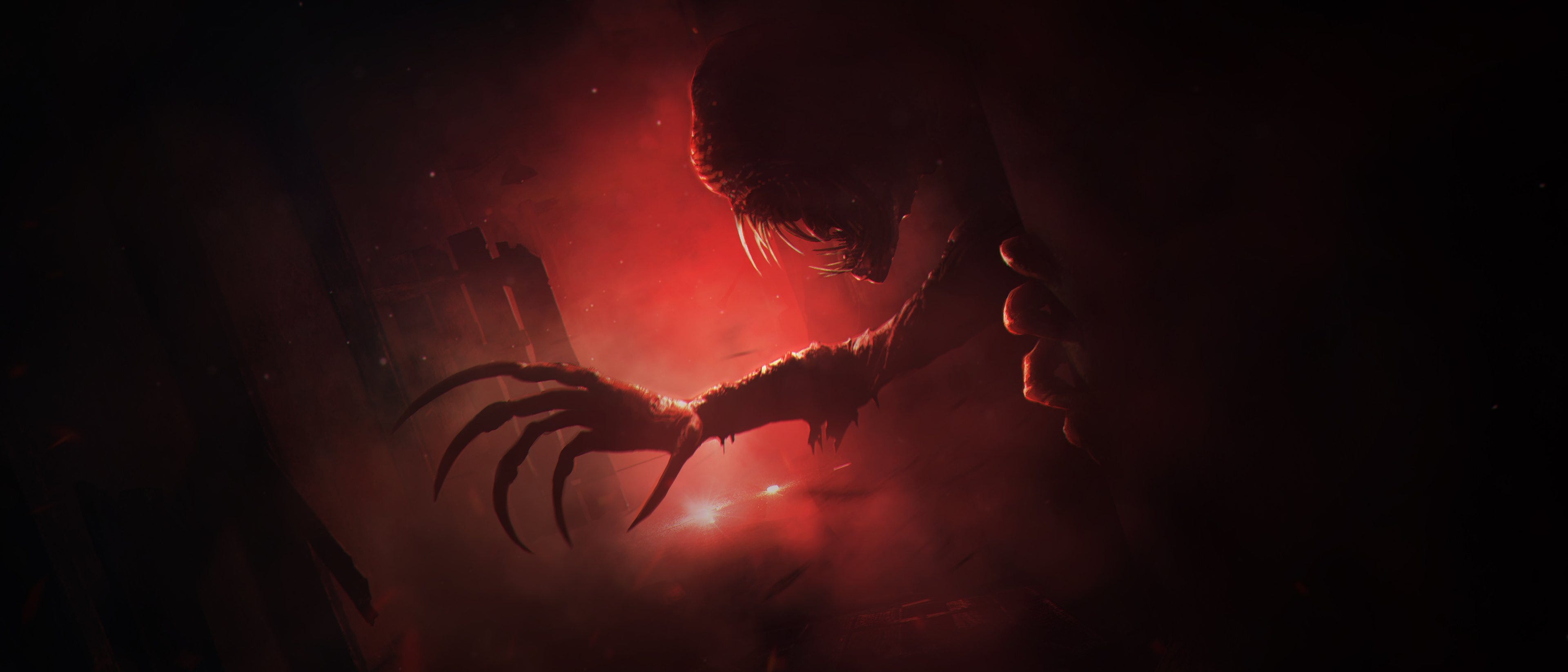
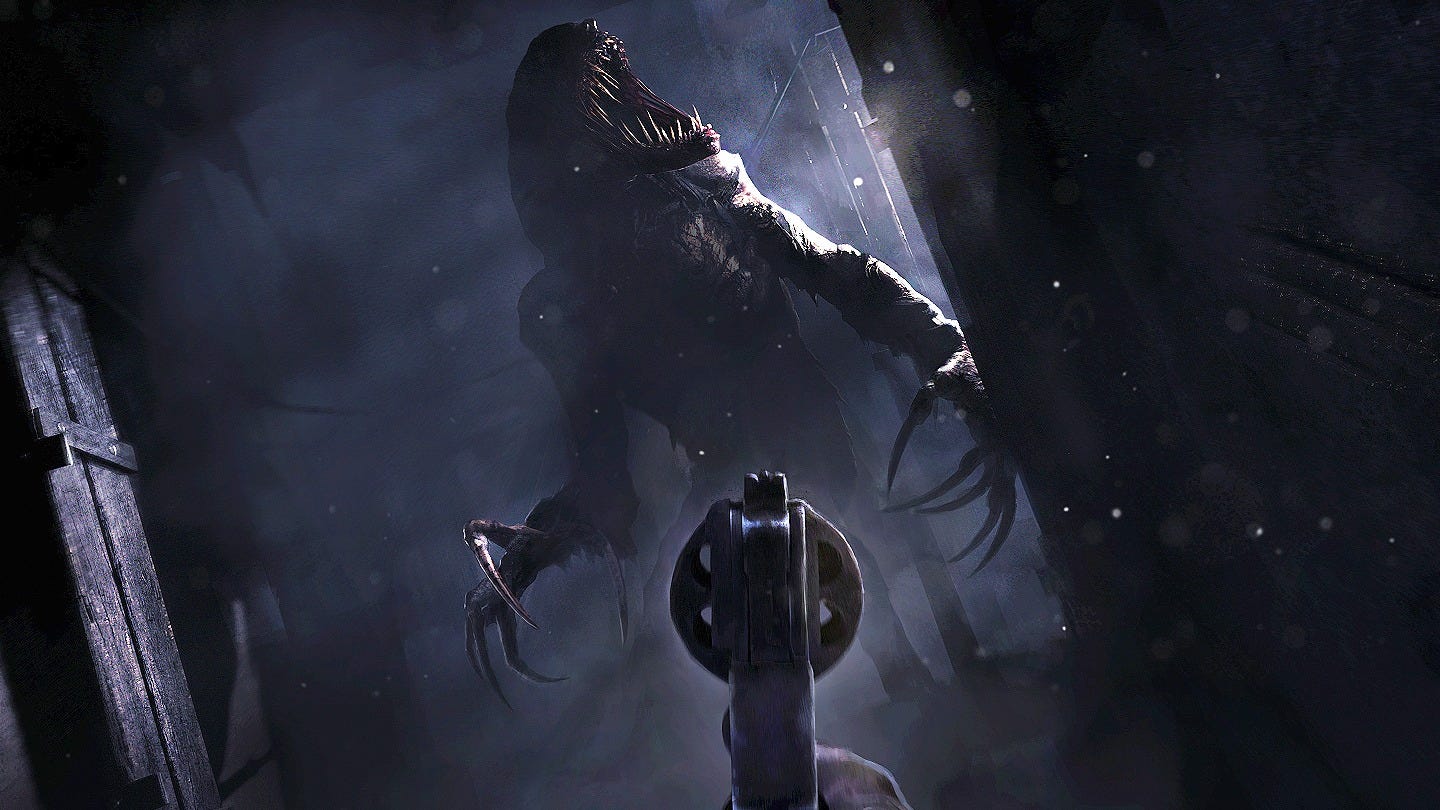
This emphasis on non-linear gameplay of course brings us to the design of creature, referred to as ‘The Beast’ (also ‘the stalker’). An antagonist that reacts to the players actions, can hunt you down using its own senses, and keeps track of your movements. The Beasts job is to maintain the pressure on the player, and force you to be smart in how you explore the space. When it comes out from hiding behind the walls of the bunker, it patrols the area, investigates noises and smashes through obstacles blocking its path.
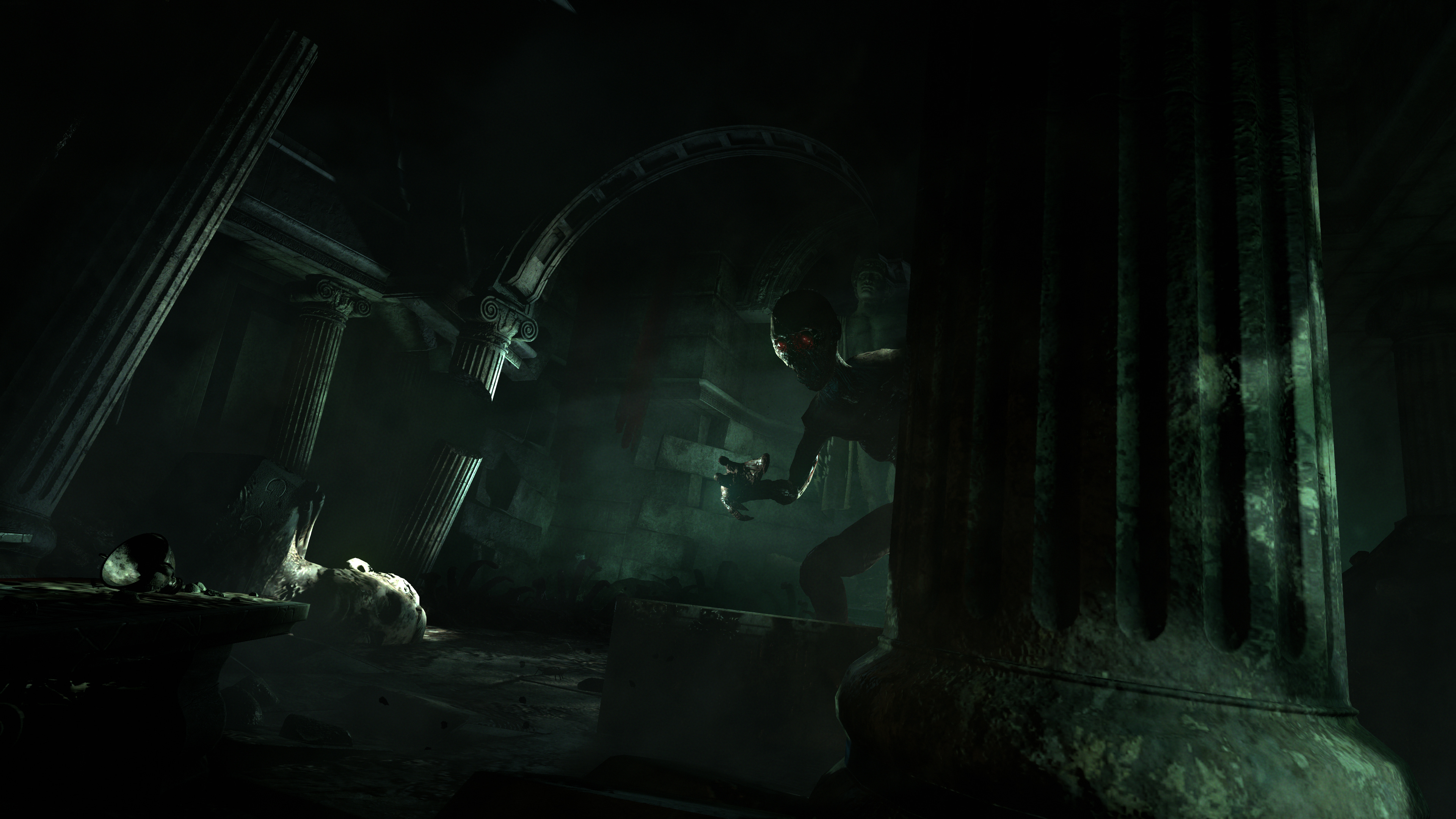
Now a lot of this might sound awfully familiar to long-time viewers, given one can easily draw parallels between the design of ‘The Beast’, and Alien: Isolation’s ‘Xenomorph’. This is, as we discovered, more than just a coincidence, and in fact, we might have had a helping hand in making that happen.
Max Lidbeck [Design Lead, Amnesia: The Bunker]: So, as Fredrick said earlier, we knew we wanted to have this kind of main antagonist stalking monster. The focus, like, should be on one monster constantly following the player and being like this antagonist to the player’s protagonist. And we knew also early on that we wanted to utilise behaviours from the ghoul in Amnesia: Rebirth that we didn’t use.
So we had the system for crawling around in the hole network [from Amnesia: Rebirth] - emerging from holes and disappearing into holes, but it was under-utilised. And then of course the alien for me is kind of the pinnacle still of antagonist AI, I guess you would call it. So definitely an inspiration. I remember watching a video that you made on the AI when doing research, for its behaviour and seeing what we could gain from that.
The Beast itself is controlled using a finite state machine, with around 40 states baked into it - which as Max described was fairly large, but still manageable for the team, given only a handful of people were working on it. After all for those unfamiliar a finite state machine dictates each individual state of behaviour that the NPC can be in, and then the rules on how these states connect to one another. For more info, be sure to check out the dedicated AI 101 episode which also takes a look at the AI of Half-Life, as well as our episode on the original DOOM which gives a thorough breakdown of how it was employed in id Software’s classic shooter.
As Max described, it was one of the challenges the team discovered in using an FSM for this system, given the NPC may transition through multiple states when executing a complex behaviour.
Evolution of Horror
While the Beast shares a lot of similarities with the Xenomorph, there are many aspects of its behaviour that are not just distinct, but help sell it as a distinct creature in its own right.
For one, the Beast is capable of destroying a lot the bunker. Creating new paths for both the creature, and the player, to explore. This creates a whole different dynamic to the game versus Alien: Isolation that the dev team leaned into from the very beginning.
Max: We made a decision early on to have a rule where wooden props were breakable, and then we made sure to have a lot of wooden stuff because it just made pathfinding and that kind of thing easier (*laughs*). And we also really enjoyed the behaviour of it wrecking havoc in the bunker.
Fredrik: The, the whole game is basically you are your goal with this game is to break wood. (*laughs*)
I mean, if you look at it, the wooden doors, that’s your, like, that’s the basic thing you’re doing most of the time [breaking the wood]. So I think for us as well, we wanted the Stalker to be able to break wood as well, because that could actually lead to these kind of moments where the Stalker actually helped you out in a situation where you were lacking resources or stuff like that.
But perhaps the thing that really sticks out to me is The Beast does something that - once you realise it’s doing it - makes the game all the more terrifying. As you’ll recall in our Alien: Isolation episodes, when the Xenomorph goes back stage, meaning that’s in the vents, it largely just goes off on a wander, and it’s only when the director system triggers front stage by virtue of a timer, or there is a noise deemed loud enough to interrupt the backstage cycle, that the creature will come back out of the vents.
The Beast also has an active and passive mode much like the xenomorph, with a Presence threshold that dictates when it goes back into the walls if it hasn’t found you. But in this instance, even when the Beast is in the walls, it’s still trying to follow you. The generator provides a lot of respite given the beast doesn’t like the light, but that doesn’t mean it gives up. While the game will provide some brief respite at times to allow you to progress, the Beast is almost always trying to follow you, and will continue to crawl around behind the walls based on the knowledge it has, to hunt you down.
Max: It is always active, but there are some exceptions.
For instance, right when you start the game the very beginning of the officer hub level, it’s not active. Then when you complete some objective in the first map, and then we kind of release the reins. And then it does that for the remainder of the game, except for when you’re in the tunnels level. Other than that, yeah, it’s active and it’s moving around.
It has two sort of main modes. It’s got an active mode and a passive mode. So in active mode and if the generator is on, it’s gonna be just crawling between different holes in the currently loaded map at random. So it just randomly selects which hole to go to. It crawls there through through the walls and then it stays in a hole for a random amount of time before going to another hole. And the idea behind it, like, moving around between holes at random in active mode is to increase the likelihood of the player, like, seeing the dust trails and hearing its movements and that kind of thing. We wanted its presence to be known kind of in active mode.
Passive mode then, regardless if the generator is on or not, as soon as possible, [it will] enter the whole network and get to a hole that’s, farthest from the player. Just to give the player some breathing. So it’ll go to a hole super far away, and then it’ll stay, like, dormant in that hole for a couple of minutes. And then it will move to another hole that’s far away from player.
I think we only had two or three scripted moments. Is that right, Fredrick?
Fredrik: Yeah, two or three, [it] becomes three with the intro I guess when you open up the sub-levels. So this was an elaborate decision on our part to not make it behave differently. Everything should be based dynamically off of the sound system, and so all of the actions the player make should have consequences.
It’s only a couple of places where we really wanted [that] the player shouldn’t be able to go through that environment without having an encounter. They are very few, like saying two of those out in the sub-levels. Apart from that, it’s the same logic makes all of these kind of dynamic war stories that we talked about during development.
We did really put a lot of effort into making sure that the system didn’t feel like it was cheating the player. So everything should be based off of the player’s actions in a way.
All of this is made even more terrifying when you factor in how this works in context of the level loading. While the map of Amnesia: The Bunker is largely fixed and doesn’t change, the game only holds the current section of the map that the player is in as active in memory. This makes sense of course given it’s wasteful to leave the rest of the game world active but in truth it was because Frictional’s proprietary HPL game engine wasn’t built to support it.
Players will notice that as you move from the Central Bunker to areas such as The Prison or The Arsenal the game loads in often with a short pause and the small loading icon in the bottom corner of the screen - and of course the time this takes is dependant on the machine you’re running on.
Now you’d be forgiven for thinking that when the levels are loaded and unloaded, so to is the Beast, and in a sense that is true. But the team worked on utilising an existing part of their tech stack such that the creatures memory of what is going on remains consistent throughout as you move from one location to another.
Max: We have something that we call an agent blackboard, which in previous games, we’ve used it when you have multiple agents that are hunting the player. So you keep track of what agents are active and what they’re doing.
In this game, we only have the stalker - we also have the rats, but they’re [simple] agents. So what we ended up [doing was] using the blackboard to actually track, the relevant stalker data that should be consistent across maps. Our engine wasn’t designed with this kind of open world gameplay in mind where you can run back and forth between maps. It was actually something that was added during the development of The Bunker, kind of on top of everything else.
So this means that there’s not just one global stalker entity in the game. Instead, there’s one stalker entity per map. So when you then move between the maps, you have to sync the different stalker entities together. So the blackboard kind of worked as a system that kept track of what the stalker’s current state is and then it kind of copy pasted it.
Fredrik: We had never done this kind of movement of an enemy from one level to another, and we realized quite early that if you were to move and run back from the prison for example, and if the monster would de-spawn, you would do that all the time to cheese the game.
Yeah we had to kind of make the, the stalker transition with the player if they went back. We had to work with this engine for something that it wasn’t really developed to handle, I guess. I’ve seen it in playthroughs where players are actually thinking that if I just run back, I will have it de-spawn and then they turn around and the stalker comes and grabs them and they go super scared and I love that. But we managed to cheese them instead.
Max: Yeah, I wonder why they assumed it would de-spawn? It’s like they don’t have faith in us?
Fredrik: I think it’s the loading. Yeah when you load a new environment I think that gives them a sense of false safety, I guess.
This state management and loading system is so robust, it even extends to the save files. So if you just grabbed that precious item only for the beast to appear - and you’re on a low enough difficulty there’s a nearby save point - don’t save your game! If you die and then reload that save file, the beast will be waiting for you all over again.

![Clear shot of the monster from Amnesia: The Bunker [SPOILERS] : r/Amnesia](https://substackcdn.com/image/fetch/$s_!q4yP!,f_auto,q_auto:good,fl_progressive:steep/https%3A%2F%2Fsubstack-post-media.s3.amazonaws.com%2Fpublic%2Fimages%2F335c983a-c32a-4bfd-9809-abe598493c6d_937x753.png "Clear shot of the monster from Amnesia: The Bunker [SPOILERS] : r/Amnesia")
Speed Round
While we got into the meat of it all in our conversation, there are a bunch of small facts that are also worth checking out. So here we go, time for a speed round!
The Beast has a default vision of around 25 meters, and when a player is in range, it runs a bunch of rays to key points player body to see how much of it is unobstructed - much like how vision worked in our episode on Splinter Cell Blacklist. While turning the lights off does help impede its vision, it is still quite capable of seeing you in the dark. So yeah, be careful.
Speak of lights, the environmental lighting is deliberately tied into the Beasts behaviour. When the generator is on and the lights become increasingly erratic and flicker a whole bunch, get into hiding, for the monster isn’t all that far away.
While we mentioned that the monster loves smashing wooden objects, there was on area this had to be modified for. Player’s of The Bunker will know that one of the most challenging areas in the latter half of the game is navigating the arsenal to reach the dynamite, with its own maze of metal and wooden based storage units. The team had to stop the beast being able to spawn in this area until you unlock the door otherwise half the geometry designed to block your path ran risk of being destroyed prematurely.
When moving around the world, the creature doesn’t run on a navigation mesh but rather a custom navigation point system baked into the level by designers, with path blockers being placed in the world by objects and traps it cannot cross. Should you use a molotov or smoke grenade to block the creatures path, it will try and find a way around, and if there’s no path in the bunker, it will even try to path through the walls to find a more viable alternative.
Sounds trigger a response from the creature, and it is always keen to follow and investigate noises it can hear, provided they’re not occluded - and there’s level markup created to help dictate how sound propagates in the map. While some noise can be mitigated, the one noise it will always respond to is the firing of your weapon.
But an additional fact is that even if the creature is very far away, there’s a system in place to stop you repeatedly making a lot of noise when you think you’re safe. A hidden interest system runs under the hood such that even if the monster is on the other side of the map and you’re making a ton of noise - throwing objects or repeatedly spinning your torch up - then it creates an interest range around the player for the monster to hone in on. The more noise you make, then the radius tightens, until it’s more or less on top of you. So yeah, stop throwing the boxes around!
The Beast has an escalation gauge that runs under the hood that, as Max described, identifies just how pissed off the monster is. This counts not just when you damage it with gunshots, fire or explosives, but also how far along the player has progressed in the game. The higher this value is, it influences how long it looks for you, how much damage it does, and and how resistant it is to further attacks from you.
Last but not least, a lot of the things we just talked about, are actually given away in the notes and photographs you can find throughout the bunker. They’re not just for the completionists to collect. As Fredrik explained aspects of the Beasts design are deliberately exposed to you in this manner, such as how it hunts, and how it reacts to different stimuli. So yeah, be sure to actually read those things - and don’t forget to check out the photos too!

Closing
Amnesia: The Bunker is not just the latest in a beloved series of horror games, it’s one of the few games out there that really explores the challenges of convincingly ruthless antagonist. A monster that keeps the pressure on you throughout the game, and helps make a tight and carefully crafted experience feel unique, and still terrifying, with every playthrough.
A big thanks once again to Fredrik and Max for joining us for this one. People in our community had been asking for us to cover this topic, so I’m glad we managed to link up with the studio to make this happen.