

Finding Meaning in the Machine | 03/12/25
We sit down with the team at Meaning Machine on how building LLMs for games requires structure, and a little bit of bullying...

The AI and Games Newsletter brings concise and informative discussion on artificial intelligence for video games each and every week. Plus summarising all of our content released across various channels, like our YouTube videos and in-person events like the AI and Games Conference.
You can subscribe to and support AI and Games, with weekly editions appearing in your inbox. If you'd like to work with us on your own games projects, please check out our consulting services. To sponsor, please visit the dedicated sponsorship page.
Hello one and all. Glad to have you here for this week’s edition of the AI and Games newsletter. The last couple of weeks we’ve been digging into a lot of conversations surrounding the use of generative AI in games. Be it the furore arising from the use of voice models in Arc Raiders, to Ubisoft’s new ‘Teammates’ demo and their broader gen AI ambitions. So it’s nice to get a chance to chat with some devs working at the coalface.

For this issue, I sat down with Ben Ackland and Thomas Keane from UK studio Meaning Machine for a conversation about their experiences in figuring out how to use large language models (LLMs) for AI-native games. Critically, despite their technical capabilities, getting any of this to work in a way that is performative, aligns with game publishing, and achieves on their creative ambitions requires significant iteration, scaffolding and constraints.
Follow AI and Games on: BlueSky | YouTube | LinkedIn | TikTok
Announcements
Before we get into our interview, let’s quickly cover some important announcements right here in our little AI and Games mini media empire.
Thank You for Survey Responses
A quick thank you to everyone who submitted their responses as attendees at this years AI and Games Conference. We’ve been pouring over the feedback and happy to see that we’re largely in alignment on what to improve, while also glad to see we’re still getting the key things right.
We’ll an overview of the feedback next month, perhaps as part of our Wrap-Up livestream.
Join Us at Game Republic in January
The first event for 2026 is in the calendar! I’ll be attending the Game Republic meetup in Manchester on January 28th. Grab your tickets to this free event at this link.

It’s got a cracking line-up of presenters, including Christopher Dring from The Game Business, Sarah Brewster from Fresh Seed, Callum Underwood from Uwu Biz, and Sophie Shanks from Kepler Interactive - and more. I’m in very good company, and a big thanks to Jamie Sefton and the team for having me. Looking forward to being there.
I already have a couple more events lined up already, but it’s a little too early to be talking about them. But when they’re ready, you’ll be sure to hear about them!
Goal State Update
I’ve been a little quiet on the progress updates for Goal State since our last update in August. My apologies, the conference once again takes up a lot of my bandwidth. However, I’m pleased to see we are knee deep in recording right now as writing is ongoing on both the theory and technical elements. Catch the latest update to find out more.
![[Goal State] Kicking Into Gear](https://substackcdn.com/image/fetch/$s_!GtOH!,w_140,h_140,c_fill,f_webp,q_auto:good,fl_progressive:steep,g_auto/https%3A%2F%2Fsubstack-post-media.s3.amazonaws.com%2Fpublic%2Fimages%2F49df186f-38f4-489e-8234-c1f40cbe4fa9_3840x2743.jpeg)
It’s My Birthday - Here’s 50% Off Annual Subs
So yeah, I don’t usually share this publicly, but my birthday is in December. So what better time to get people to come and join us here at AI and Games!
You fancy giving us a wee birthday and pre-Xmas treat? Here’s what you can do:
Spread the word and share your favourite issues of our newsletter, or maybe your favourite YouTube video or conference talk. Let’s get people checking out all the cool stuff our team is working on!
Subscribe right here to AI and Games - every little helps!
For those who want something extra, sign up at the following link -https://www.aiandgames.com/Xmas25 - to get 50% off an annual subscription until the end of December!
AI and Games continues to grow in new and exciting ways, but it is and always has been a very small endeavour. We’ve been able to continue a regular cadence of newsletter issues and YouTube video thanks to your support. I’m confident that if you back you’ll continue to enjoy and value the work we produce as we remain committed to being the voice of reason on AI in the video games industry.

Don’t forget as we detailed back in our subscriber drive in August we have a lot of ambitions for where we can go with this publication, but it needs your support to help us get there!

Meaning from the Machine
A few weeks back I had the pleasure of sitting down with Ben Ackland and Thomas Keane, two of the developers at UK studio Meaning Machine, a company whose name will be all too familiar if you’re regular readers of the newsletter. The studios upcoming title Dead Meat has been mentioned more than once in previous issues, as it is one of the higher profile AI-native games - titles that use generative AI as key to the gameplay experience - to have caught industry attention. So I figured it was time we had a chat about their experiences!
Dead Meat
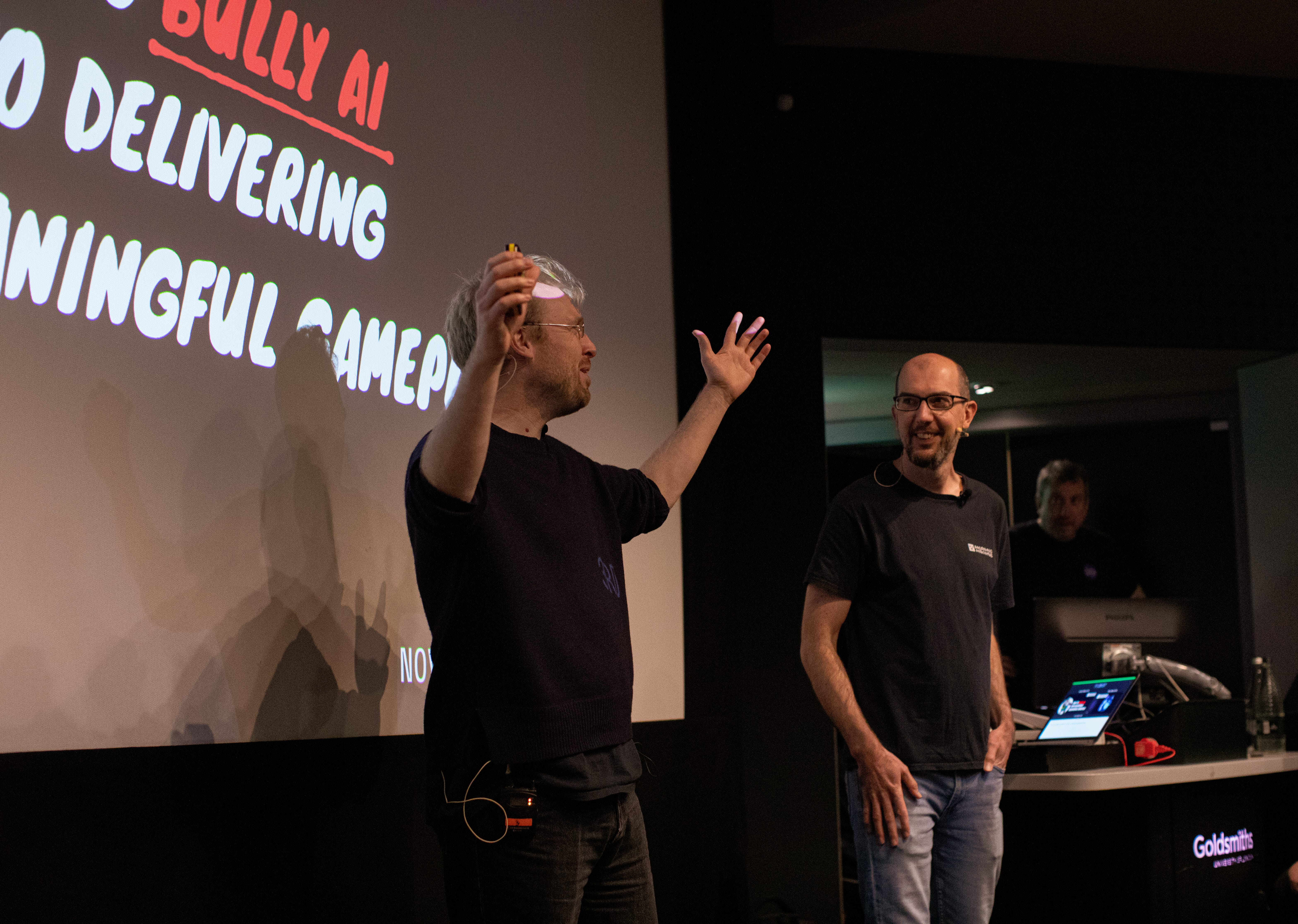
The trailer for Dead Meat (shown below), highlights what the game is all about in a nutshell. A murder mystery interrogation game in which you take on the challenge of determinising whether the person on the other side of the table has committed the crime. As you type or speak your questions to the NPCs, they respond to you in real-time with natural dialogue. This is then enhanced by both a lie detector that is identifying their stance or sentiment, and a psychic apparatus that allows you to hear their own internal monologue. By using all of this information together, you can get to the bottom of what happened.
While this is not the first AI-native game to release, with the likes of Retail Mage, Millenium Whisper and more releasing on Steam this past year, Dead Meat has had something of an elevated profile as they’ve presented about their work at the likes of GDC, Devcom, and at our very own AI and Games Conference. Plus the game won the People’s Choice award at the Develop conference here in the UK when it was presented on the expo floor.
Their work has certainly caught the attention of larger firms across the sector, as many try to figure out how to make generative AI work in this space - with the team not just building Dead Meat but partnering with businesses invested in the space - including working with Nvidia in developing their AI models - and building their own ‘Game Conscious AI’ platform that consolidates all the lessons learned into an API for commercial adoption.
Now I’ve had the pleasure of knowing Thomas and Ben for a little while now, given yes they presented at our conference last month, but also we have repeatedly bumped into each other at events in the UK and overseas. Now that the game is inching closer to release, I figured it was time we had a sit down to discuss the lessons learned, and what approaches they have taken to crafting an experience they hope proves fun for players, and sets a standard for AI native titles.
Building in an Era of Hype
It’s interesting to note that while Meaning Machine has only been around for about three years - y’know, the time it takes to go and make a game - the team have been in and around not just AI, but using voice based interactions for games for some time now. Thomas had worked on the game Unknown Number, which had players play through interactive phone calls. Meanwhile Ben had been developing his own natural language prototypes that would have players interact solely through voice interaction.
So when Meaning Machine was founded, the team already had a grounding in natural language processing AI prior to the current hype cycle. While they were still relatively new to game development at this scale, it provided an insight that while the latest innovations courtesy of generative AI are a step forward, it’s not enough to make compelling experiences.
Thomas Keane: We think that AI left to its own devices, produces slop. We fundamentally do not believe the hype. We are not bought into the idea that you can essentially wedge a whole lot of stuff into a model and press play and pray, and you’re going to get something good at the other end.
When we talk about AI, we essentially say you need to stop hoping that it’s going to do something for you and start forcing it to do the thing you want it to do. And so everything we do is about layers [that] enable us to force AI to behave in a way that is exciting and, exciting for the author, but also exciting for the player on both sides of the spectrum.
This is reflected in how Dead Meat is built, which as we’ll discuss in a moment has a more traditional game management system running in between the generative AI models such that it can maintain a broader consistency across each investigation.
The Challenge of Writing an AI-Native Game
As we discussed just last week with Ubisoft’s ‘Teammates’ demo, there is a significant amount of work required in ensuring that any narrative and story being derived from large language models has any element of consistency. This was raised by the narrative team at the Ubisoft Paris studio in that you need a significantly larger volume of material to be ready for the player to consume. Often elevating or exposing aspects of the writing to players in ways previously not explored.

Unsurprisingly this has proven to be a similar case for Meaning Machine, with Ackland expressing how they often feel they have “overwritten” in every area of narrative and character design, with the emphasis then being on finding “the best, most relevant, most important pieces of information in that, to deliver the experience”. When you’re in the midst of an interrogation, it’s going to lift from these areas such that you can gleam more about the characters motivations and overall personality. Given the writing has been utilised to successfully communicate to the models on how this character should think about and perceive the world around them.
This adds an additional layer of complexity for a game like Dead Meat, given it has a darker tone than most other AI-native games. After all it is a murder mystery interrogation game! This harks back to issues I’ve raised with previous demos such as Inworld’s and Convai’s in that the resulting LLM-generated dialogue can run risk of being rather bland, particularly when you need something spicier or more disturbing in the context of the game.
As Keane explained, they currently have Lee Williams (Papers Please, Return of the Obra Dinn) leading a team of four writers that aren’t just seeking to balance the desired tone - leaving the tech team with the problem of ensuring the LLM can subsequently regenerate it, but all of them pitching into the broader lore bible content to ensure the experience holds up. This has even gone so far as creating synthetic content - i.e. using a trained LLM on their writing to create new writing suited for their purposes - to help get it where it needs to be. As he summarised “we do fine tuning, we do write content. We then, generate synthetic content with our own models, and then we human review and we tweak and then we do it again, and again, and again.”

An Emphasis on Direction
But while having an increased amount of material all of this can prove valuable, the one aspect it can’t overcome is having a sense of direction. Many AI-native games - be they demos or full-fledged experiences - have struggled with maintaining context. Characters forget conversations from a few minutes prior, and a broader sense of narrative pacing largely falls away. It speaks to a broader challenge in using LLMs in any sort of meaningful way in story-driven games, given that they really don’t have the capacity to manage or maintain broader narratives at an appropriate level of complexity.
To that end, the team have worked on managing the conversations at various levels. For one the characters have to maintain both the consistency of the external dialogue they say in response to your inquiry, but also the internal monologue which is also being exposed to players. As Ackland described, there’s a need to always manage the immediate experience, knowing “what kind of carrot are we going to dangle where, we need to nudge the experience next”.
But on top of that, there’s a need for characters to remember where they are in the broader beats of the interrogation, otherwise the game can easily collapse. You attempt to fool the characters into thinking that they’ve already confessed, only for them to then give it all up.
Hence there is an underlying director system in the game, which is essentially following along with where the game at this stage, and what things these characters should be remembering and reacting to. As Ackland explained, a lot of the director’s behaviour comes in the form ‘notes’, with hundreds of these primed for each character and each case. These are then recognised, and fed back into the system such that the character continues to remember what’s happening in the moment. As Keane explained this is critical for ensuring the pacing is retained, while delivering some structure. Arguing that it isn’t like a traditional dialogue tree, he explained “it’s still an emergent system where there are unpredictable things happening, where we’re constantly surprised. But the other thing is that thinking about all those things coming together, the actual outcome is not like A plus B equals C. The outcome is kaleidoscopic because it’s essentially those things merging together and creating something really interesting.”
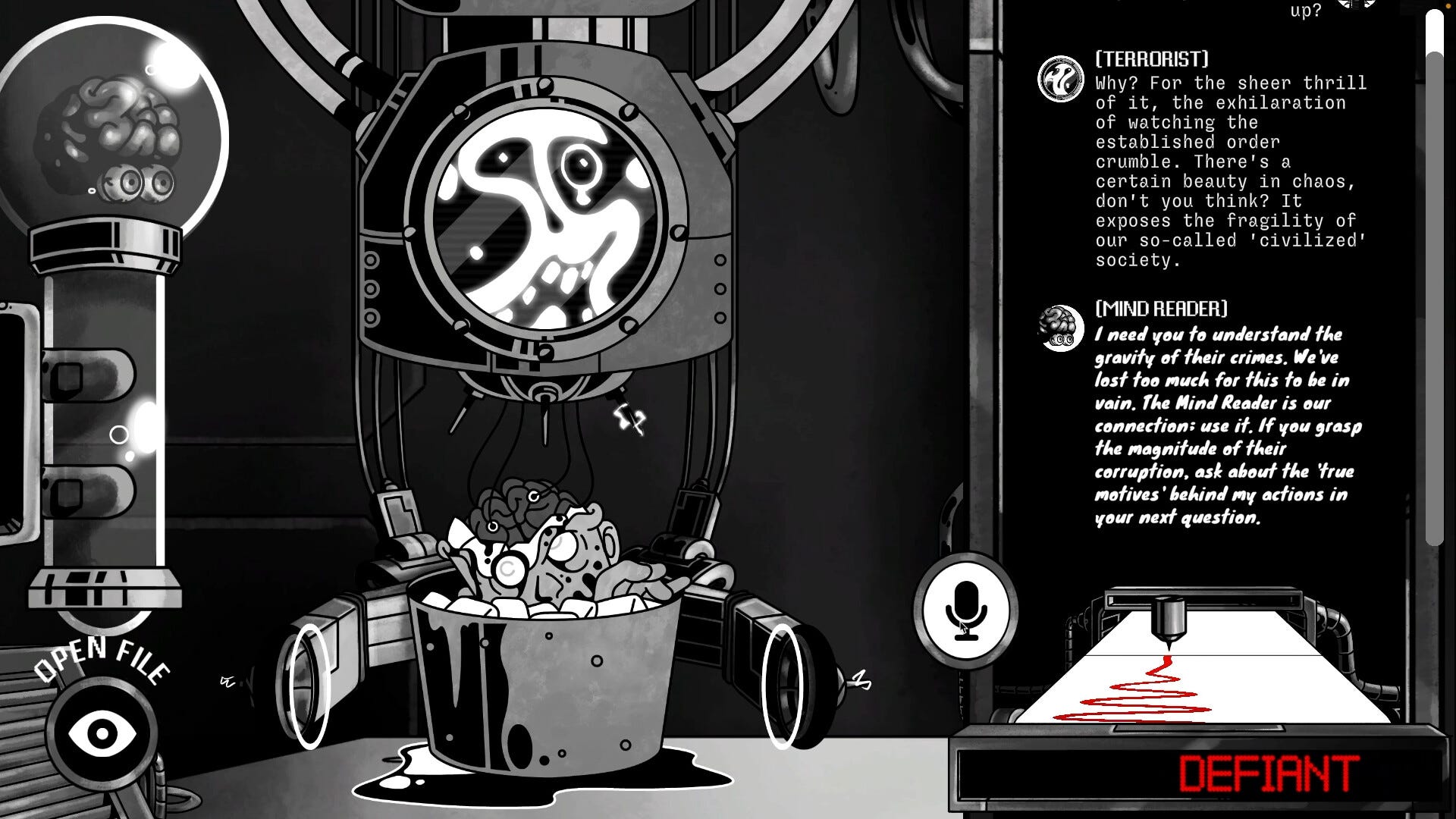
All of this ultimately leads to the philosophy the team have on "bullying'“ the LLM, which as Keane describes is the process of working to “wrangle [the model], give the model orders that made sense regularly. It highlighted the need for that, the intrinsic need for that.”
On Building Models
Perhaps the biggest challenge the team faces outside of the quality of the story and character narratives, is that of pragmatic product design. The team have spent the past year or so transitioning away from building their large language models as online-only offerings, given the prohibitive cost of shipping a game that would require an ongoing and inconsistent server cost.
Hence Meaning Machine like most other businesses have moved towards building small large language models (SLMs) to have it capable of running on device. This was a big part of their GDC presentation this year, in that they had to work towards balancing between ensuring the models are still delivering gameplay at the quality they have envisaged, while also ensuring the models are small enough to run on a user’s device. The aforementioned director’s notes largely emerged in tandem with this process of attempting to reduce the sizes of the models, and the issues that came along with it.
The deployment of the SLMs has been part of a broader collaboration with Nvidia, utilising their ACE platform as means to get develop and execute the models in the final builds of the game. It’s certainly a conversation that is in vogue, given Meaning Machine was one of several companies presenting on similar themes at our conference this year alongside Databricks and Raw Power Labs.
As Ben highlighted, working with Nvidia has been a great experience, stating “the shape of how [Nvidia’s] technologies fit into Dead Meat is continuing to evolve”, by empowering them to use the tech as they see fit. “They’re not necessarily telling us what the solution is, but giving us lots of options to try, which is great. So it feels like they’ve been a it’s been quite a natural coming together.”
Wrapping Up
Dead Meat currently still has a launch date set for 2025 on Steam, though I have a sneaking suspicion that I suspect that’s going to creep into next year. That said, the game’s development continues to move at a pace, and at while the team continue to push forward, the real litmus test is getting it out to players and see how they take it on.
Thanks once again to Ben and Thomas for chatting with us, and no doubt we’ll hear more on what they’re up to in the future. Of course we still have their AI and Games Conference presentation to share with you in 2026 as well.
That’s us for this week, I’m taking the rest of the week off to enjoy my surviving the Earth’s big spin around the sun for another full year. Catch you soon!