

Generative AI at GDC: Jogging in Place | 18/03/26
Another year with little meaningful discourse.

The AI and Games Newsletter brings concise and informative discussion on artificial intelligence for video games each and every week. Including industry news, innovative research, emerging trends, and our own exclusive editorial and reporting.
You can subscribe to and support AI and Games, with weekly editions appearing in your inbox. If you'd like to work with us on your own games projects, please check out our consulting services. To sponsor, please visit the dedicated sponsorship page.
Hello and welcome to this week’s edition of AI and Games. I had planned to write part 3 of the Game AI Existential Crisis this week, but figured I should comment on everything happened at GDC.
Oh and before we get started, I wrote this issue prior to Nvidia’s announcements at GTC on Monday, including the horrendous DLSS5 demo. I’ll save that rant for another time.
Announcement: My GI.biz Op/Ed

Before we kick things off, a quick announcement that I was invited to write an op/ed for GamesIndustry.biz as part of their ‘AI Week’. Entitled “Biting the Silver Bullet: AI in the Games industry in 2026 and Beyond”, I took the opportunity to summarise a lot of the big talking points I’ve made in this here newsletter over the past year.
You can read it here, or at the image above. If you’re curious what I presented at the Gamescom Dev Leadership Summit last month, imagine this article but as an hour-long talk and you’re not far off it.
A huge thank you to Lewis Packwood for inviting me to submit this piece. I’ve been reading GI.biz for the best part of 20 years, and while I’ve been interviewed for articles on the site in the past, it’s pretty cool to now say I got to write an article for their editorial.
Follow AI and Games on: BlueSky | YouTube | LinkedIn | TikTok
GDC 2026 and the Generative AI Conversation
This year I made the decision to not attend GDC. This decision was the culmination of a number of factors: I have a lot of work going on, the US is increasingly expensive to visit - and not particularly welcoming - plus the changes made to GDC itself suggested that the value I attribute to the event through high quality talks was on the way out. I had opted to use what little time I could spare out of the office this quarter at the Gamescom Dev Leadership Summit, which I wrote about a couple weeks back.

Naturally it’s a shame I didn’t go, after all I have a lot of friends and contacts in North America that are great to reconnect with when over the pond. But perhaps one of the hidden benefits of being at GDC is I don’t hear as much about what is actually happening at GDC. The conversations are much more focussed, and I seldom spend too much time reading up on announcements and big stories until the week after. However this year, was a very different story.
“We’re having the same conversations again, and again, and again...”
Last week my inbox was inundated by press announcements either from PR wings of big companies, or from agencies trying to secure interviews and coverage by offering me information under embargo. All of them advocating for the latest AI thing these companies are pushing. I think I have to give you all the credit here as the good folks reading this newsletter and spreading the word. It seems we’re now a big enough outlet that it now warrants trying to get our attention when some new AI shiny gets announced.
So yeah, thanks I guess? No seriously thank you all for reading and supporting our work. This is just a natural by-product of building our wee modestly successful publication.
For this week I figured, given I can’t comment on being at GDC this year, why not comment on the narratives surrounding AI at the event. The sentiment I have surmised both from reading all the big announcements, and from folks on the ground sharing their thoughts with me, was that for every step forward, we’ve taken two backwards. A reek of desperation to advocate for generative AI as people are either increasingly over it, or are seeking more meaningful conversation. I’m sorry to say that if you’re looking for meaningful discourse on AI in the games industry, GDC has opted against that in pursuit of the marketing dollar.

A Round-Up of GDC Headlines
Rather than do a topic-by-topic breakdown of everything that was announced - because I value both your and my sanity - here’s a list of stuff that caught my attention to warrant including:
ComfyUI, which has built a reputation as being a generally well-liked generative AI open-source toolchain, has now got local AI video generation courtesy of RTX acceleration with Nvidia.
Google Cloud had a lot to say at GDC. In amongst a very flowery presentation on the sunny uplands of AI in the games industry, they also shared some real work on AI-native games and generative AI production workflows.
Microsoft’s new PC/hybrid console ‘Project Helix’ will support neural rendering (i.e. AI upscaling), (AI-driven) frame generation and texture compression.
Xbox’s Copilot will launch on consoles later this year. Providing means to automatically record ‘fun’ moments of gameplay (which your Xbox One could do without AI btw), as well as provide guidance and support on the games you’re playing.
Razer announced a ‘companion’ AI for QA and their own agentic toolchain.
Arm is collaborating with Nvidia to build stronger integrations between the former’s CPUs and the latters GPUs.
Arm is also collaborating with UK studio Sumo Digital to help them evaluate their new AI-upscaling technologies.
Tencent (re)announced MagicDawn - which was already shown at SIGGRAPH Asia last year - which is their own AI-powered game engine technology for supporting things like global illumination (i.e. lighting), spatial audio, and occlussion culling.
Not so much a headline, but rather the one thing I heard people get ‘excited’ about, was not one but two different websites have cropped up to try and share insight into which generative AI tools studios are actually using to work on games.
Now this is only the stuff that I felt warranted a mention. I think I read around 30+ news stories and press releases on AI from GDC that ranged from ‘hey that’s actually kinda neat’, to ‘hmm, interesting’, followed by ‘oh well that’s a thing’ to just laughing, deleting the email, and moving on. Sadly, there was far more of the latter than there was of the former.
There was of course some positive stuff when you push pass the PR and focus on the talks. I heard good things from the content my colleague Steve Rabin put together under the banner of game AI, plus from all accounts Rez Graham did a good job in taking over the AI roundtables as Neil Kirby stepped down from the position. I’m looking forward to seeing the talk from EA on how they trained machine learning for the goalkeepers in FIF- sorry, EA Sports FC 26. This looks really interesting.
“Did I ever tell you what the definition of insanity is?”
Despite all of that, the real conversation was once again generative AI as a tool in the games industry. Lots of sponsored talks on the subject, lots of booths both in the various halls, and a lot of opinions of varying quality.
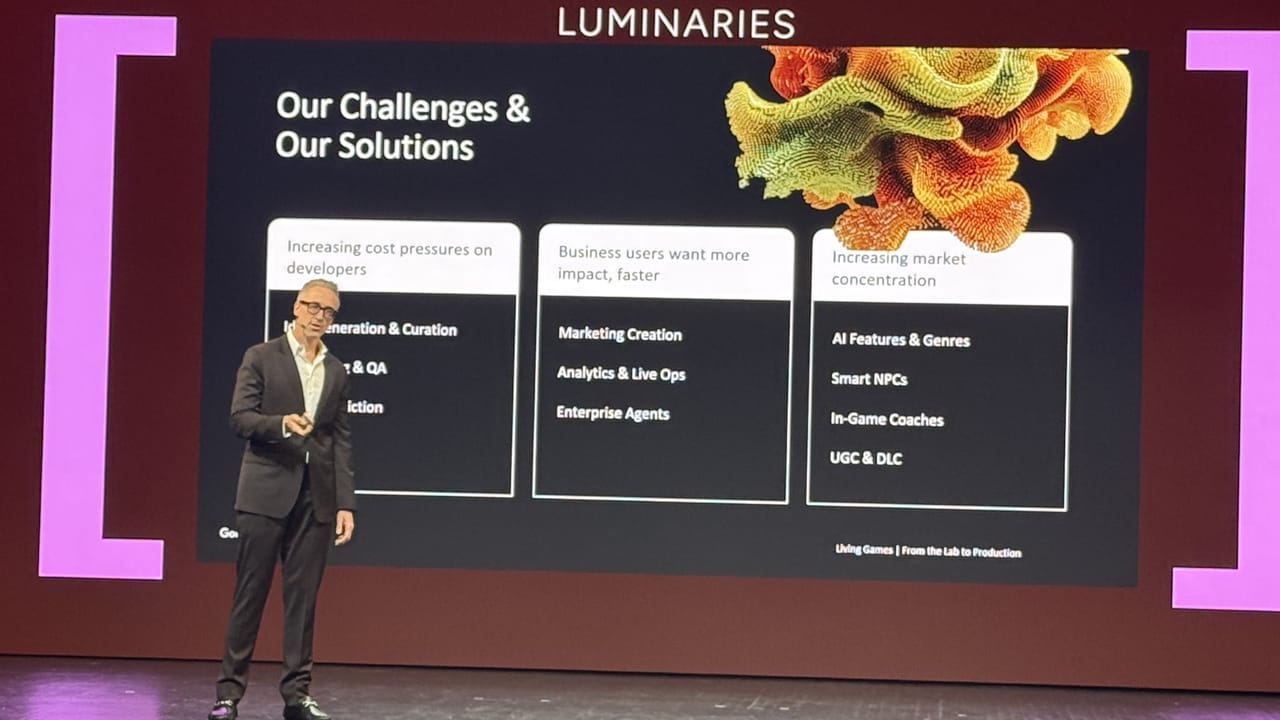
Speaking of opinions, a lot of headlines were put together off the back of one panel hosted on the GDC ‘Luminaries’ stage, in which Moritz Baier-Lentz, head of gaming partnerships at Lightspeed Venture Partners, i.e. an investment firm with a lot of fingers in AI cookie jars, stated he was “shocked and sad” about the lack of enthusiasm for generative AI and that the industry had not embraced it as much as he had hoped.

I mean I’m sorry, but are we really meant to take that sentiment seriously? With all due respect to the four gentleman on stage - all of whom have been very successful in their respective careers - but between them they have no experience working as an actual game developer (go look them up on LinkedIn, I’ll wait). So once again, we have online discourse on AI in game development being driven by a headline from a panel with:
Zero experience of actually developing a game.
Zero experience that helps give context to the value (if any) of an AI tool in a creative workflow.
Zero experience in the impact of using AI in a creative workflow.
Zero desire to engage in the issues surrounding generative AI in games.
GDC’s conversation on AI has sadly not evolved over the past 3 years (despite the best efforts of many a speaker) because it feels like we’re still where we were in 2024:
Lots of booths showcasing tools and tech that, thus far, has not been proven in production. Ranging from the big players, to start-ups that will die in 18 months.
The discourse of AI entering the industry continues to be surface level and vague.
Little to no talks on the impact or value - positive, negative, or otherwise - on generative AI tools in production in the main programme.
But by god more and more sponsored talks on AI huh?
The majority of developers, and players, are cemented in their stance that all of this is a waste of time.
We’re having the same conversations again, and again, and again...
A Lack of Meaningful Insights
Now of course a lot of what I would consider to be a lack of meaningful insight stems from the fact that we’re still only 3 years in to this era of AI-tooling in the games industry. Outside of the predominantly small-scale and indie teams shipping games, or at least trying to, there’s very little data out there that can speak to the efficacy of AI tooling in a traditional game production, because nothing at AAA-scale has really shipped yet where AI tooling was there from day one.
So here we are with another year in which a whole bunch of stuff is thrown at us, all in the hope that somewhere, somehow, all of this will turn into profit? There’s no doubting that AI tooling has its uses in specific use cases, but the conversations in most circles are still tinged with a desire to avoid it, or work around it, because we simply don’t know whether this is worth our time. Fortunately the ‘NPC as GPT’ hype has died down (sorta), we’re now entering the ‘AI for everything’ phase, and it’s just another round of the same empty statements and hollow platitudes.
Now yes, I sound horribly cynical, but let me take a moment to reiterate that there was a lot of good stuff mixed in with the ‘meh’. Stuff that has caught my attention as I think ‘hey, maybe they’re onto something?’. Like the work by Arm and Qualcomm in trying to make AI efficient to deploy on mobile. The Double Helix specs talking about texture compression on consoles which would help reduce install sizes if anyone can afford a new Xbox in 2027. Tencent’s MagicDawn also sounds interesting because it’s trying to solve known issues in lighting and audio - high performance low cost audio occlusion would be huge! These are things that are meaningful to the end-user - be they game developer of player - and that’s what the AI discourse continues to lack.
Instead we’ve got one level of discourse happening at conference stage level showing off the new shiny, while trying not to engage with the lower-level - the developer and player level - of conversation. I saw Baier-Lentz lamented that the ongoing layoffs may have dampened people’s enthusiasm for a technology often being used as their replacement. I wonder if he stopped to chat with anyone outside of the barriers placed in Yerba Buena gardens for their perspective? He might get an earful.
Meanwhile I admittedly lost my cool last week when it became a headline across various outlets that Google DeepMind stated in their GDC talk slot for their AI world model Genie 3 that it’s not a practical tool for use as a video game engine, given it cannot retain model consistency.
I mean, not only has many an AI expert pointed this out, but we dedicated multiple issues of AI and Games to this topic nearly a year ago.
Despite this, we continue to let this superficial discourse dominate the conversation, rather than treat as what it is: hollow. I did state in my BlueSky post that I don’t want to speak ill of the likes of GamesIndustry.biz and Game File that originally reported on this - these are great outlets, they do great work, I read both of them. However, we’re still in an age where too much reporting on AI lacks appropriate editorial critique. If anything the real story here is that Google admitted something that anyone with a solid background in AI in context of game development already knew.
For all of the noise coming out of GDC. I don’t feel like I missed anything major. Outside of the talks - which are the things I value the most - the rest of the AI discourse just feels exactly the same as it did in 2024 when everyone was doing something behind closed doors but few of the big names wanted to commit. The only difference is now there is a larger evidence of commitment but with little to show for it.
No doubt this will change over time, but it highlights once again that for all of the interesting and valuable work happening in the space, a lot of it will be drowned out by the hype.
Oh Just… One More Thing
A big thank you to everyone who reached out to share with me the update on the Arc Raiders situation.
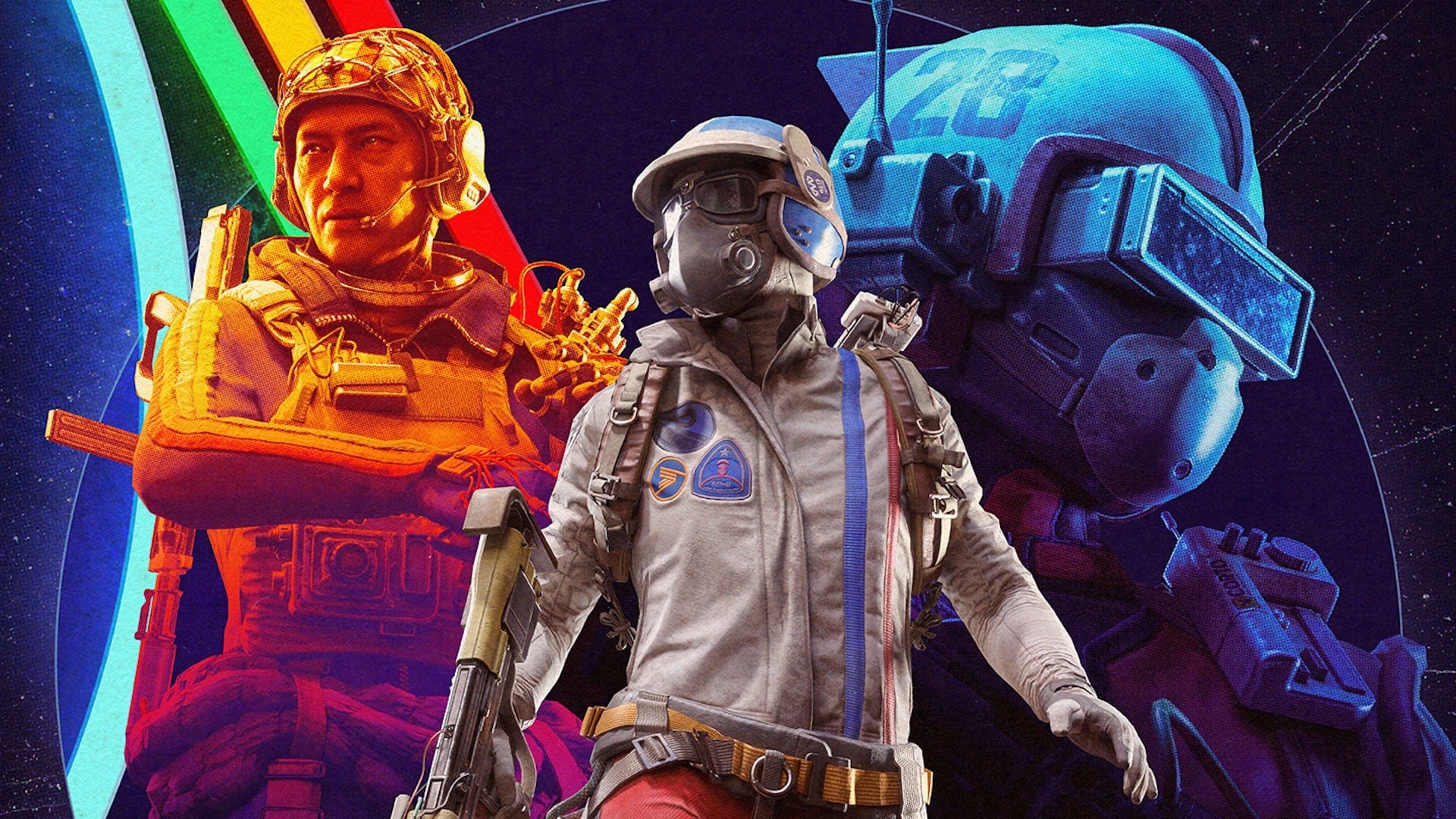
In a recent interview at GamesIndustry.biz, Embark CEO Patrick Söderlund discussed how they have been working to re-record a lot of the dialogue to no de-emphasise the use of AI voices.
It still doesn’t change my thoughts on what is the biggest issue with their approach, in that the game uses the tech without delivering any real value. For studios keen to replicate Embark’s success, the message is that premium quality voice acting can be replaced with AI models, and the audience will (largely) be okay with it.
Fingers crossed I’m not proven right on that one.
Okay, that’s it for this week. Next week: Game AI’s Existential Crisis - Part 3!
Or do I got on a rant about that DLSS5 thing?
Perils of talking about AI in games, there’s always something new to talk about…
Have a good one folks!