

Genie 3 Spooks Games Investors (For No Reason Whatsoever) | 04/02/26
Sponsored by Lingotion


Switch 2 prices won’t increase for now!
Bitmagic Unveil a Clone of Civilisation - Made by AI
Genie 3 Public Demo Causes Game Stocks to Crash
The AI and Games Newsletter brings concise and informative discussion on artificial intelligence for video games each and every week. Including industry news, innovative research, emerging trends, and our own exclusive editorial and reporting.
You can subscribe to and support AI and Games, with weekly editions appearing in your inbox. If you'd like to work with us on your own games projects, please check out our consulting services. To sponsor, please visit the dedicated sponsorship page.
Hello one and all, and welcome to AI and Games. I hope you’ve all had a great week. We’ve been a little rough around the Thompson household as some sort of January cold/crud has hit us - sadly ruining much of our highly anticipated weekend. But hey, we’re on the mend, and things are looking up once more.
This week we’re catching up on some of the news in between our deeper dive issues - i.e. I’m writing a lot, just not all of it for this week’s edition!
Plus, I figured we better talk about one of the big headlines that from last week that we’ve already discussed in this here publication, that is perhaps the most ridiculous reaction to an AI announcement I’ve seen in recent memory.
Follow AI and Games on: BlueSky | YouTube | LinkedIn | TikTok
A Word From Our Sponsor: Lingotion!
We’re grateful once again to the good folks over at Lingotion, who are not just leading the way for legal and ethical AI acting in games, but sponsoring this weeks issue!
You may recall that we had a conversation back in December with Lingotion’s CEO and Founder Andreas Rodman about the company seeks to provide a legal and ethical framework for AI voice acting. Their aspiration is to give performers legal control and renumeration for their voices being adopted in AI models. You can find out more about Lingotion’s platform and their approach to supporting actors and performers through AI at lingotion.com

News Round-Up
Alrighty for this week, it’s a whole bunch of news stories worth catching up on. So let’s do it!
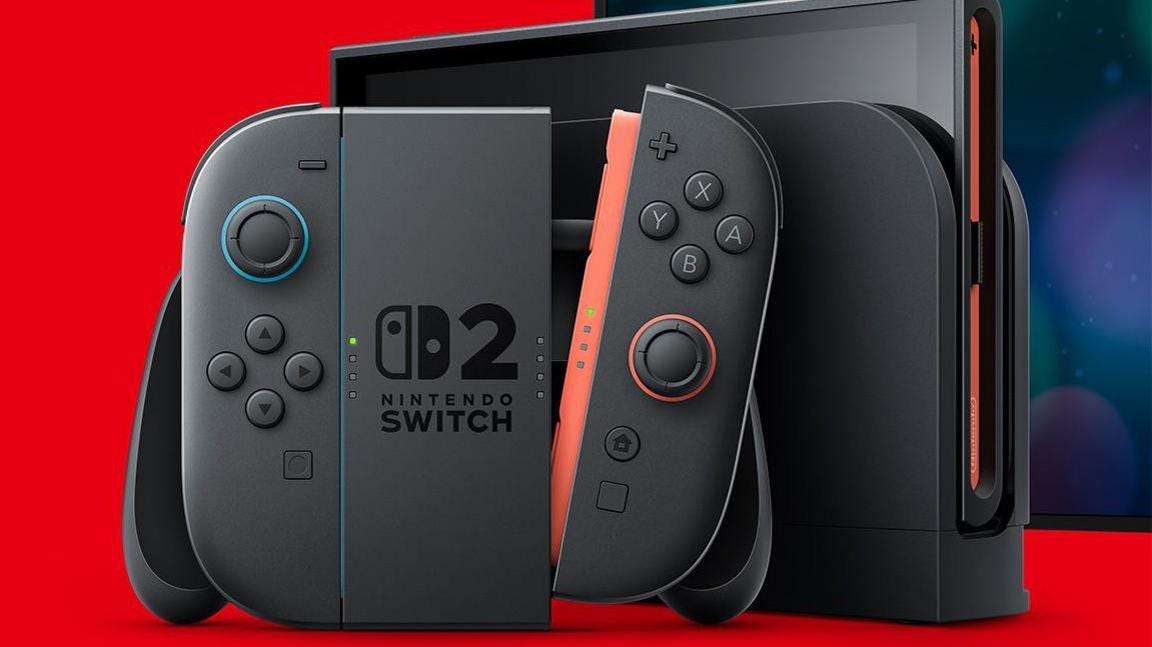
Nintendo Switch 2 Price May Increases Due to AI Demand For Memory
As discussed in our predictions issue last month, the price of consumer gaming is continuing to increase on account of AI datacentres and related hardware scooping up as much of the available capacity from DRAM manufacturing. This is already led to consumer-grade DRAM becoming increasingly expensive, and it’s expected that this will be the next in a long list of reasons as to why consoles will increase in price in 2026.
As reported by VGC, Nintendo president Shuntaro Furukawa recently responded to a question at the company’s latest financial reporting, stating that for now at least, the price of the Switch 2 will not be affected. However, there is a possibility that should the situation worsen, the company will assess the market and take action.
Stockpiling for Launch: It’s important to acknowledge the the Switch 2 didn’t suffer much from US tariffs as they began to wreak havoc in global trade last year. Though much of this stems from the fact that the console was delayed from an originally intended launch in 2024. This was in part to ensure the console had strong titles in its launch quarter such as Mario Kart World and Donkey Kong Bananza (my 2025 GOTY), but could also address consumer demand and minimise scalping. Hence millions of units were already shipped to the US before the tariffs were underway.
As such, they’re already well ahead in production and have plenty of stock available. Plus they have purchased a lot of the base materials needed for manufacturing the Switch 2 in advance. Though if AI continues to scoop up available memory, it is increasingly likely that all consoles will see a price increase by the end of the year.
Bitmagic Announces ‘Creator’ Platform - With ‘Idle Civ’ Demo Free to Play
Helsinki-based AI-first games company Bitmagic earlier this week unveiled their AI-driven game development platform ‘Bitmagic Creator’. The engine advertises its capability to build fully functional 3D games entirely from written prompts. Removing the need for users to engage with the ugly day-to-day of writing games, and have the AI prompting generate the necessary components you require.
To show this off, the company is offering up to 1000 EUR in credits to try out their tools in the Bitmagic Game Lab. But in addition, they showcased the tools capabilities with their latest effort to demake/clone existing games in their engine. Having already showcased that the engine can make clones of games such as Vampire Survivors, the team showcased ‘Idle Civ’ - their own version of Sid Meier’s Civilisation.
Impressive Results With Limited Scope: As always, it’s important to read between the lines of a lot of this rather than treating it at face value. I mean it’s important to stress that this engine is quite impressive. By training a Large Language Model (LLM) on the intricacies of the engine - and no doubt building the engine to allow for ease of crafting relevant code and art assets via the model - has allowed for quite a broad range of games to be built. That said, having tried some of them out, I’d consider it generous to suggest these demos are fun to play . They’re certainly functional and reflective of these games to some degree, but it’s a far cry from replacing the originals.
You can see the potential of something like this for aspiring developers and kids hooked into ecosystems like Roblox to craft their own experiences. I imagine Bitmagic has a profitable future in that arena should they find a way to monetise it successfully.
Sony Patented AI-Driven Podcasts?
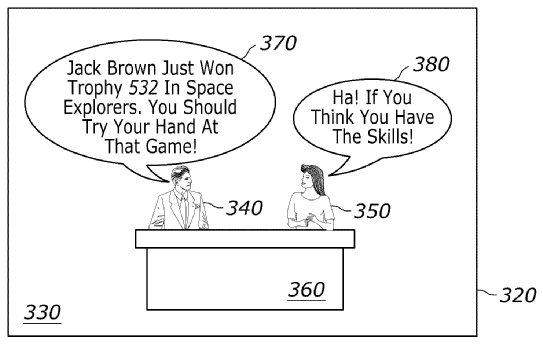
Chris Scullion over at VGC caught a story about a recently approved patent for Sony that uses AI to create personalised podcasts on the PlayStation platform that feeds players updates on games they’re playing, what their friends are up to, and recommends games you haven’t played yet.
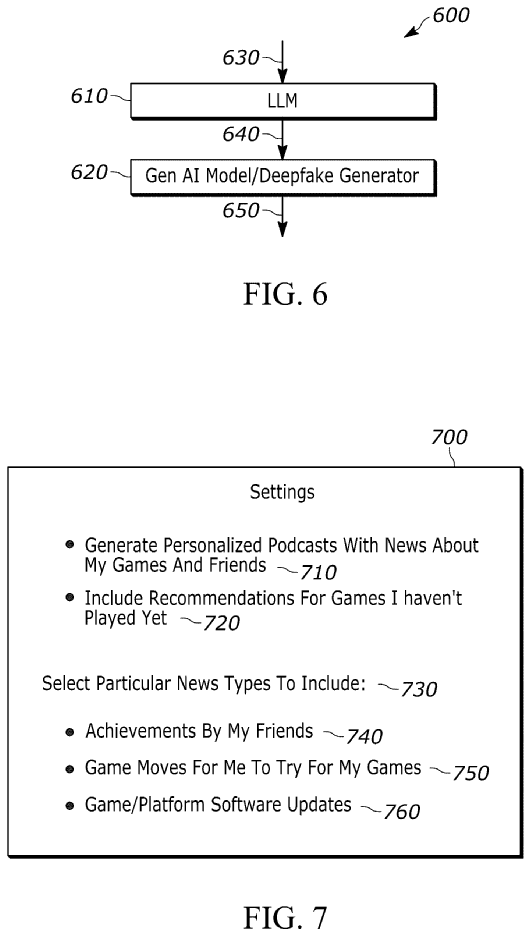
The patent - available to look at via the World Intellectual Property Organisation (WIPO) - details the use of an LLM combined with an image generator of some sort to craft a video podcast where you can watch hosts discuss what’s happening of late that’s worth your attention. The weird part of this being that the hosts of these podcasts may very well be the characters from Sony’s roster of characters across the PlayStation brand.
“Tony’s Hit a New High-Score on Sektori”: So this is really an elaborate and expensive way to summarise stuff that PlayStation’s ecosystem already tracks - leaderboards, game recommendations, purchase history, unlocked trophies, friend status updates, and new game updates pushed to release - wrapping it up in a bow for Nathan Drake or Kratos to read it out to you. I wonder if they ever got far enough to consider the implications of that given the performance actors involved in those characters? How about Vicar Amelia? That would make for some interesting viewing.
Actually, I wonder if they’ll let the podcast hosts respond to viewer feedback? I always wondered how Joel felt about ‘the Gamers’ failing to recognise the point of The Last of Us is that he’s a piece of shit human being…

Genie 3 Spooks Investors Who Don’t Understand How Games Are Made
Without a doubt the big story of last week was a new announcement about Google DeepMind’s Genie 3 model. As we’ve discussed previously, Genie is a ‘general-purpose world model’, meaning that it simulates an space within which agents (i.e. you) can take action. It then renders an image that simulates the world in which it exists within. By repeating this process of reading user input, then rendering an image, it creates the illusion of interactive video (games). Genie like other world models relies on vast quantities of video data in order to interpret, simulate, and regurgitate everything from real world scenarios to video games. I wonder where they could find all that video data…
Genie 3 has made headlines since it was announced last year, but given it’s an experimental research demo only a handful of people have tried it out - I did not but I know a few people that did. However, Genie 3 is now to try out provided you have the Google AI Ultra subscription, are over 18 years of age (I wonder why…) and are based in the US. The Ultra subscription will set you back $249.99/£234.99 a month.
So yeah, for the price of an original Nintendo Switch, you can access Genie 3 among other things (basically using Google’s AI models at their full capacity).
Once again, as I sit alternating between my ‘former AI researcher’ and ‘game developer’ hats, my opinion of Genie and other world models hasn’t changed. These are most certainly impressive AI developments, in that we can prompt a machine learning model to simulate a behaviour space and also render it in the style of something we have seen before: embracing style transfer, reproducing particular art styles, and more. But of course some corners of the internet think that the games industry is on a road to ruin courtesy of this technology - and sadly some of those people are involved in investing in it.
Impressive Tech With Limited Application
Wearing my ‘game dev’ hat, I still don’t see any value in this outside of some visualisation of how a piece of concept art might be playable, or using it for ideation within a game I have already built. The latter was what Microsoft Research did with their ‘Muse’ project that was announced last year. I wrote about this in a dedicated research digest issue, in that the project showcased how small edits to map designs could be simulated using a model such as this - but it of course relied on the game already existing, and hundreds of hours of footage of the game being played.

But outside of these limited edge cases, this is not a replacement for games in any meaningful sense. These models are incredibly expensive to host and deploy, are not capable of crafting new ideas - though as we’ll see are certainly capable of regurgitating existing ones - and more importantly struggle with consistency. I wrote up a case study episode on this last year in which we looked at a handful of these examples, and highlighted that as impressive as these things are they are incredibly limited, and are in no way, shape, or form, a viable alternative to conventional video game development and distribution. The Bitmagic story from earlier in this issue has much more weight to it by comparison, given it is implementing a game within a defined engine - meaning it has some sense of ground truth for maintaining consistent and reliable outputs.
Okay But Make Me Free Zelda
Of course it’s no surprise that as soon as this became accessible, what did everybody do? Make cheap clones of existing games, such as this delightful example from Twitter/X.
Again, technically impressive, but I’m sure Nintendo’s lawyers are having a lot of interesting conversations at the moment. It’s one thing to use video footage for training the model, it’s something else create a low-end reproduction of their game, right down to the animations and wind trails.
Tell Me You Don’t Know How Video Games Are Made…
So yeah, AI company makes big breakthrough, it’s made public to drive hype and influence stock price. Another day, another Doug. In fact it did little for Alphabet’s (i.e. Google’s) stock price. It went up less than 2% and that’s already been negated within a week. But this time around it had a much bigger impact - as reported by VGC among many other outlets - on various games companies who saw their stock drop anywhere from 5-10% after the announcement.
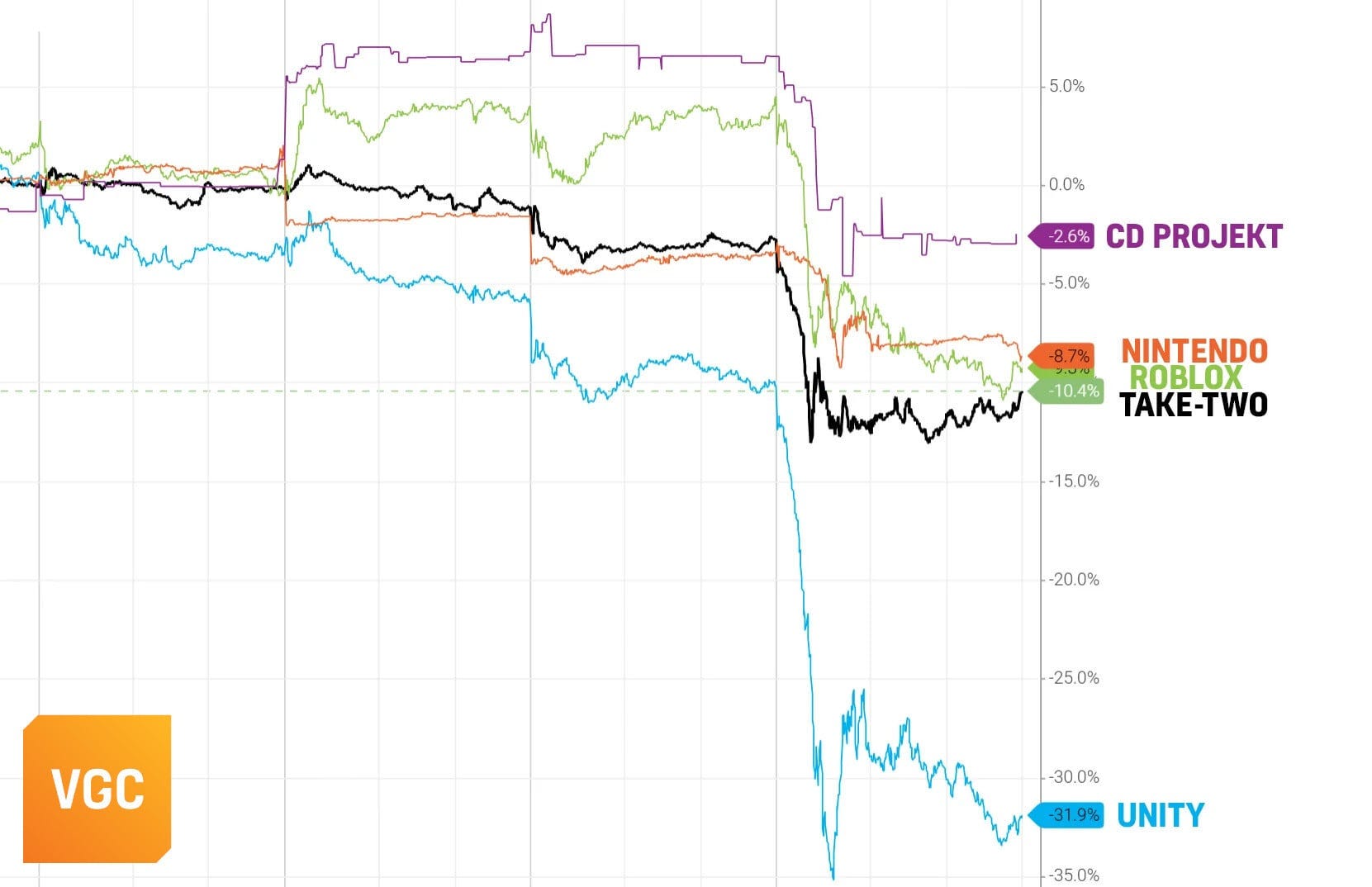
The worst offender was Unity, who saw their stock drop over 35% and then recover, but still with around a 25% reduction on this time last week. I don’t think it helped that their CEO Matthew Bromberg, posted a statement on Twitter/X stating that the company would “operationalise these advances”, by finding ways to build AI frameworks that could essentially parse and reproduce a world model’s output into the game engine. Not only does that sound like the company is conceding to world models being a replacement (they’re not), but it’s kind of the opposite of what most users of the engine want.
Once again we’re in a situation where an AI advance is being discussed and disseminated such that it has material impact on an industry despite said innovation not being of any real material use.
Sure, I think there is an argument to be said for world models to exist in some use cases, but considering the operational costs, repeated evidence of copyright infringement, failure to successfully reproduce assets from the same prompt, and the fundamental lack of contextual awareness and memory - did I mention Genie 3 only lets you ‘play’ for a minute at a time? - this is not going to have any broader value in the games industry anytime soon.
It’s been a rough news week huh?
Wrapping Up
A short and sweet issue this time around, but we’ll be back next week with a deep dive for next week’s edition. Plus, we have a brand new AI and Games case study launching this Friday both on the site and on YouTube. Looking forward to sharing it with you!
In the meantime, take care and I’ll be back!