



We talk to Supercell about their AI 2026 Innovation Lab as applications close this week.
Game AI Uncovered volume 4 is out now, with words from yours truly.
EA Sports FC using generative AI support commentary.
Plus tech specs dropping on PC a reaction to AI-driven RAM shortages?
The AI and Games Newsletter brings concise and informative discussion on artificial intelligence for video games each and every week. Including industry news, innovative research, emerging trends, and our own exclusive editorial and reporting.
You can subscribe to and support AI and Games, with weekly editions appearing in your inbox. If you'd like to work with us on your own games projects, please check out our consulting services. To sponsor, please visit the dedicated sponsorship page.
Hello one and all and welcome to AI and Games! For this week’s edition I sat down for a chat with Taavi Paananen and Matias Varjonen to talk about the 2026 iteration of Supercell’s AI Innovation Lab. What was a 10-week event located in Helsinki in 2025 has now expanded into a 9-week programme being hosted at multiple sites around the world that is providing financial support, AI resources, and mentoring for aspiring teams and individuals to experiment with how to use AI to build games never seen before.
With the deadline for applications closing this week on February 22nd, I dig into what Supercell have been up to, give you a breakdown of what this programme is offering, and chat with Taavi and Matias about the broader plans and aspirations of the AI innovation team.
Follow AI and Games on: BlueSky | YouTube | LinkedIn | TikTok
News and Announcements
Alrighty, before we get into our big story, a quick run through of some announcements, plus a couple of headlines.

Game AI Uncovered Volume 4 is Out Now
The Game AI Uncovered series, which includes a chapters written by game AI professionals on their projects, has released a shiny new 4th edition. Edited once again by Paul Roberts, this edition includes behind-the-scenes insights in the making of games such as Undisputed, Dirt, Grid, Wherewolf, Psychonauts 2, and Hawken Reborn.
In amongst all this awesome stuff, I have also written my second chapter for this series - a beginner’s guide on AI character design. It’s great to be part of this all over again, though as I discussed on LinkedIn I had forgotten which volume my work would appear in. I almost bought a copy last week until Paul reminded me I get one for being a co-author. It speaks to the amount of work that is required to go from initial draft to launch, and congrats once again to Paul and my fellow co-authors.
The book is out now via the Routledge website, and other booksellers.

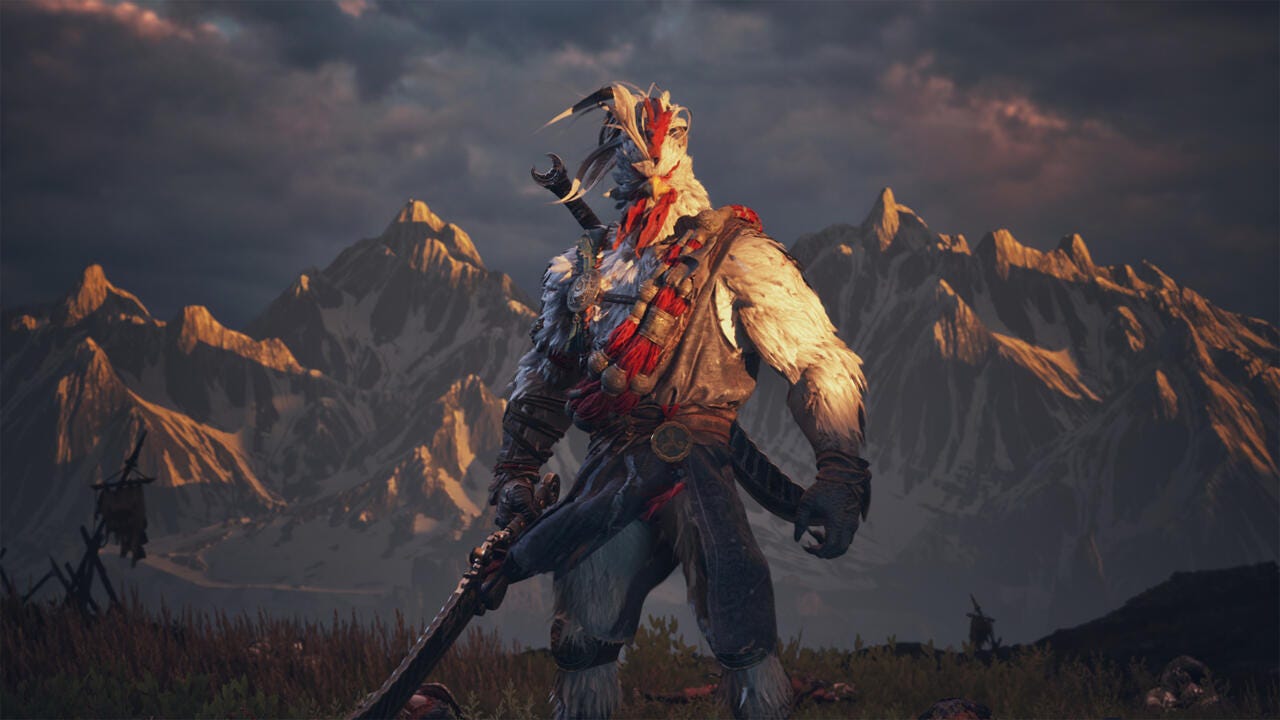
AI-First Publisher Krafton Clarifies AI Use in Project Windless
Announced last week at PlayStation’s most recent ‘State of Play’ event, Project Windless is developed by Krafton Montreal Studio, and has players control a 9-foot humanoid rooster named Rekon. Inspired by the book series “The Bird That Drinks Tears”, the game appears to borrow from the Dynasty Warriors formula, yet somehow looks even more violent and ridiculous. I am officially intrigued…
Given that Krafton have previously declared they’re moving forward to becoming an AI-driven business, it does lead to questions about pretty much every single production they’re working on as to how much Generative AI is involved, given it continues to be something that the vast majority of players are simply not interested.
As reported by Victoria Phillips Kennedy at Eurogamer, Krafton responded to questions on this and stated that the game doesn’t use generative AI in the game itself. Only exploring it “internally during exploratory phases”:
"For Project Windless, the Montreal team is taking a traditional, craftsmanship-driven approach to single-player development. The team primarily uses AI internally during exploratory phases to support iteration and efficiency rather than as a central, player-facing feature of the game.
The game is currently aiming for a 2026 launch date and is planned for PC and PS5.
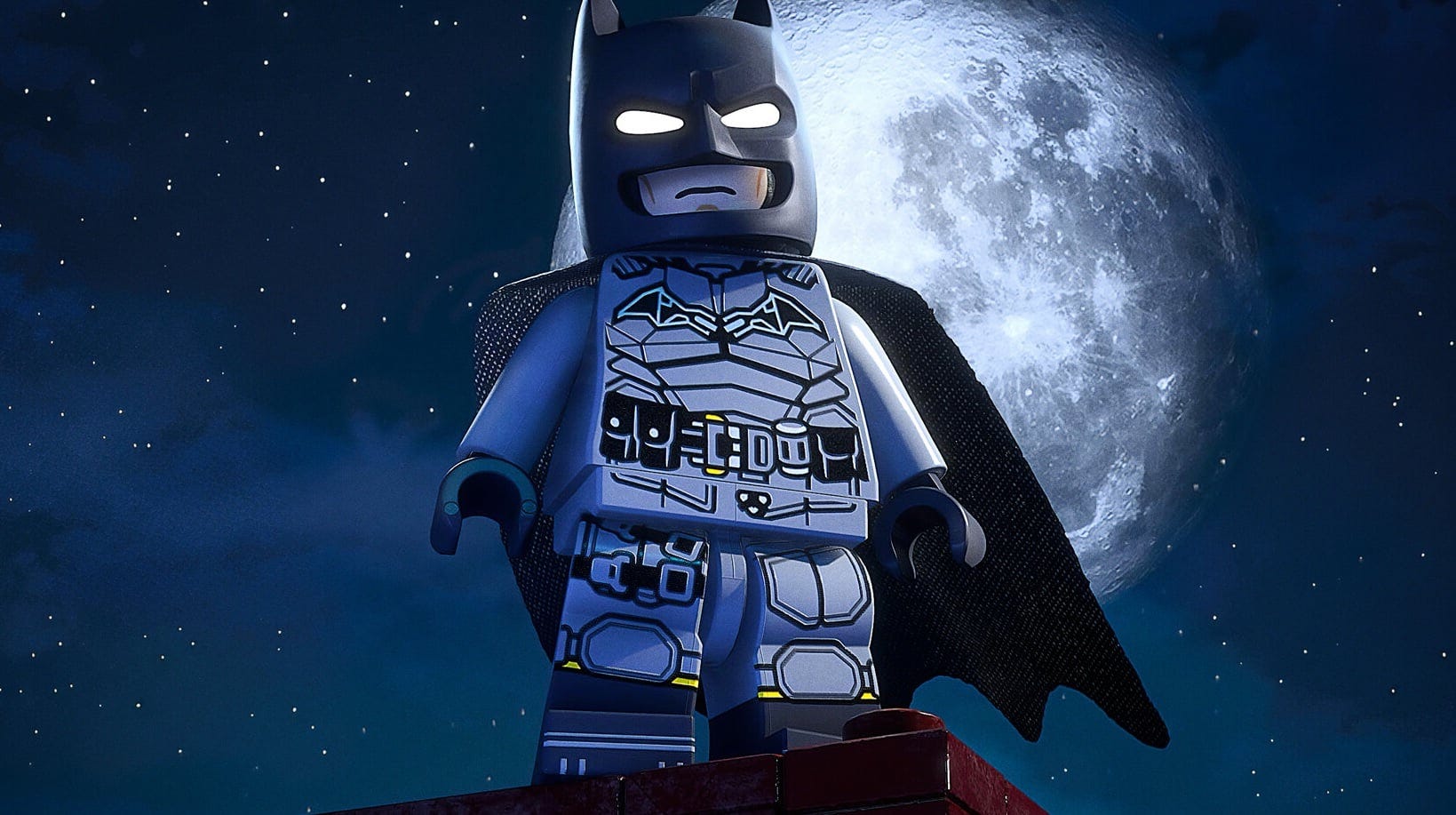
Upcoming Lego Batman the Latest Game to Drop RAM Specs During AI Drought
Releasing on May 26th, Lego Batman: Legacy of the Dark Knight is looking to be on the big releases of Q2. Heavily by the wide range of movies of the popular DC character, and the Arkham series of games, this caught many people’s attention when it was announced during the Game Awards last year.
The other reason it caught people’s attention was that it originally had a system requirement of 32GB of RAM, which is quite high for a new title even now in 2026. However it was noted last week on a Steam announcement - much like IO Interactive’s 007: First Light before it - that it has since dropped the RAM requirements down to 16GB.
In an age where RAM costs continue to increase due to AI datacentre demand choking up supply, I think we’re going to see a lot more effort by studios to optimise titles at release and trying to low the memory requirements as much as possible.
The AI Crunch on Hardware Only Gets Worse
As we’ve discussed in recent weeks, the situation with hardware shortages driven by the rush to build AI datacentres is really ramping up. I knew things were going to be bad this year, but it’s interesting - and depressing - to see just how quickly this is ramping up.
In the last week I’ve seen four different stories crop up on this trend:
The Steam Deck OLED is currently out of stock in the US and Japan, with Valve confirming there will be stock fluctuations throughout the year.
The ASUS Rog Ally X has seen a price increase of just shy of $200 in Japan - because it runs on a faster version DDR5 RAM.
Rumours are abound that Sony will delay any PlayStation 6 plans due to the current RAM crisis - which lets face it, could last for a couple of years.
Hard drive manufacturers Western Digital and Seagate have sold their entire 2026 production quota already. Where is it going? AI data centres.
It’s only going to get worse before it gets better. Who knows, maybe when the bubble bursts you can some new hard drives and memory at a discount?
Unity and Godot Share the AI Headlines For Completely Different Reasons
So yeah, two stories this week that are very different for each other. The first came from the recent earnings call from Unity where CEO Matthew Bromberg addressed their current AI offerings by stating their new AI toolchain - which will be showcased at GDC 2026 - will “remove as much friction from the creative process as possible”. Essentially they’re expanding their generative AI tools to make it easier to create assets and code.
As Chris Kerr wrote on GameDeveloper, Bromberg suggested that it will “enable developers to prompt full casual games into existence with natural language only, native to our platform—so it's simple to move from prototype to finished product.”
Spoken like someone who has never shipped a game before, but okay…
Meanwhile, Unity’s emerging (and still largely liked) competitor Godot has suffered from some of it’s own AI woes given it’s an open source game engine.
Thanks again to Chris for writing up this piece about how the team maintaining the GitHub repository for Godot are being inundated by pull requests (changes to the engine code that are being offered up to integrate into the project) that they suspect are being generated by AI given their quality. You can catch Godot engine’s project manager Rémi Verschelde’s comments below.
EA Using Generative AI in Sports Commentary - A Natural Evolution?
Last one for you this week comes from a recent interview in the BBC with football commentators Guy Mowbray and Sue Smith on their voice work for EA Sports FC. More specifically for us, they highlight that EA is now adopting generative AI to help support the workloads put upon each of these presenters.
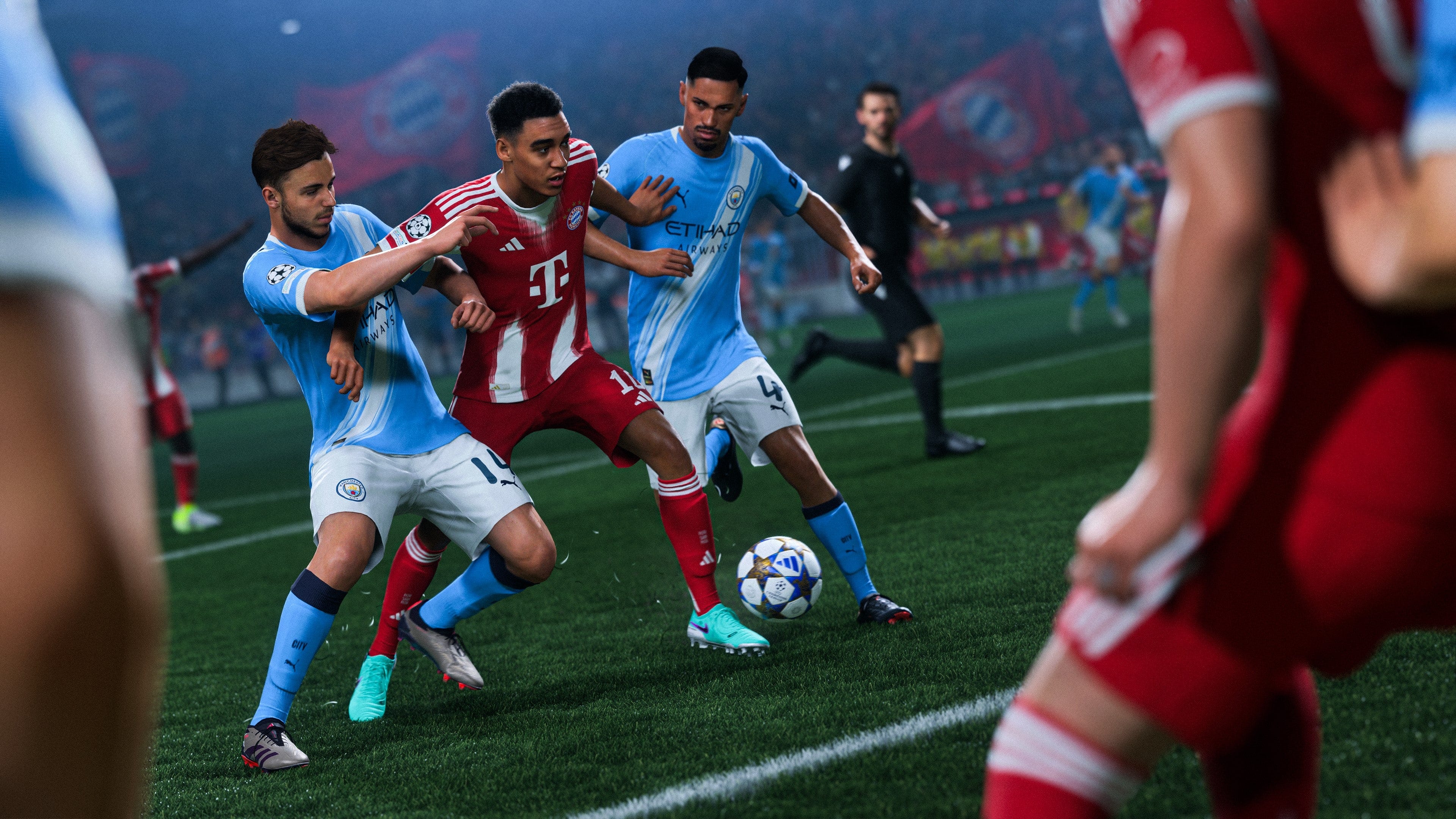
While the adoption of generative AI in voice performance is a contentious issue - ranging from SAG-AFTRA strikes to even my own op-ed on its usage in Arc Raiders - sports commentary always struck me as a sensible place for it be adopted. As Mowbray himself states, working on commentary for sports games is a “never-ending job” as they need to update voice work for new player - with over 20,000 names in more recent entries as they include more leagues in both the men’s and women’s sport - plus addressing new terminology, and adding flavour. As Smith says the team works on this for hours a day for months of the year, and it adds a lot of strain to their voices as they add lots of different variations on the same sentence - given it has to have contextual relevance - all the while ensuring their voices “have to be perfect”.
The use of AI is seeking to remove some of the strain on their workload, while working to maintain the overall quality. It’ll be interesting to see how this all comes together in future versions of the game.
Supercell’s Plans to Kickstart AI Innovation
As regular readers can attest, 2025 was a pretty crazy year in the space of AI for video games. There’s a lot of companies making moves throughout, but the one I was watching from afar is perhaps not who many would think of, the mobile gaming giant Supercell.
Headquartered in Helsinki with offices and studios across the world, the studio famous for titles such as Brawl Stars, Clash of Clans and Clash Royale had been exploring the current state of machine learning and generative AI for game development; hosting an AI meet-up in San Francisco during GDC, and at other events in cities where their studios were based - ironically I was invited to one in London last year, but I was visiting a client in Helsinki.
The Three Horizons: The company has established an AI strategy focussed on ‘horizons’ that lean on three verticals: of operating smarter and faster, of proving out features for new game ideas, and experimenting with new frontiers for players to engage with Supercell IP.
All of this is supported by what would become Supercell’s AI Innovation Lab: an idea that originated as a 10-week pilot programme for game/AI creators in the spring of 2025 in their Helsinki offices. The studio has since become very excited about the possibilities, with this year’s initiative running as a 9-week incubator programme across multiple sites around the world. This year the studio is now having three cohorts run in parallel, having opened up a new AI innovation lab in their San Francisco offices last fall, and the dedicated hub in Tokyo opening in March this year.
Here Comes a New Challenger: Now let’s face it, Supercell isn’t the only company making these kinds of moves. But unlike many others they’re moving fast, and they’re increasingly public about their efforts. All that said, from the outside-in, it’s difficult to determine their intent, and ultimately what they hope to achieve. Late last year I had a chance to sit down with Taavi Paananen and Matias Varjonen, the team behind the first Supercell AI Lab in Helsinki, to find out more about their work, and whether all of this would pass the sniff test. It was a fun and interesting conversation, and it was great to see that we are aligned in many respects. So we had a follow-up chat earlier this month to discuss the 2026 iteration of Supercell’s AI Innovation Lab as applications are about to close on February 22nd.
Supercell’s Approach to AI
When I started hearing rumblings about what Supercell were up to at GDC last year - I had people texting me updates during their meetup while I was at another party - I couldn’t help but be a little cynical. After all, I’ve spent much of the past two years reporting in this year’s publication about all the half-baked and ill-conceived pushes companies are making into AI. Be it AAA companies delivering nothingburger statements for investors, to start-ups promising the earth and quietly fading into obscurity.
Of course for parity’s sake we’ve also seen a lot of companies come out, saying the right things, and doing interesting stuff, be it Ubisoft, Studio Atelico, Meaning Machine, Lingotion etc. But what was Supercell’s take going to be?

Focussing on the Players: What struck me from the get-go was the insistence on avoiding the very pitfalls and trappings of other studios. As Varjonen explained, the intent of the innovation labs is to act as an incubator for finding out what AI could offer to players, and not simply investing as an exercise in efficiency or cost-cutting .
“We see AI as one tool in the toolbox, while the player experience remains at the forefront. We don’t believe in AI for the sake of AI” said Varjonen. The intent wasn’t to jump into this wholesale and have the rest of Supercell fall in line, but rather have the work bubbling up from the labs be presented more broadly across the company; discussing whether this makes sense in the broader scheme of their development pipelines. After all, something that works in an incubator isn’t guaranteed to work when the complexities of real-world production bears down upon it.
“For us, the AI innovation lab is Supercell’s in-house incubator program. Its mission is to explore what is now possible in games that was not possible before.”
As we discussed over coffee, while many studios in the games industry are having conversations about the value of AI - be it tinkering with tools, running pilot programmes, or working to placate investors - very few speak about it publicly. Heck it’s how we wound up sitting down together, given I knew they were making moves - and while we’re one of the few publications out there discussing both the pros and cons of AI in the games industry. As he explained, it was important for Supercell to not conduct this R&D behind closed-doors, but instead try and encourage the conversation on AI in the sector.
An Opportunity for Game Creators: As Matias explained, “AI has levelled the playing field for builders: allowing anyone with a vision to hop on the developer’s seat. Yet there is a lot of unhappiness within the industry, be it lack of funding, a shift in the market, or changing player expectations.” These are issues I’ve discussed on the newsletter throughout this past year. The game market is currently highly volatile, and inconsistent - with the likes of Wildlight’s Highguard and Riot’s 2XKO sadly being the first casualties of 2026. Plus as we discussed with Carli Stein and Cassia Curran last year, the investor market on both sides of the AI/gaming sphere is still a challenge.
This is where the innovation lab hopes to provide an opportunity for people interested in exploring recent innovations in AI. Both in terms of the all-important monetary support, but giving people an opportunity to gather meaningful feedback from developers and players. Varjonen describes their ambition for the innovation lab to “be a lighthouse. To help people find their place, and launch their crazy visions. We have the launchpad, they just need to build the rocket.”

The 2026 AI Innovation Lab
The plan for the 2026 innovation lab is for selected participants - be they individuals or entire teams - to spend 9 weeks with a suite of tools and resources at their disposal to work on crafting new game ideas and concepts using contemporary AI technologies.
Starting with a week-long kick off bootcamp in Lapland, Finland, the remaining 8 weeks take place at one of three labs sites (Helsinki, San Francisco, Tokyo). Participants receive financial support to cover housing and essentials during this time, and will be provided office space to set up their projects, mentoring from staff at Supercell, as well as have the opportunity to engage with the company’s broader ecosystem to get feedback on their ideas. Including participating in a demo of their projects that could lead to their projects being spun up internally within the company, and a permanent job alongside it.

Support Comes in Various Forms: Naturally if we’re talking about modern AI, especially generative AI, that also comes with a cost attached to it. Training and deploying generative models is an expensive proposition, and so Supercell are providing 50k in credits for compute - allowing for AI models to be trained, iterated upon, fine-tuned, and then deployed - plus an additional 20k for testing their ideas out with real users. This can mean running pilot programmes on prototype projects, and supporting the overheads of deployment, and ensuring the additional compute costs for hosting an AI model on the server are covered.
While there is an opportunity to demo the projects at Supercell HQ, the thing that did catch me by surprise is that despite so much investment, they are not enforcing equity or intellectual property rights. Should participants conclude their time with the lab and decide to take their ideas elsewhere, they’re free to do so.
Paananen summarised it pretty succinctly: “It is not often that the best company in its field opens up its doors for innovation, takes no IP, and simply pays for all flights, housing, and other necessities for 9 weeks.”
Well, no… it’s not that often at all.
Apply by February 22nd
I’d be remiss to point out that the deadline for the innovation lab closes this week!
If you’re interested in applying, here’s some key information you:
Application Deadline: February 22nd 2026 (i.e. this Sunday)
Program Period: March 23rd to May 2nd 2026.
Location: At one of Supercell’s AI innovation labs in Helsinki, San Francisco, or Tokyo. With the opening week being a bootcamp held in Finland.
How To Apply: Visit ailab.supercell.com and smash that apply button.

Participants are expected to be on-site at one of the three sites throughout the project. So do bear that in mind. Someone’s going to need to look after the cat!
Wrapping Up
What comes out of Supercell’s Innovation Lab this year will certainly be worth watching out for - and who knows we might be able to deliver a follow-up on that later in the year.
In the meantime, thanks to Taavi and Matias for his time, and best of luck to everyone applying for the innovation lab. It certainly seems like a unique and exciting opportunity.
As for us, we sadly don’t have time to spent 9 weeks hacking away at prototypes, we have work to do! In fact next week I am in Lisbon as I present a keynote for the 2026 Gamescom Dev Leadership on AI in the video games industry - shock surprise - and while I won’t be able to talk much about what I’m up to, we will still have an issue of AI and Games in your inbox on Wednesday. See you then!
Good article, generative AI for commentary isn't an awful idea, I dare say pretty good. The same voice lines over and over can get tiresome so having an AI generate them can mix it up at least