

Bobium Brawlers Brings AI-Generated Monsters to Mobile | 29/01/26
We chat with Studio Atelico about their newly announced creature battler.


Intel’s Downgrading Consumer Output to Pursue More AI
Ubisoft’s Recently Announced AI Push Is Also Politically Motivated
South Korea’s AI Legislation is Kicking In
We chat with Studio Atelico About Their Newly Announcement AI-Native Card Battler
The AI and Games Newsletter brings concise and informative discussion on artificial intelligence for video games each and every week. Including industry news, innovative research, emerging trends, and our own exclusive editorial and reporting.
You can subscribe to and support AI and Games, with weekly editions appearing in your inbox. If you'd like to work with us on your own games projects, please check out our consulting services. To sponsor, please visit the dedicated sponsorship page.
Hello one and all and welcome to this week’s edition of AI and Games. Now we have a quick apology to make given this is going out on Thursday, and not on our regular Wednesday. I hope this wasn’t too disruptive to your week, and that you survived not having us with you yesterday. Don’t worry, things will go back to normal next week.
The reason we got pushed back is the focus of today’s issue. Earlier this week Studio Atelico hosted a PR event for their new game Bobium Brawlers, a mobile game that is using Generative AI models running on device to create a monster battler game. Players can create their own monsters in real-time by designing them using natural language, and and then refine them into your very own king of ring.
This is the first game out of Studio Atelico, and the team were keen to highlight Brawlers will showcase how they aim to adopt generative AI in ethical ways in game productions. So we sat down for chat to discuss what that really means, and what the studios hopes are for this project.
Follow AI and Games on: BlueSky | YouTube | LinkedIn | TikTok
Announcements
A quick round-up of interesting things happening right here at AI and Games:
Design Dive Returns for 2026
We published our first video of 2026 over on YouTube. Design Dive is back as we talk about Ninja Gaiden: Ragebound - one of my 2025 GOTY picks - and how it keeps the core difficulty brought on by enemy NPC encounters consistent and then provides players with a range of difficulty options. You can catch it as a video or in the written version below.

Thanks to Game Republic
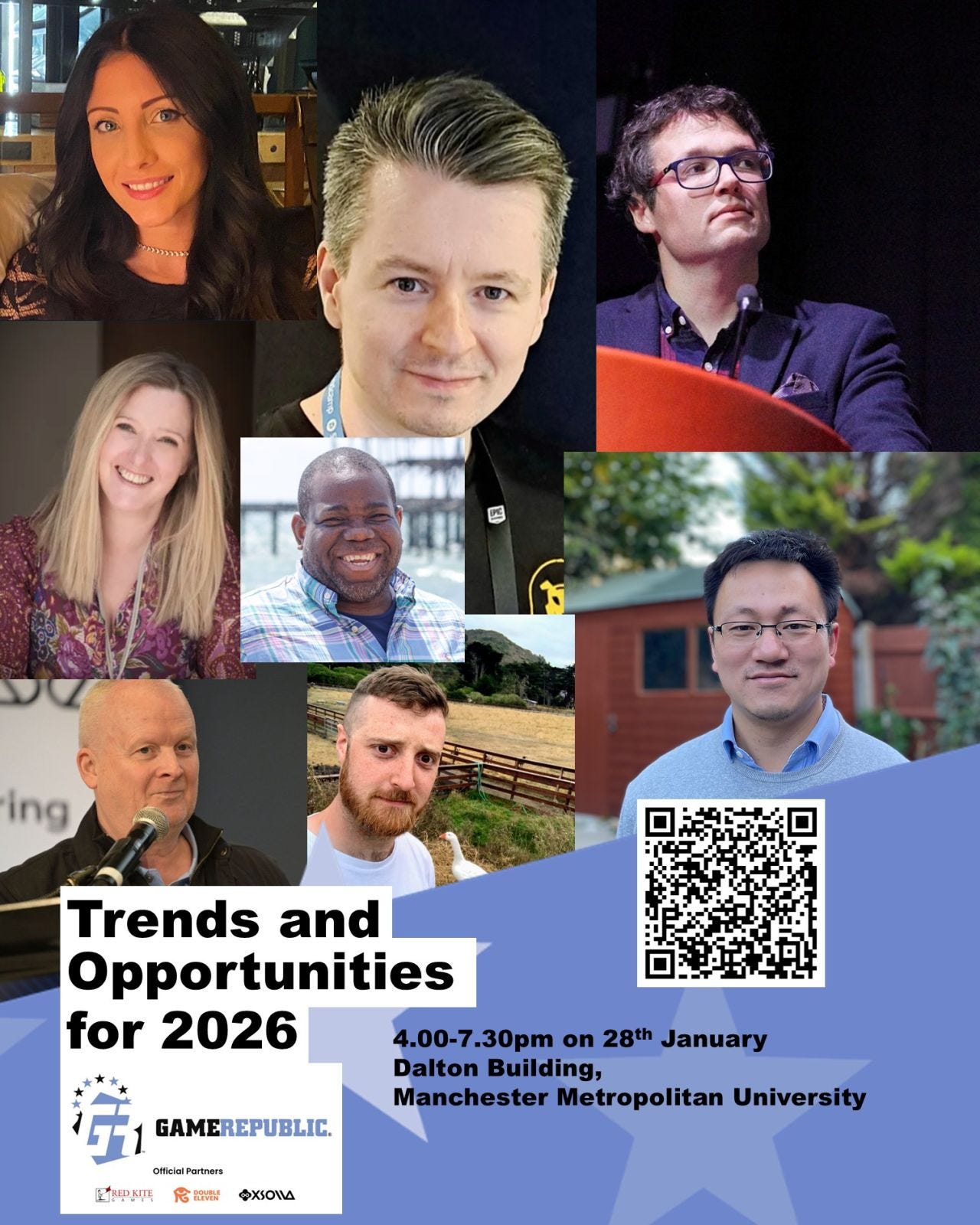
Special thanks to Jamie Sefton and the team at Game Republic for having me present at their 2026 Trends and Opportunities event in Manchester yesterday. It was a great evening with a lot of cool presentations, and it was good fun catching up with new and familiar faces. My presentation was largely built on my predictions for 2026 newsletter from a few weeks back - with some additional flourishes from my Devcom talk last year. So yeah, if you just caught me presenting last night - welcome aboard - and would like to know more about many of the topics raised, check out the link below.

Oh also, speaking of Devcom, or Gamescom Dev as they call themselves now…
Keynote at Gamescom Dev Leadership Summit
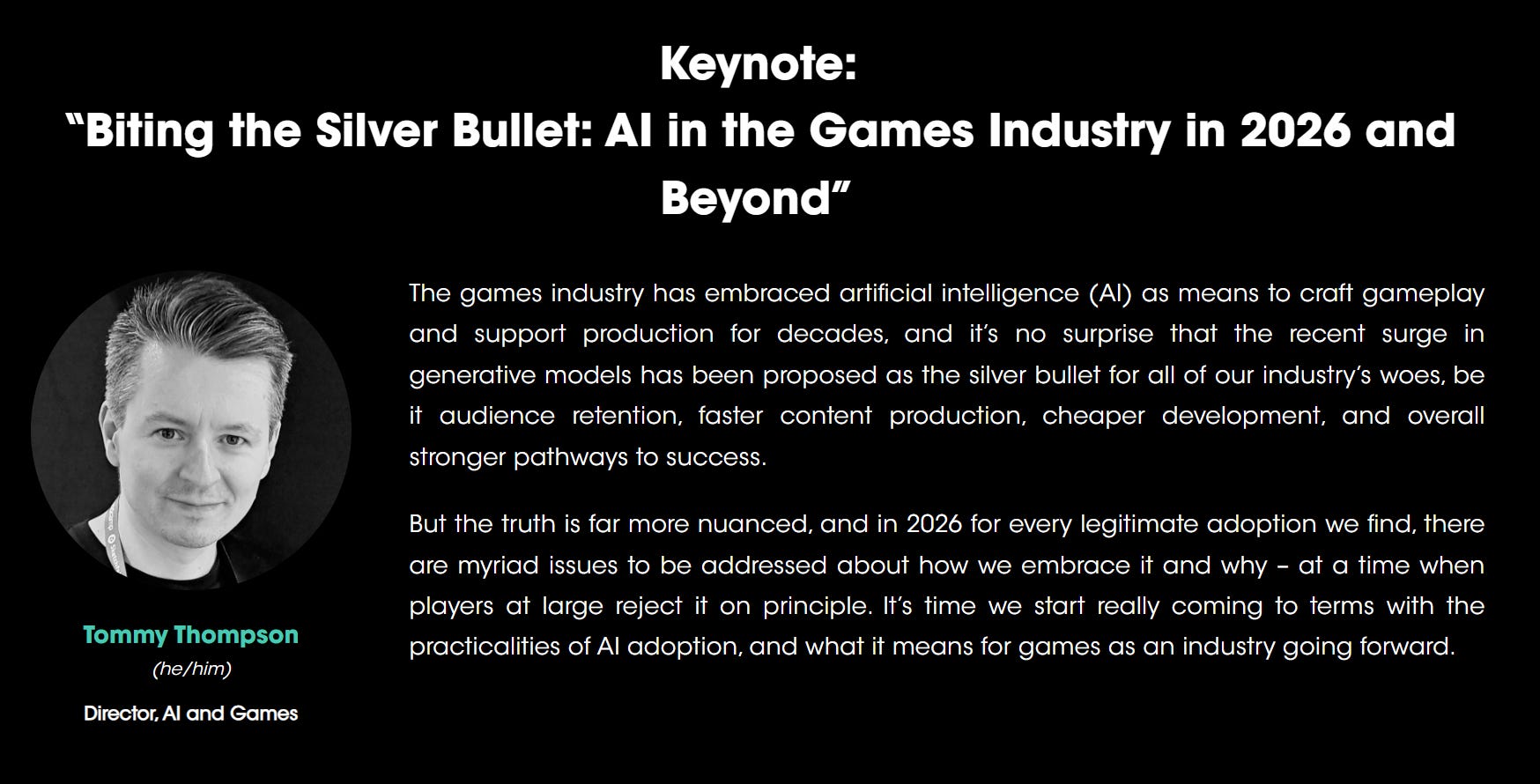
I’m sure it was announced already on socials but I noticed there was a bit of a news push behind it earlier in the week, what with it appearing on GamesIndustry.biz and a few other places, but yes I’ll be presenting a keynote next month at the Gamescom Dev Leadership Summit in Lisbon. One of the big talking points in the press release was about talking about “AI disruption” in the industry, yeah… that’s me.
I have my work cut out for me, but it should be a fun event! Looking forward to it.

AI (and Games) in the News
A quick round-up of some headlines that crossed my path earlier this week.
AI Backlash in Games Garners Mainstream Attention
Short and sweet, The Washington Post wrote up a piece about recent AI backlash on everything from the failed Postal reboot, to Claire Obscure and Larian’s spectacular PR goofs. It further cements the idea that gamers are increasingly unhappy about AI slop creeping into their games, and that this is going to become a long-term issue that will become a louder and more consistent narrative in this year and beyond.
Ubisoft’s Restructuring Highlights Further Investment in (Generative) AI
Ubisoft’s announcement of significant restructuring - which includes closure of two studios, the cancellation of numerous projects (including the seemingly imminent remake of Prince of Persia: Sands of Time), a re-commitment to existing franchises, and potential layoffs - was undoubtedly the biggest story to drop last week.
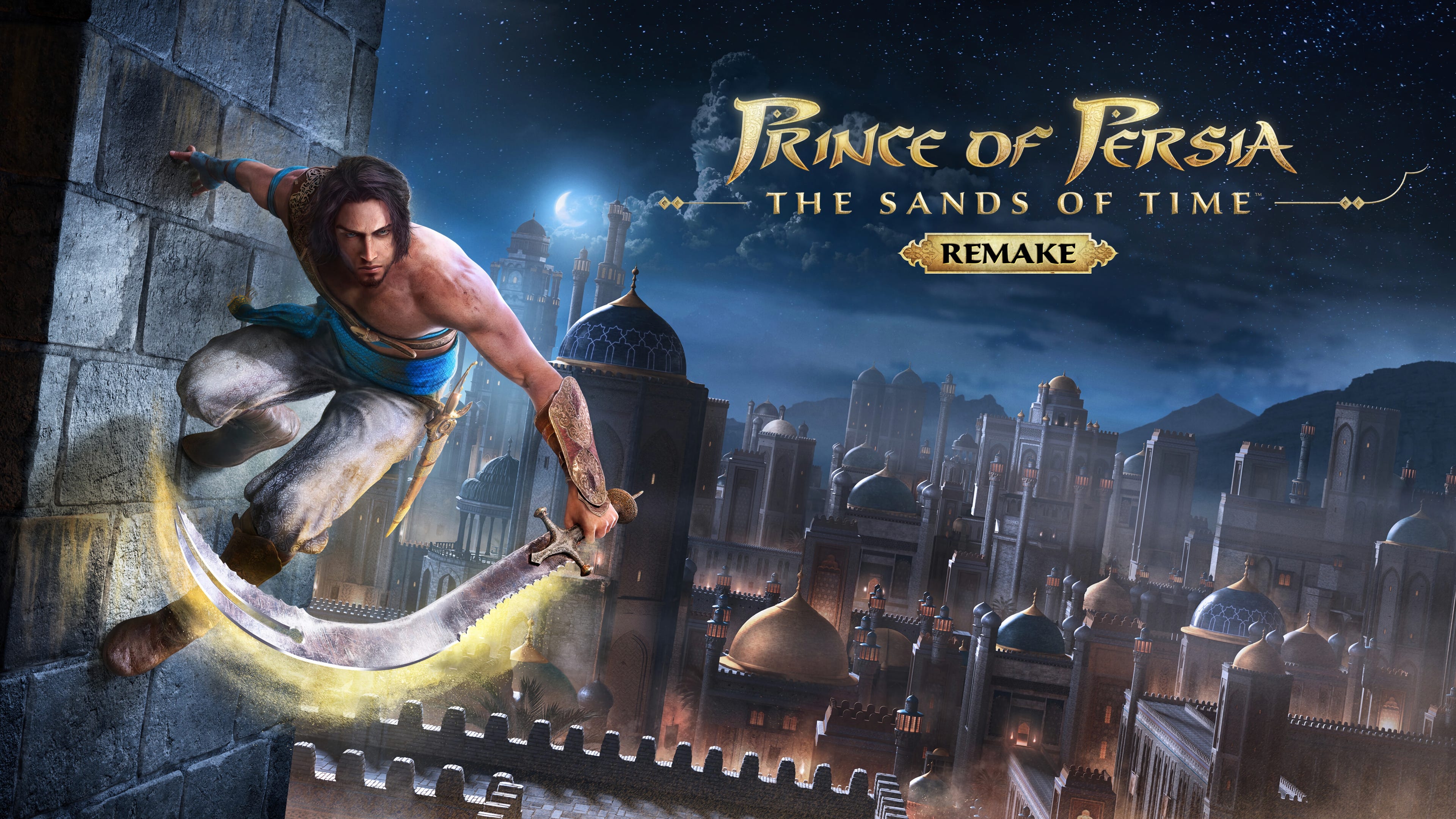
One part of this story that received focus across numerous outlets, notably PC Gamer, was the company’s intent to double-down on their investments into Generative AI. To quote the announcement shared around last week:
"The new operating model will further empower the execution of the Group's strategy, centered on Open World Adventures and GaaS-native experiences, supported by targeted investments, deeper specialization, and cutting-edge technology, including accelerated investments behind player-facing Generative AI."
Now understandably, this reads rather out of touch as the company shuts down both Ubisoft Halifax in Canada and their offices in Stockholm, Sweden, plus opening a consultation to cut 200 jobs in their Paris HQ. It sucks, frankly, but I wanted to give a bit more context to the political motivations behind stuffing AI in the announcement.
If you’ve been following Ubisoft’s work in AI over the past 10 years, you’ll know they’re no stranger to R&D in the technology and how it can be employed in their productions. They have dozens of sites around the world focussed on exploring and experimenting with AI in their games - be it front facing or in production. More recently they’ve worked on a handful of Generative AI demos. Notably the NEO NPC and Teammates projects - both of which we’ve reported on - that are coming out of an R&D team in headed up in Paris. This isn’t ready for primetime yet, and I argue it probably won’t be for a couple of years yet: a point that the developers themselves acknowledged both times I was invited to try these demos.
So why the emphasis on AI in the announcement? Well for one thing I imagine appealing to investors at a time when stock is taking a hit wouldn’t hurt, but the bigger story is in political alignment. Ubisoft are heavily involved in the France 2030 project, a €54 billion investment by the French government to ensure businesses and broader society are ready to engage with and maximise utility of AI systems (by 2030). The initiative is but one part of the country’s much broader PIA: ‘Programme d’Investissements d’Avenir’ (i.e. Investments for the Future) programme to stimulate economic growth and innovation.
Ubisoft have already received some financial support from the French government towards their AI projects courtesy of France 2030, so it’s in their best interests to bang that drum.
Intel’s Committing to AI - and Gamers Will Suffer
As reported over on ArsTechnica, Intel profits have continued to slip in recent years, but only in the commercial side of their business. Meanwhile the AI side of things - providing chips to data centres - continues to see healthy growth year-on-year of around 5%.
But as discussed on Intel’s earnings call, they’re struggling to supply enough AI product. They simply cannot make enough chips to meet the demand coming from data centres and other AI companies. As such there is a good chance that this will mean a reduction in capacity for consumer-focussed product, and an increase in cost along the way - just as the new generation of Core Ultra Series 3 processors are expected to hit the market.

Intel have been an interesting beast in the past decade or so, leaning heavily into the data centre market having completely missed out on mobile, and with the consumer PC space largely levelling off. Data centres, and AI especially, are now critical to them maintaining the product margins they need in order to continue to invest in their own tools and technologies.
As an aside, I’ve been reading Chris Miller’s ‘Chip War’ recently, and so its been interesting to see all these recent pivots by chipmakers in context of their historical business practices.
How Will South Korea’s New AI Laws Impact the Games Industry?
Well hey, I haven’t mentioned the law here for a few weeks, but here’s an interesting one that slipped past me. Earlier this week South Korea’s Framework Act on the Development of Artificial Intelligence and Establishment of Trust came into effect. As reported this does have some key elements that games studios both in South Korea and beyond have to take into consideration. Most notably the labelling of AI-generated content in games, and how this will apply to any game from any studio should they wish to ship in South Korea.
I need to dig into this some more, alongside the responses to the AI consultation by the UK government in a future issue.
Studio Atelico Announce ‘Bobium Brawlers’, the Ethically-Built AI Card Battler
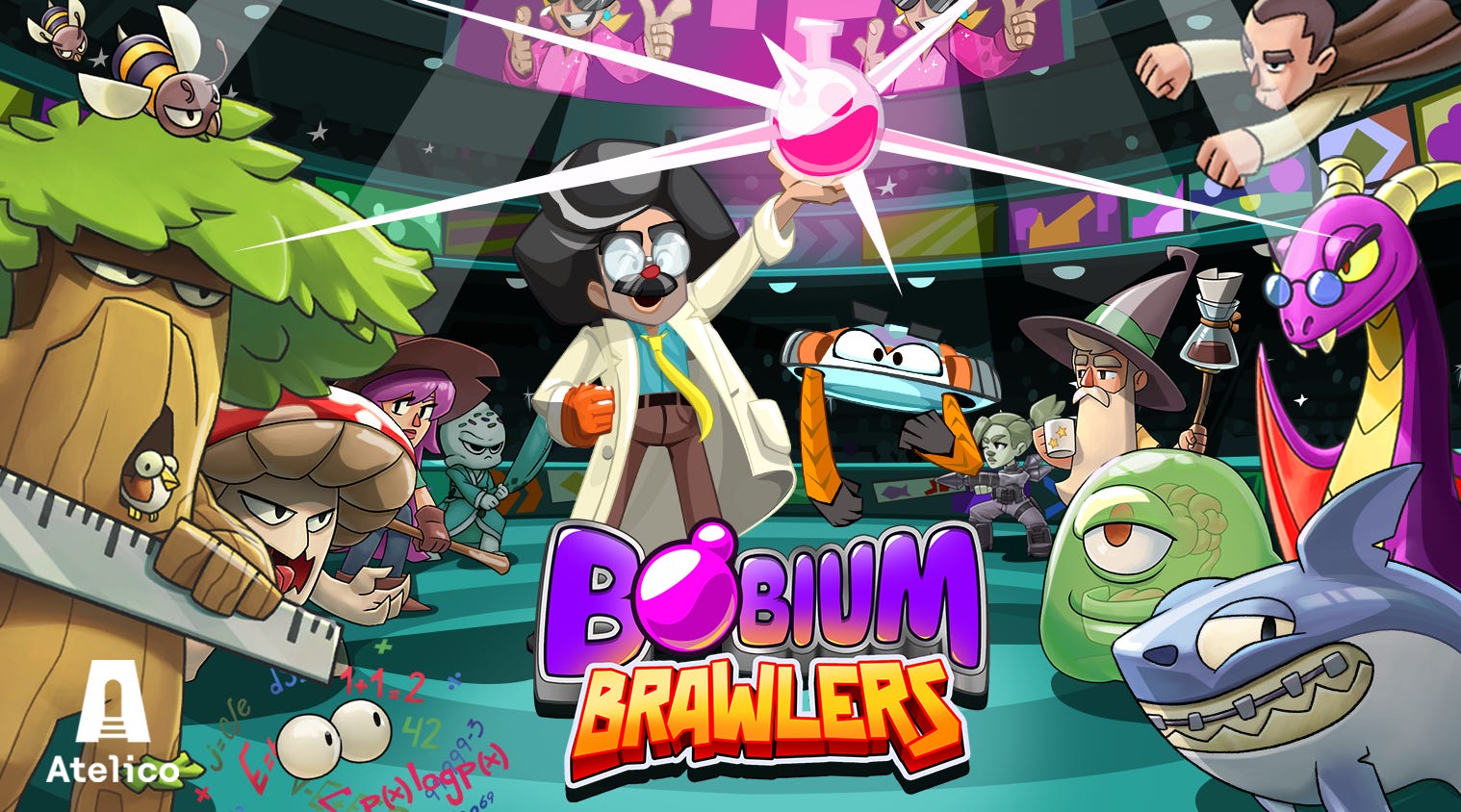
Earlier this week, Studio Atelico - an AI-first games studio founded by former developers at Uber, Meta, and Sega, announced Bobium Brawlers, a turn-based card battler launching on iOS where players get to design their own monsters to do battle against other players. The trick behind it, is that players use generative models to create their monsters, both in terms of their name, description, attacks as well as their visual look and overall style.
If you're a regular reader, you might recognise the studio given they presented at the AI and Games Conference last year about the work they’ve been doing in building the Atelico AI engine, with a focus on small generative models that can run local on device - meaning they don’t run in the cloud and require an internet connection - but also with an emphasis on ensuring they are built ethically. Sadly we’re still editing up the talks, but we hope to share it with you in the coming months.
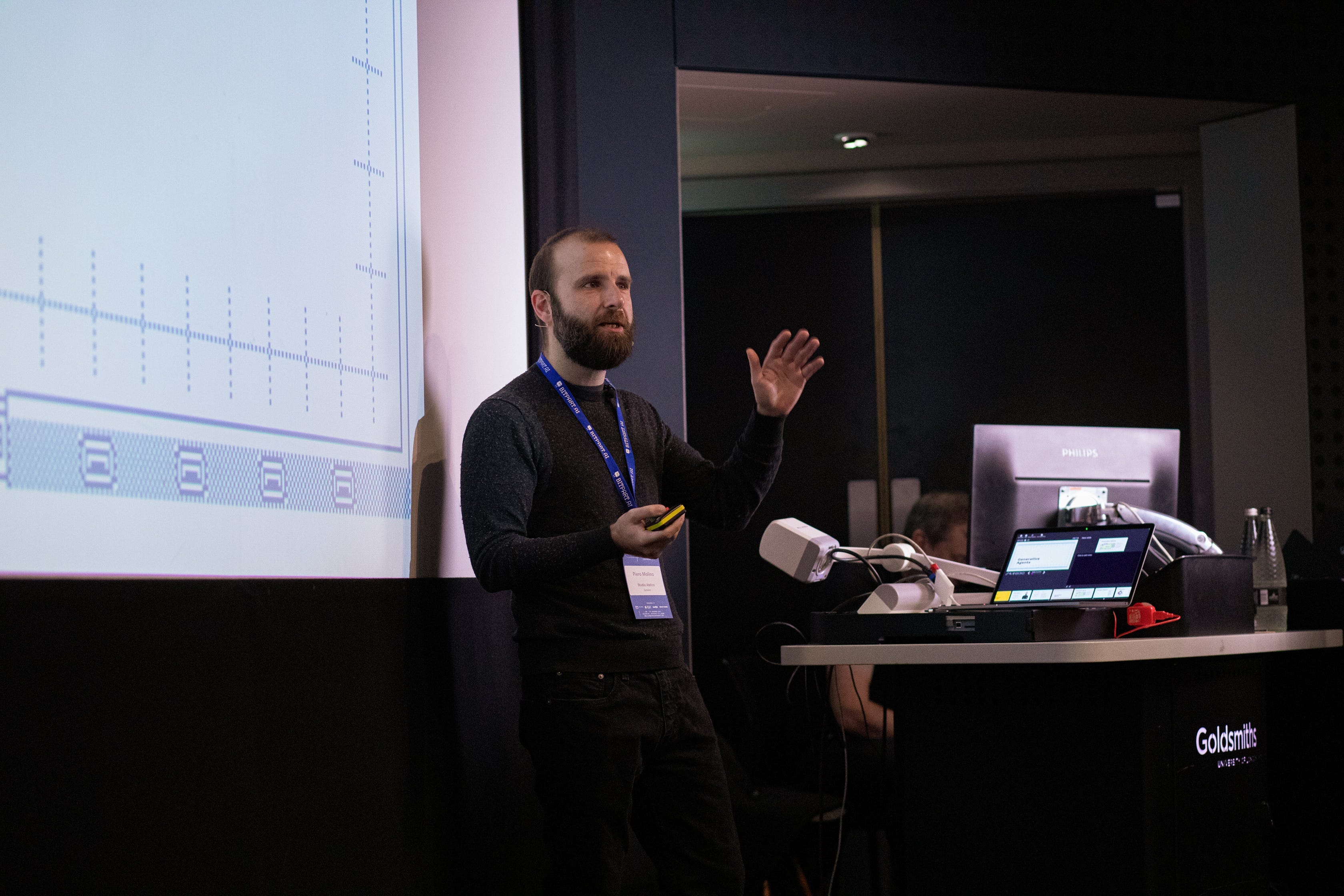
Having previously worked on the Generative Agent Realtime Playground (GARP), which sought to reproduce the Stanford AI ‘sims-like’ generative agents project on device and without the use of cloud-based AI, Bobium Brawlers is Atelico’s first real push into shipping their own game. It’s also a real test of their overall philosophy, both in terms of using these technologies to make something interesting for mobile platforms, but also in trying to set the tone for ethical AI adoption that could resonate with players. So I sat down to chat with studio CEO and co-founder Piero Molino to talk about the team’s experiences, and to go a little deeper on what to expect when the game launches on iOS in the coming months.
“The most fun part of the experience was creation.”
Finding the Fun
The game’s card battling mechanics struck me as a real deviation from the GARP project we’ve previously seen come out of the studio. So it was interesting to me to see how they’d transitioned from one concept to the other. As Molino explained, it was a process of finding game mechanics that could both utilise the foundation of their AI engine, while also providing a sense of fun in exploiting what the models could generate for them.
“Very quickly, it became clear that the most fun part of the experience was creation.” Resulting in them leaning into the idea of giving players the opportunity to craft weird and wacky monstrosities, with the aesthetic pulling on the likes of Futurama and Rick and Morty, and even Mega Man.
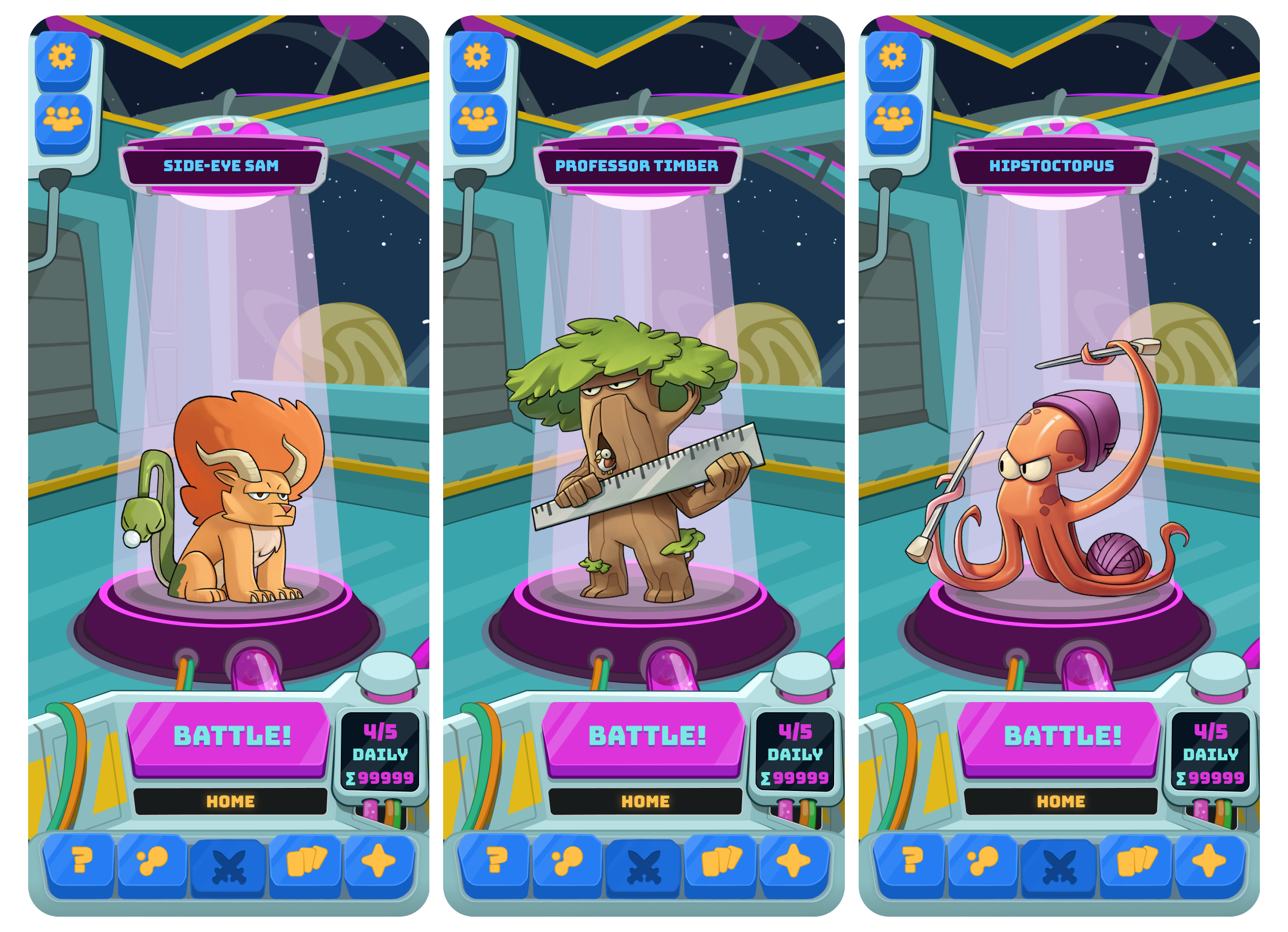
But of course the game needs to have something of substance underneath it, and it’s notable that Bobium Brawlers is building these AI-generated characters within an established card-battling system designed by the team at Atelico. “[With GARP] the joy was entirely driven by emergent character behaviour”, but this time around the team wanted to explore how you can build using a generative model that is constrained by an existing gameplay system and architecture.
“This introduces a much trickier balance” as Molino explained, given the game mechanics are constrained by a domain-specific language (DSL) that reinforces the core logic of the game. Both in terms of how the player’s input influences the creation of the brawlers, but also the constraints that impact what is attainable given both the player’s current resources, and the underlying balance of the game’s design.
Building Thematically Sound Brawlers
While the main push in the announcement was about the ability to create your own brawler that takes on your ideas in its metadata and aesthetic (which we’ll come to in a moment), for me I was really interested in how it influences gameplay. After all we know that an LLM can be used to tell stories and summarise or describe things as verbose or as succinct as we’d like, but how are they interfacing that with the underlying rules of the game?
Brawling Within Constraints
As Molino explained, the Studio has been learning that “finding the right spot on the spectrum between ‘the LLM decides everything’ and ‘every detail is hand-designed’ is the central challenge of building games with generative mechanics.” My first thought was the studio needs to be feeding a lot of information to the LLM that designs each battler, such that it retains the overall design and balance of the systems they’re playing in. Otherwise the LLM will simply build a card without understanding the context of how it fits into the game’s overall meta.
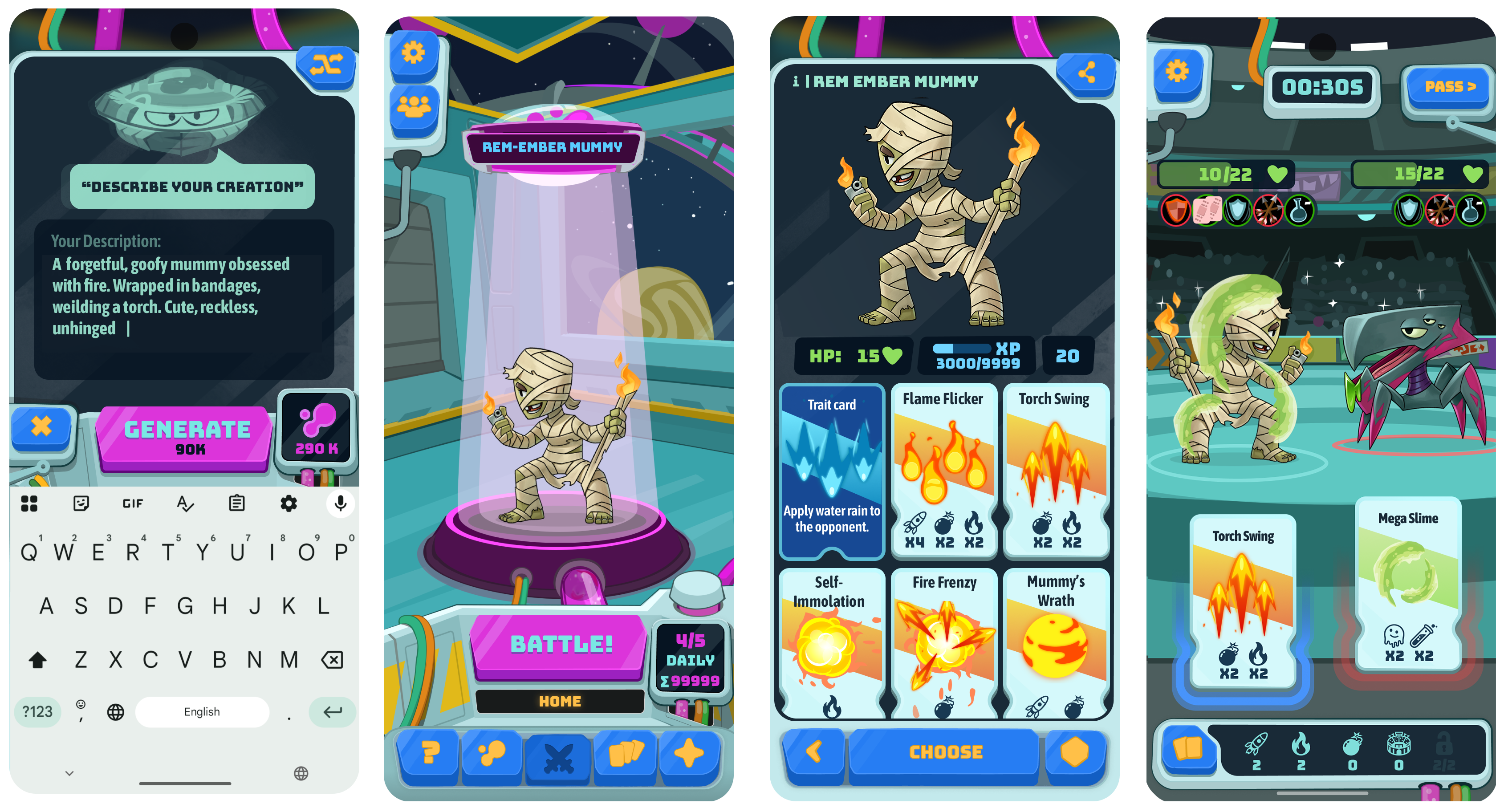
The core of Bobium Brawlers battle system is built by the dev team themselves. Not just with the aforementioned DSL language they’ve built to define brawlers, but also they have a complete bible of how the game operates that is fed into the LLM when it runs. This includes the rules of the game, handcrafted examples of cards that make sense in the game world, and a series of archetypes evocative of decks that players might craft. The resulting cards are then output in the DSL which means they can immediately be parsed and interpreted in-game for use.
But the LLM is doing more than just the surface-level information of the characters name and personality. It’s also deciding how the character is designed for combat. Like similar games in the genre, the attack system relies on mana for using specific cards, with different attack types using different types of mana. The system both from its own internal musings and the players inputs, will generate attacks that are thematically relevant to a given character - complete with appropriate mana usage and status effects. Hence should the player asked for a pyromancer mummy, the resulting output has most of the attacks be fire-themed, deal fire damage, and require the appropriate mana.
This concept is expanded further, with the player’s descriptions often influencing the attack design itself. Asking for a “forgetful tortoise” will lean towards more defensive and tank-like gameplay styles, while a “wild wolverine” will be fast and aggressive.
Balancing for the Long-Term
Naturally the game designer in me wondered just how far down the rabbit hole the team had evaluated this. Feeding the design and balancing rules to the LLM is one thing, but playtesting it such that you can guarantee that players don’t discover a game-breaking loophole or that the meta doesn’t stagnate within a few generations of monster evolution is something else entirely.
At this time the team has ran a statistical evaluation of the model and corresponding outputs that refined the design decisions of the overall game blueprint. Only time will tell how well this fares, or how fun it remains, when the game is put into hands of players.
“We also want to demonstrate that AI can be used in games in a way that feels morally responsible and sustainable.”
Deploying (Generative) AI on Mobile
While Bobium Brawlers isn’t the first AI-native game to cross our paths, given we’ve talked about everything from Retail Mage to Millenium Whisper, AI2U, InZoi, Dead Meat and more this past year on the newsletter, it is doing something that stands out. Some of those games were moving towards on-device deployment of AI models, but they were all destined for PC and Steam. But Studio Atelico decided to launch this game on iOS: a completely different and equally demanding market, albeit with a more streamlined and consistent hardware profile.
The studio is doubling-down on this approach, given they see on-device as means to showcase the potential to use Generative AI more responsibly, describing the approach as “more private, and more environmentally friendly” and giving users “greater control over their data”.
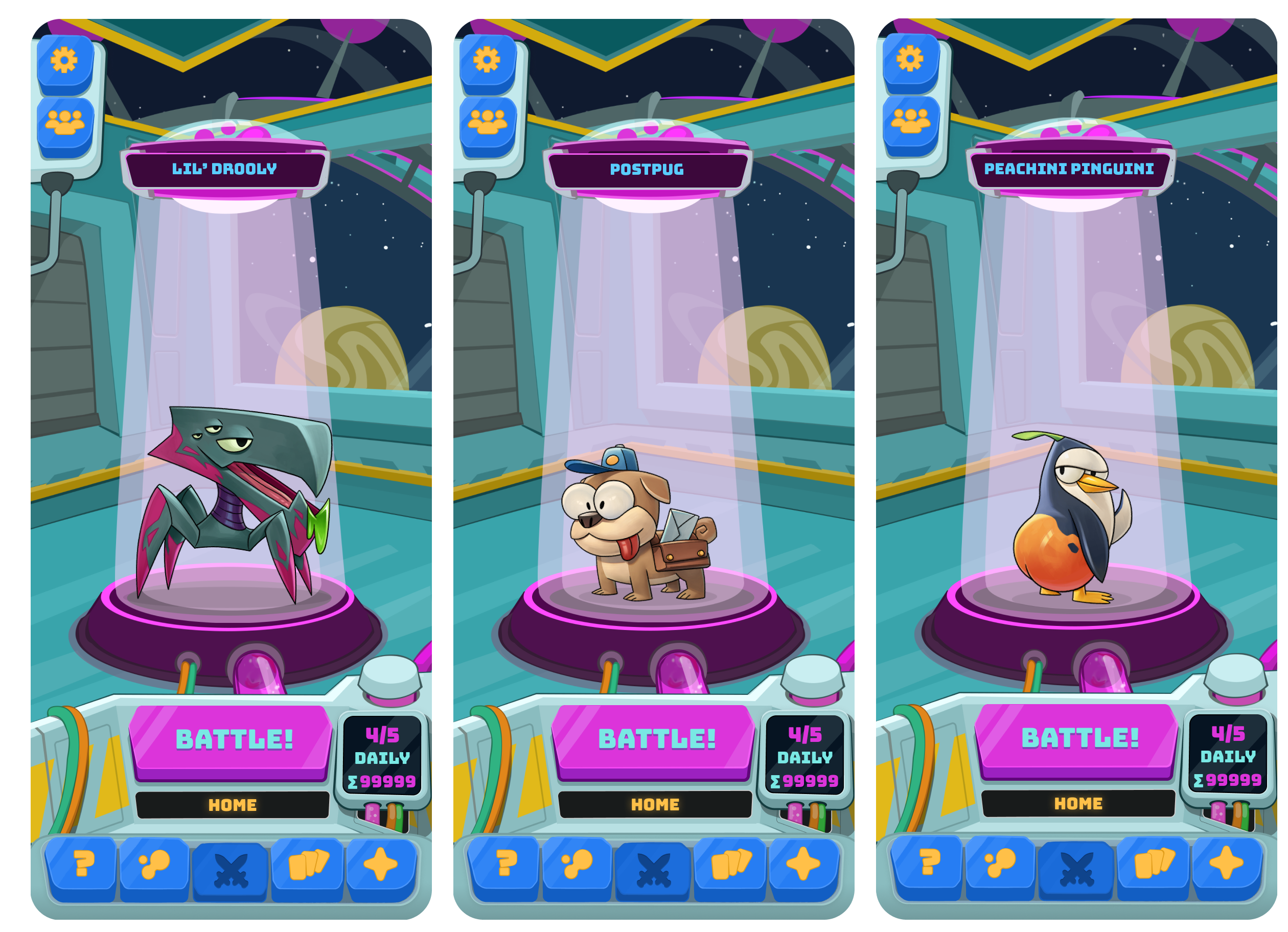
But on top of this, there are also pragmatic business reasons, given hosting a game like this on a server and having it repeatedly poll the LLM would be incredibly expensive. This why I’ve repeatedly stated in my predictions issues that on-device is going to flourish, because it’s the only way to make these generative models economically viable in a game production.

But this brings with it another challenge, given the models have to be smaller, and in doing so often begins to impact quality. This was a point that was raised during our conversation with Meaning Machine late last year as they try to bring Dead Meat to market.
Given the experience of the engineers at Studio Atelico, the process of fine-tuning the models to be smaller was one they were prepared for. For them it was about ensuring the models are adapted specifically to suite the game while ensuring it retains their desired quality.
Right now the models fit within roughly 2GB of RAM when being used on the device -for context iPhones have had at least 4GB of RAM since the iPhone 12 in 2020, with the base iPhone 17 from 2025 running on 8GB. This model can then generate creatures within tens of seconds, which Molino feels is “a reasonable compromise”. Right now RAM is the main constraint the team are worried about, and our experimenting with keeping the base installation of the game smaller by having models download and update as you play.
“It starts with a clear contract that defines exactly how the art will be used and any limitations based on the artist’s preferences.”
Ethically Source AI Models
Since I crossed paths with Piero and the Atelico team last summer, the one thing about their business that’s been reaffirmed time and time again is that the studio is focussed on ethical AI adoption. Either using existing AI models that are derived from fully licensed datasets, or building their own using their own data. The studio went so far as to outline their ethos in a blog post last year in part as a response to Rez Graham’s “Human Cost of Generative AI” presentation at GDC 2025 - a talk that leans on a comment I made at the GDC roundtables in 2024.
It was certainly amusing given I didn’t anticipate it, and I was sitting in the front row.
So when Bobium Brawlers was unveiled, a big talking point from the studio was their desire to do this as ethically as possible, and it was important for me to dig into what that meant and taking them to task. Given I think we can see studios wax about how ethical they are provided it fits within some defined capitalist framework - see my piece on Arc Raiders from late last year.
But unlike GARP, which only relied on an LLM, this new project is also generating the art assets for each card. Hence it’s now also dealing with art generation as well, and the challenges involved in that process.
For Molino, it was important to “demonstrate that [Generative] AI can be used in games in a way that feels morally responsible and sustainable.” The on-device aspect is but one part of a larger approach which influences using base often from explicitly licensed data, fine-tuning the models using their own data, and remuneration and royalties for artists who contribute to the art generation process.
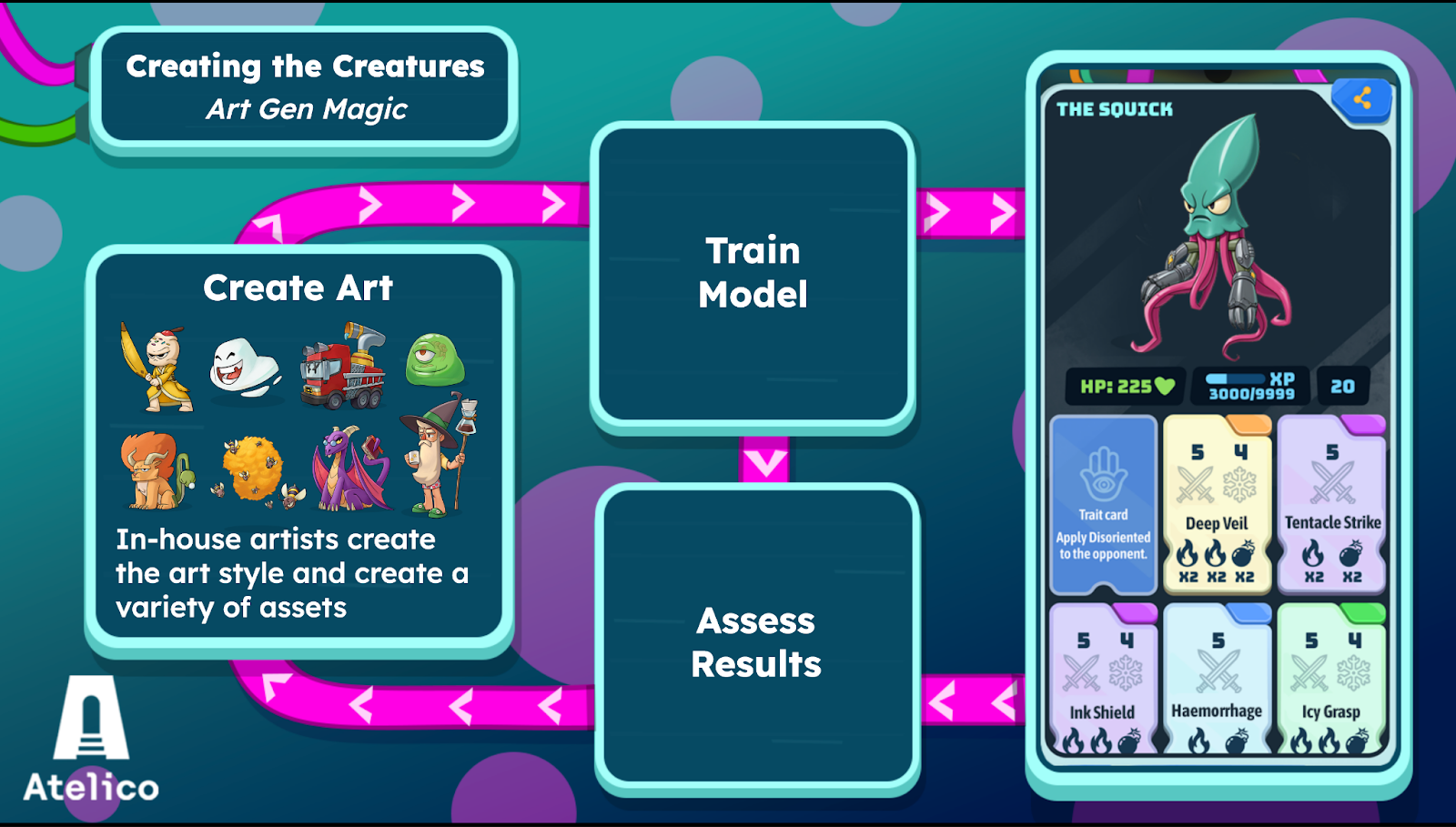
Artists who come on board are providing a contract the “defines exactly how the art will be used, and any limitations based on the artist’s preferences”. Right now they have only worked with a couple of artists, but the goal is to open source the contract in the future as an example of how to approach making this framework equitable.
The game’s rather colourful art style has required a more structured approach given the team wants to ensure that the art assets are consistent between monsters. With art director Mollie Boorman defining the overall visual style that would not only lead to the initial training data, but also give other artists direction on how to build within the game’s established universe. Encouraging artists to make lots of examples of different types of objects, animals, robots, and otherwise that would later influence the generation. With Molino stating they could start getting reasonable results with just a few dozen images in relevant categories.
Perhaps one of the most important things in the art, is that they lean into the quirks of art generators. As we know, AI art generators are prone to be illogical and inconsistent, with extra limbs, bonus fingers, and a lack of understanding of basic human anatomy. However, given the cartoony style of the art, combined with the rather wacky humour, it feels more like part of the charm. Molino stated that creature designer Jose Luna “has genuinely enjoyed seeing his style emerge in so many unexpected and wacky ways.”
Wrapping Up
That’s us for this week. Quite a meaty issue if I do say so myself. Thanks for sticking with us to the end, and big thanks to Piero Molino, Chris Olson and the team at Studio Atelico for giving us a behind-the-scenes look at Bobium Brawlers. We’ll be keeping an eye on it when it comes to market on iOS.
We’ll be back on Wednesday next week as we return to our regular release schedule. Meaning I better get started writing the next edition already. Can’t stop, won’t stop, etc. etc.
Take care folks!