

UK and China's Shifting AI Mandates | 31/07/26
Plus SK Hynix suffer(?) their own success, Xbox is on fire, and you can chat with Peely now!


Hello one and all and welcome to this week’s edition of AI and Games. I’ve still not quite got hold of this writing schedule after the past couple of weeks. So this is a little later than planned, but still I’m glad it’s now out and in your hands.

Before we kick things off today, I want to take a moment to thank everyone for their time while I was in Montreal last week. Our team had a bunch of meetings at a handful of games studios related to ‘stuff’ that one day we will hopefully be able to talk about in some capacity. The Montreal game development community were very welcoming, and we had around 15 developers turn up for our impromptu gathering over on Rue St. Denis.

It was so great to meet everyone, and I tried to work my way around to chat with everybody a little bit about themselves and what they do. Three hours is simply not enough, and I feel like I have many a conversation I need to finish! It’s lovely to be able to say we’re going to be in town and people actually turn up to hang out. It’s such a nice feeling, and thank you all for making us feel so welcome! Let’s keep in touch!
For this week’s edition we have a bunch of stuff to announce as always, but I spent the bulk of today going through the headlines and catching up with what’s been going down in recent weeks. Let’s do it!
Follow AI and Games on: BlueSky | YouTube | LinkedIn | TikTok
Announcements
Announcement time! All about the conferences…
Gamescom AI Tracks
Another week, more AI talk announcements, let’s do this! Oh and don’t forget to grab your ticket!
Note: On publication we announced a talk from Wargaming on World of Tanks: HEAT. We’ve since been informed that this talk is not going to be at Gamescom Dev this year. Apologies for the confusion!

Careful What You Wish For: Shipping Games in the First Era of Coding Agents
Duygu Çakmak / Creative Assembly
Our very own AI and Games Conference co-founder Duygu Çakmak will take the stage as part of the GameSkills series in collaboration with Gamaste. As we’ve discussed recently in the newsletter there’s much to be said about the rise in AI-generated code and agentic frameworks for coding that take over the ‘grunt work’ of programming. While this is proving to be quite an exciting push for software engineers, it also creates a lot of problems that run risk of derailing processes and workflows. Yes they can prove useful, but we need to work hard to build safeguard against it. Duygu and I had a chat last week about what’s going to be in this talk and I’m looking forward to hearing more.
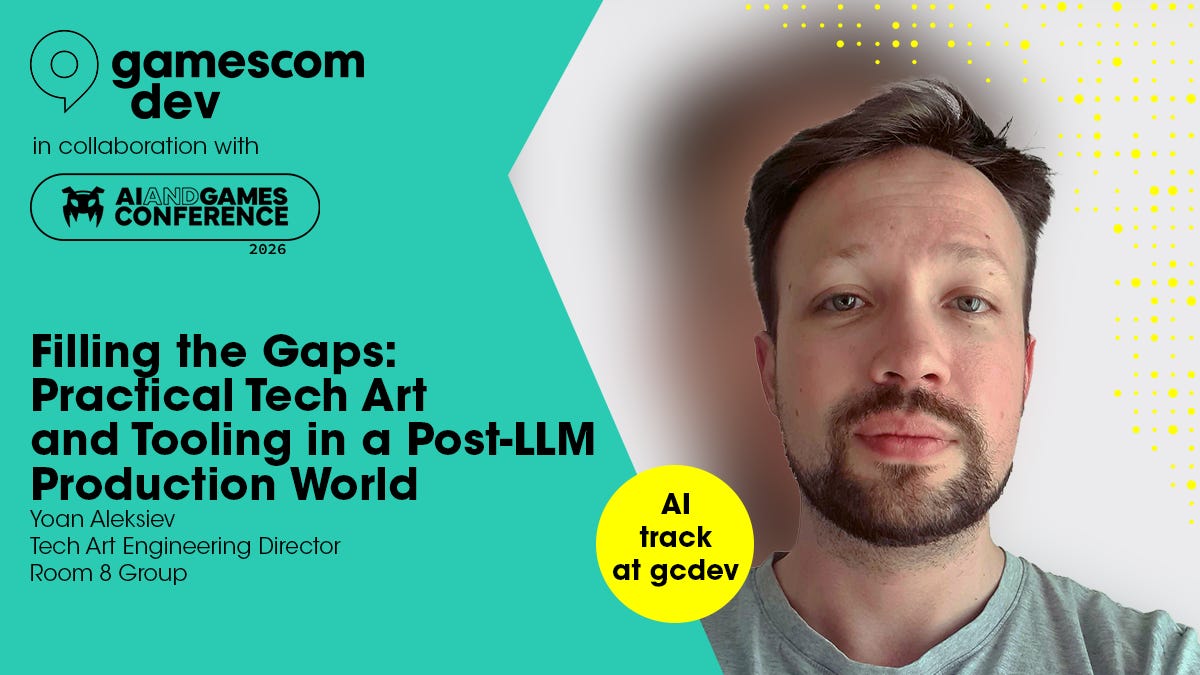
Filling the Gaps: Practical Tech Art and Tooling in a Post-LLM Production World
Yoan Aleksiev / Room 8 Group
As we see interest in LLMs in a variety of problem areas (see the last talk on coding agents), there’s also other disciplines keen to try it out. To that end we have Yoan Aleksiev from seasoned co-development studio Room 8 Group discuss where LLMs can help in practice or even fall-short in the highly challenging field of technical art.
AI and Games Conference
Plus of course our very own event has two updates this week!
2026 Deadlines Are Upon Us!
The final announcement for two big deadlines for AI and Games Conference 2026:
Early bird ticket sales close today.
‘Industry’ and ‘Indie’ tickets are already sold out. We still have some ‘Student’ and ‘Professional’ tier tickets available.
Fully priced tickets are also now live for all tiers.
Call for submissions closes on Sunday night (August 2nd).
We’ve had a surge of ticket sales and submissions this week - as is often the case approaching a deadline - and we already have a solid headcount for this year. We’re very excited to welcome everyone back to London in November!
More 2025 Videos!
Plus we just launched two more videos from the 2025 event. Both of which have a good bit of Unreal Engine in them!
Gemini in Unreal Engine: Enhancing Game Dev with Multimodal AI | AI and Games Conference 2025
Gabriel Ware, Juan David Hincapie-Ramos / Google
Recently Epic Games announced the ability to integrate LLMs into workflows of Unreal Engine 6, but this idea didn’t emerge out of nowhere. We had Gabriel and Juan visit us from Google at our 2025 conference to talk about their experiences of integrating their Gemini LLM into the engine and the experiments they have ran over the past year.
Elevating Mobile Game Experiences With On-Device ML Inference | AI and Games Conference 2025
Yusuf Duman / Arm
Right now we’re seeing a big shift towards AI deployment on mobile devices, particularly given the increasing efficacy of built-in AI compute. To that end Yusuf Duman from Arm talks about some of the work the company is doing in providing more streamlined and accessible tools for AI execution on mobile devices, complete with an Unreal Engine demo.

AI (and Games) in the News
Okay yup, we haven’t really been covering the news in recent weeks, so I figured why not dedicate this issue to a catch-up! Let’s just run through a bunch of headlines and discuss them in a little more detail.

Xbox is a Mess
Well since we last discussed Xbox’s broader strategy, in which I said it felt like a lot of platitudes and tackling easy wins with the audience, the other shoe has finally dropped. The solution it seems from Asha Sharma and team to Xbox’s woes in terms of product viability is to gut it throughout. This struck me as the inevitable outcome when you consider the changes in leadership across the Xbox division of Microsoft that brought in people across enterprise software companies (note, not games), combined with declining revenues, hardware prices increasing due to AI (which is partially Microsoft’s fault) with the fact it was time for the company’s annual layoff season.

With several studios being divested and sold off - with recently ‘released’ Double Fine still suffering layoffs as a result - many surviving studios have still suffered drastically. The stink surrounding id Software seems especially rough not just due to the studio laying off a significant proportion of their staff the same day as the expansion to DOOM: The Dark Ages was launched, but also that the studio has actively avoided acknowledging the damage it has done notably in their id Tech engine development.
Meanwhile, as Sony has made a tremendously unpopular move with their announcement they’re going fully digital in 2028, followed by PSN going down right as the Marvel Tokon: Fighting Souls beta was launching, Xbox still could not help themselves. The early-access launch of Halo: Campaign Evolved - which people pay for as a premium add-on - was scuppered courtesy of an equally disastrous Xbox service outage that affected not just the launching of digital games, but also single-player games that needed to connect to servers to play for ‘reasons’, and even physical games!
Since then they’ve been on the apology tour, but one cannot help but notice when their esteemed competitors suffer some PR headache that the good folks at Redmond can’t resist thrusting their beer into someone else’s hands while they step on every rake in proximity.

If you need a fantastic example of how not to run a games business right now, just look at Xbox. Does anyone remember the good vibes they earned for that roughly one hour window of Summer Games Fest? Nah, me neither. Just yesterday Sharma came out with another memo identifying the four pillars of Xbox which sound remarkably like what they were before. Only now they expect to strengthen a console platform people aren’t buying because it’s too damn expensive, and an intent to make Minecraft the “world’s creator platform”. Ugh, I feel sorry for Minecraft fans.

Back in January I predicted Xbox was going to die as a platform. Not that it would no longer be around - thought it appears revenue is dropping pretty badly - but rather the appetite for consumers to care about Microsoft’s gaming division was fading fast. But as I said at the time, there was a need to address the public image of Xbox and ensure it can consistently deliver good product that gets fans excited. Right now I am seeing none of that, and if anything they’re doing an ever better job of torpedoing the brand than even I had anticipated.

The Japanese GenAI Poll That Got Far Too Much Attention
A news story from a couple of weeks back first reported by Famitsu and then summarised elsewhere (see Eurogamer) was that the 2026 edition of Japan’s Online Game Association’s (JOGA) Online Game Market Research Report had a deep-dive into (Generative) AI adoption. Notably, one of the headlines from this survey was that 100% of polled Japanese studios in this scenario were utilising Generative AI, with Google Gemini taking top billing, and Anthropic’s Claude and Microsoft’s GitHub CoPilot rounding out the top three.
Now this is made to be news, but I read the information contained herein - I even worked to read the original article from Famitsu and the report itself to some degree - and thought ‘yeah, and…???’
So first and foremost, this is a survey of studios that make online games. We’ve been using AI as part of the development of online games for decades at this point. In fact, the areas that are reported on are in areas of data analytics, with user preference analysis and behavioural prediction being highlighted as key areas. These are two areas that we use AI day-in, day-out in everything from mobile games to live-service shooters. It’s all about understanding how your audience is engaging with your game and how this can be used to make judgements about the games themselves, and notably whether we can subsequently monetise the player in particular ways.
The real takeaway from this is that there’s been a transition from building internal pipelines and tools for doing this to now working with mass-market enterprise tools like Gemini and Claude. These LLMs provide great access to data analytics workflows without the same level of work as one would have to do before - given the models are trained to understand how to conduct these tasks. Plus in amongst this, when you factor in GitHub Copilot as third most popular, is that there’s a push for AI in code generation happening here that isn’t being discussed despite being arguably the biggest AI trend in 2026.
Plus of course you have to take all this with a grain of salt, in that right now many Japanese studios want to be seen to be embracing Generative AI. It’s part of the broader culture within Japanese business at this time that they want to be seen to be engaging with the government’s broader AI initiatives. So while I imagine most of them really are doing this, I also suspect every now and then someone is fibbing so they look good on paper.
I feel like much of the noise around this story speaks to how in general most people don’t understand game development, and particularly existing AI-enabled workflows in the pipeline. The real stories are nestled a little deeper but you need to know where to look.

EA Achieved Its “AI Adoption Targets” According to Andrew Wilson’s Paycheck
With Bobby Kotick out the way and Asha Sharma now appearing as a new class of criminal in Gotham City, it’s always nice to check in with everyone’s least favourite gaming CEO: Electronic Art’s Andrew Wilson. As noted by Chris Kerr at Game Developer, Wilson’s ridiculous $38.6 million pay packet for 2026 - bear in mind after laying off hundreds of devs earlier this year - includes a bonus for implementing key AI adoption targets within the company.
We have no idea what those targets were, other than they were achieved. So yeah, good for them I guess? But it is kinda hard to argue about the money being saved by Gen AI when it’s so obviously going in the C-Suite’s pockets isn’t it?
UK Cabinet Reshuffle Includes New AI Minister + Taskforce
With Andy Burnham becoming the UK’s 7th Prime Minister in 10 years we got ourselves another cabinet reshuffle. Liz Kendall is no longer the Minister for Department Science, Innovation and Technology and in fact the entire department has been abolished! Now we have the Department of Business, Innovation, Science and Trade (DBIST) headed up by former Department of Business and Trade Jonathan Reynolds, I’m sure he’s thrilled he as two more letters to take care of. Meanwhile AI is being spun out into two specific areas:
Kanishka Narayan has been appointed as the UK government’s first-ever Minister for AI which will also be based at DBIST.
Lord Vallance, is now heading up a dedicated AI taskforce.
Narayan was previously the - inhales - Parliamentary Under-Secretary of State for AI and Online Safety in Keir Starmer’s government, and was involved in areas of AI opportunity, AI security, and the Intellectual Property Office. So hopefully he can bring some lessons learned in that role. He’s also from a working-class background, and quite young by political standards (i.e. mid 30’s) which could help in providing some more grounded perspectives. Meanwhile Vallance was previously the governments chief scientific adviser from 2018-2023 and is arguably most famous in the UK for being involved in our rather disastrous COVID response, and received much criticism for his perceived advocacy of the ‘herd immunity’ approach that has been argued to be the reason lockdowns were delayed and potentially lead to thousands of unnecessary deaths. So yeah, thrilled for him.

But once again we have two people involved in dictating AI policy that have zero background in computer science - they’re in Politics, Philosophy and Economics (PPE) and medicine respectively. While I don’t doubt they’re smart individuals, I am always hesitant to get too excited when people without any background in computer science and mathematics are pontificating about the future of this technology. That isn’t to say it should be left entirely to the computer nerds - I don’t know you if you’ve met us, but we’re the worst - but rather having a balance of insight from both the technological and sociological perspectives. Otherwise you wind up with the Peter Kyle’s of the world who are all too quick to buy whatever nonsense OpenAI and their ilk are whispering in their ear.
Either way, I suspect I’ll be writing about the UK government’s never-ending capacity to fail to reach any meaningful consensus on AI in the coming months. Best of luck to all involved!

An Update on AI in China
Plus two stories out of China that are also worth briefly checking in on.
Kimi K3 Catches The Western World Off-Guard (Again?)
After DeepSeek R1 caught OpenAI and other US-based companies off guard in early 2025, last week saw another LLM make headlines and re-assert China’s efforts to challenge the US in AI developments. Developed by Moonshot AI, Kimi is a series of LLMs built for a variety of tasks, but with a particular emphasis on long-tail decision making, chatbots and coding tasks. It has since been shown their latest model, K3 is capable in these tasks against the likes of GPT 5.6 and Claude Mythos, but at a fraction of the token cost - which is beginning to increase from US providers.
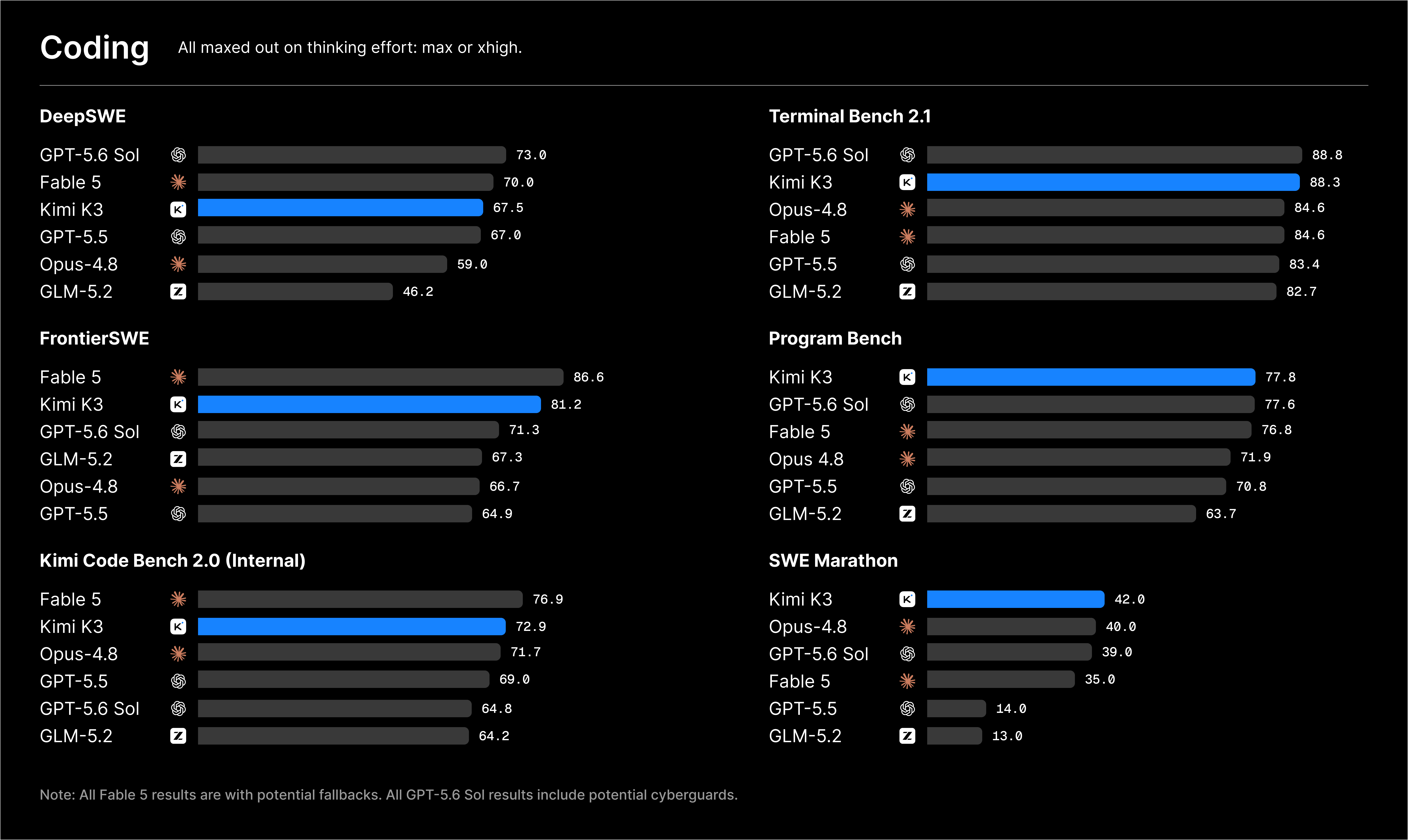
This continues the activity we’ve seen coming from China that counters the ‘bigger is better’ philosophy coming from US companies. But it’s not just about the capabilities of the model. It’s also about access. As US companies continue to keep their models closed-off, and the government intervenes to prevent foreign businesses and agencies from accessing it, China again takes the other approach. The K3 model is now the world’s first open 3T-class model, with the full 2.8T parameters being released as open weights on GitHub - meaning that anyone with the knowhow and capacity can work to retrain and adjust K3 for specific tasks without paying Moonshot. This also aligns nicely with the other big story coming out of China.

WAICO to Set a Path for AI in the Global South
The other big story was the recent announcement of WAICO: the World Artificial Intelligence Cooperation Organization. An organisation originally proposed by Chinese Premiere Li Qiang in July of 2025 to foster broader collaboration on AI. This was seen to largely counter the Pax Silica initiative led by the United States that seeks to build international strategy on semiconductor supply chain and AI developments.
Last week the Chinese government announced that 29 countries have signed up to join the project (in comparison to Pax Silica’s 23 at this time). The big difference is that while Pax Silica is predominantly the US and Europe with a handful of middle-eastern and Asian countries (and the UK), WAICO is focussed on the ‘global south’ with the majority of its members coming from Africa, South America, and the South Asian countries not invited to Pax Silica. Oh, and Russia…
All of this means we now have two competing international bodies of governance around AI. With the US fighting to keep China from gaining a competitive edge, while the latter is working to support a broader AI ecosystem that is increasingly reliant on Chinese open source models.
What this means in the long run remains to be seen, but like everything else AI is a political weapon, and we can expect China and the US to continue to be at loggerheads in the years that follow.
SK Hynix Fails to Hit Revenue Targets Because Customers Can’t Buy Their Chips
Did I slip into the Twilight Zone on the flight back from Canada? You can’t make this up. I mean we all saw this coming, right?

We’ve talked in previous newsletters about the DRAM crisis, and how hardware manufacturers are using this to line their pockets. Back in June Micron announced they’re locking in memory prices to customers for the next five years that will deliver huge margins for them. Meanwhile earlier this week Nvidia just upped the price of some of their GPUs by up to 30% - because they can basically.
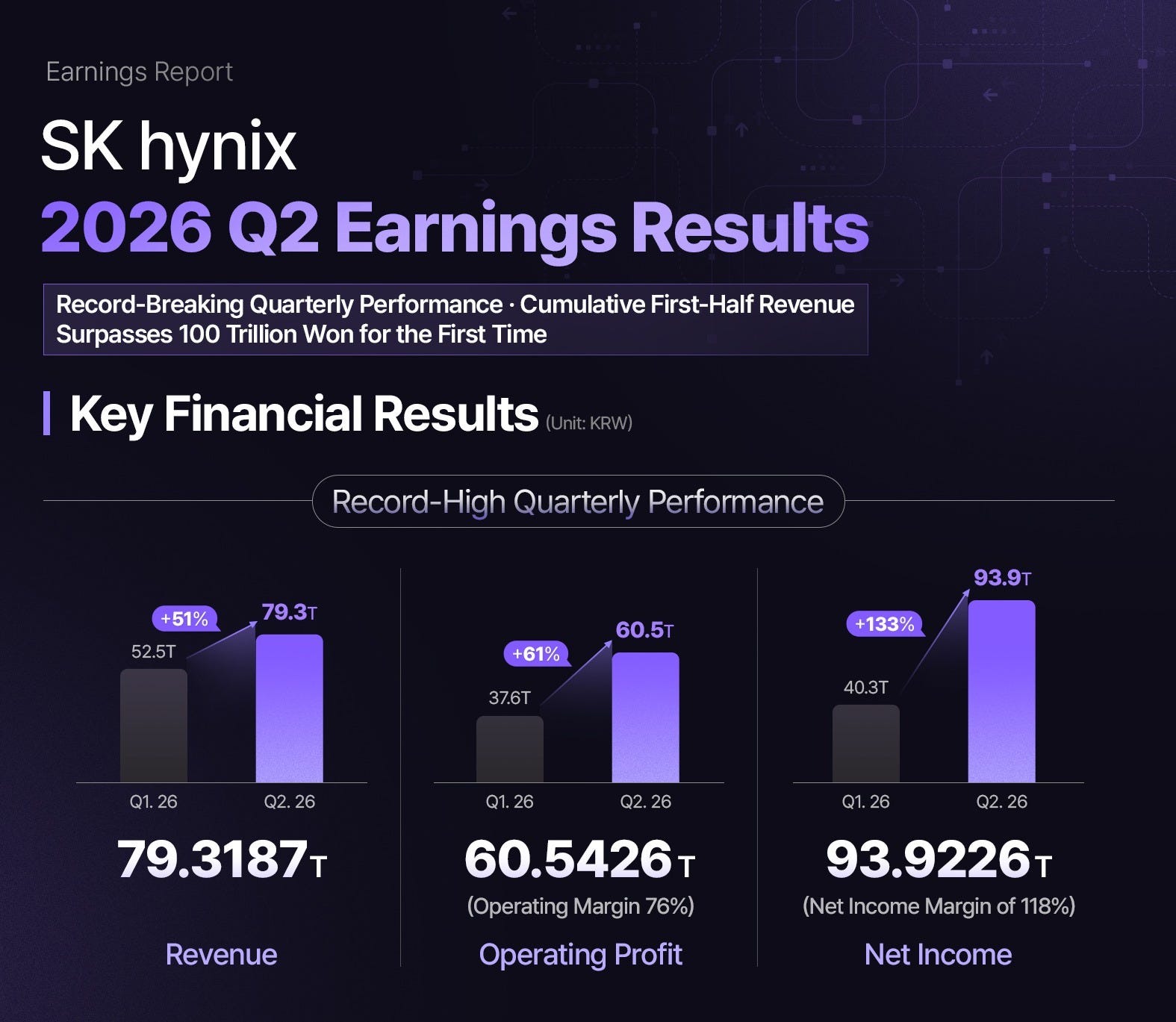
South Korean chip manufacturer SK Hynix published their Q2 2026 financials this week, and unsurprisingly have had a very good year. They raked in $55 billion in revenue this year, largely off the back of supplying chips for AI datacentres and major tech companies seeking to build AI chips into their products. But the funny thing is their stock price dropped by over 15%, and other RAM manufacturers such as Micron and Samsung also took a beating. The reason for this? Well SK Hynix didn’t meet projections by investors to make $58 billion in revenue. I mean what’s $3 billion among friends? Come on guys!
The funny part of this story is that SK Hynix explained that their failure to hit projected revenue targets was that PC and smartphone sales have taken a downturn, in part because they’re struggling to secure chips. So hey, the long term impact of this is you’ve now priced out or strangled stock for your regular customers to a point it’s impacting revenue, and the stock valuations are reacting to this minor miss given they’re also increasingly aware of the risks with the AI-focussed side of the business. That doesn’t look good. But man, you just have to love that the issue stems from them gouging their customers and then being surprised they stopped buying.
Substack Has a New AI Detection Tool, And People Are Furious(?)
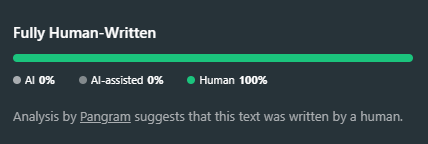
This story over at 404 Media struck me as rather hilarious. So in the past couple of weeks Substack (where I host this site) launched a new AI detection tool in collaboration with Pangram that allows both readers and writers to scan any article to assess whether or not it’s AI-generated content.
Now I saw this crop up a couple weeks ago, and if there was an announcement email sent to us I definitely missed it. But I thought ‘yeah ok’. I tested it once, found I was like 99% human, considered that a compliment, and moved on. Note you can’t use the tool to help you write the article, only to check its assessment of whether it was written by a human. However as reported in the 404 Media article, apparently some people have taken issue with this, calling it a “witch hunt” of people who use/rely/adopt/lean on AI text generation. Now of course there are legitimate arguments to be made against the accuracy of these systems - they’re not perfect and highly prone to making mistakes (shock, surprise) - and the impact it could have as people are ‘outed’ as AI users, an issue that has affected areas like game art which we reported on a while back. All that said, I didn’t think much of it.
I mean I don’t think I have to say it: my quirky grammar, weird sense of humour, and occasional spelling mistakes make it clear that I write this myself. Personally AI for writing doesn’t make sense to me - in fact AI doing any of my creative labour is a complete no-go in my book. I only get better at my craft - be it writing, videos, podcasts, you name it - the more I do it, and it needs to retain the voice and - dare I say it - authenticity (ugh) that people have come to expect from AI and Games over the years. I am once again of the philosophy that AI makes sense in complex problems where it helps us in solving them at scale. Writing this here newsletter is not a ‘problem’ in any sense of the world. It’s fun! It’s just difficult to fit it into my schedule sometimes.

Iconic Labs Announce New AI-Native Gameplay Demo - and Discuss How it Works
We’re in an era of lots of AI-native demos being thrown around by AI startups, but they rarely give any insight into how they work. Recently Iconic Labs launched a new demo called Pressure Point designed to play in browsers which has players engage with an NPC as part of an effort to showcase their ‘Digital Actor’ technology which they suggest will act “the way an prove artist would, holding character, reading the player, shaping the scene as it unfolds”. It strikes me that by really forcing the narrative design into a single location, with a single scenario, is helping to maintain that constraint - see our interview with Meaning Machine about the (as yet unreleased) Dead Meat from last year.

I’ve yet to try this out myself - as we mentioned at the top, we’ve been busy - but they released a blog detailing some of the underlying architecture, including how they build more engaging dialogue and emotional states in the NPC. But arguably the meatiest part is they discuss how they handle what is for one of the biggest issues with any conversational LLM-based architecture: latency. Waiting for an AI to talk to you just kills any of these experiences for me, and they discuss how the models are achieving media speech-to-speech latency (i.e. the time taken for the player to speak and then get an answer) as around 1200ms, which is pretty quick.
Again like I say, I haven’t had a chance to play it, go and try it out yourself and make your own judgement!

Fortnite Launches New AI-Powered Voices for NPCs
Well, we all saw this coming. Having defiled James Earl Jones’ legacy for the memes, it’s time for all the other Fortnite characters to get in on the action. With 36 existing (Epic-owned) NPCs in Fortnite receiving AI-powered voices. This is launching on July 30th as part of the ‘Conversations’ feature in Unreal Engine’s Fortnite editor UEFN that was announced back in April. It uses the same general structure as the Darth Vader implementation from last year with Google’s Gemini handling reasoning and ElevenLabs voice models handling the output. Allowing you to then have conversations with characters in the experiences you are building.
Now I have no horse in this race. I have no interest in conversational NPCs in Fortnite and doubt I’d play with this lest it was thrust upon me (like most AI ‘innovations’ in games these days). But it was interesting to observe a few things from this story. The first is that they’re still reliant on external tools, systems, and providers and we have little insight into how much is work being done by Epic versus these outside organisations. For something that is argued as a next generation tech for future Fortnite experiences it’s interesting to see companies as big as Epic still avoiding investing in their own tools and systems. It feeds off the earlier story in Japanese (online game) studios that there’s something of a shift in thinking of rather than building internal stacks like in yesteryear, companies are using these 3rd parties given it feels less risky.
The second was they attempted to get ahead of what was naturally going to be the big issue in industry circles, in that this is taking work from professional performers. Epic state that the voices for these characters are powered from voice actors specifically to be used for developer-made content (Fortnite ‘islands’). They then imply that Epic is going to work with relevant actor guilds and IP holders to try and expand this offering. So who knows, in six months you could be having inappropriate conversations with John Wick for the lols? Naturally they say they’re going to be gathering feedback on this. I am waiting to see how this all blows up on TikTok and Instagram in the next week. I like to think they’ve worked to improve guardrails and protections since the Darth Vader release last year. But hey, this is practically an arms race between the developers and the Fortnite masses. I don’t envy them…
The other thing was the announcement surrounding this is the reaction. Sure, some people are going to be all about this, others hating it. The thing that caught my attention was the social media response on Twitter and YouTube, notably around how much people dislike the voices themselves. More often than not the issues stemmed from players have prior assumptions of what they expected a particular character to sound like. Sure, I might have specific opinions on the voice of Wolverine in the upcoming PS5 title, or heaven forbid if they ever let Link speak in Legend of Zelda, but it’s that emotional attachment extends even into these random Fortnite skins, even Peely!
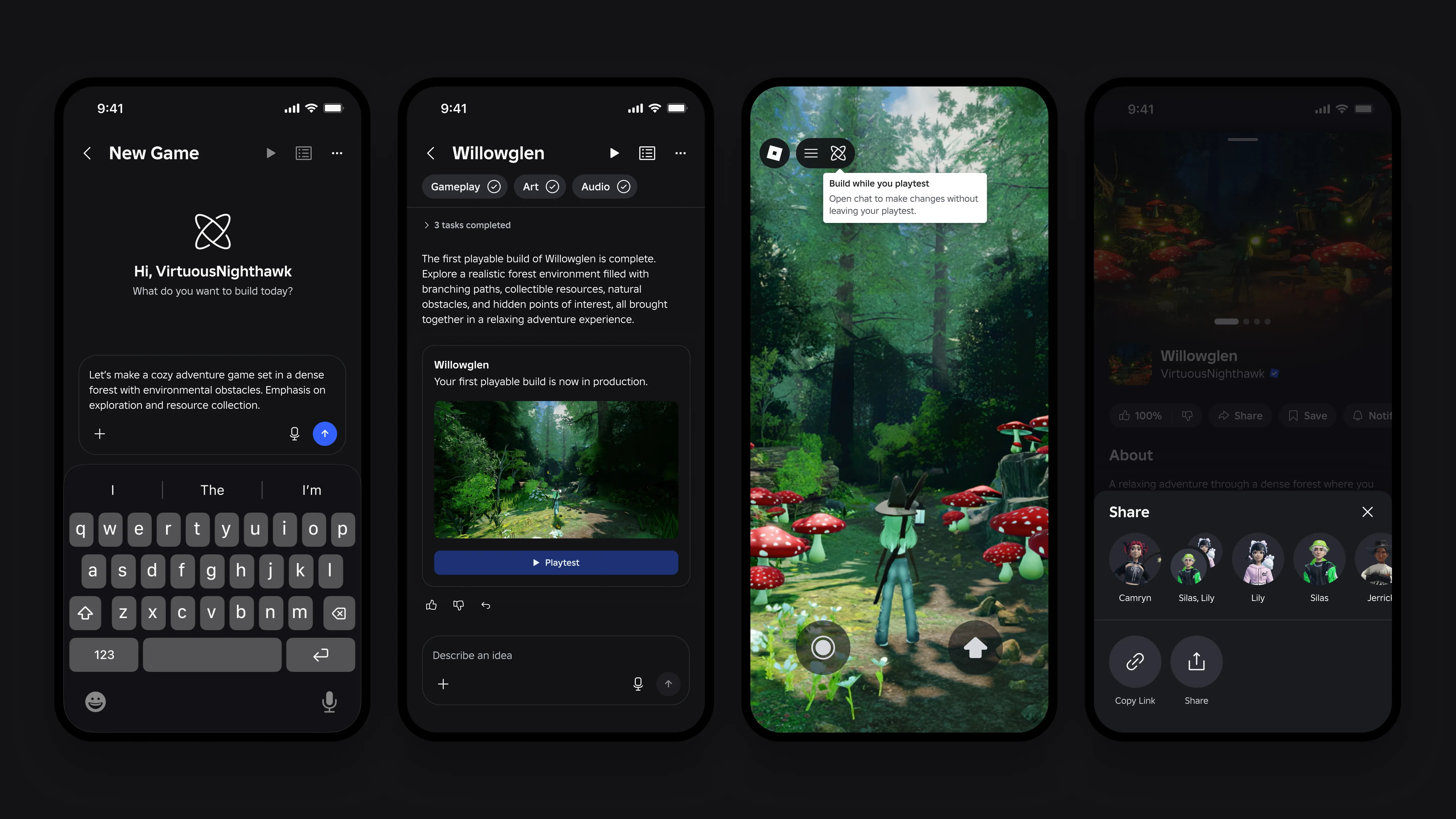
Roblox Insists New Slop Tool Won’t Fill Platform With Slop…???
Over the past year or so we’ve documented that Roblox is arguably the farthest ahead in terms of Generative AI tooling for creators. They were first out the gate with an in-editor tool to support the making of Roblox experiences, they have tools for texture and model generation, and even recently were messing about with world models to reproduce the same half-baked idea that Google Stadia tried to push a decade ago.
Earlier this month this moved to the next stage with the announcement of a new prompt-to-game pipeline ironically called ‘Build’ that allows for Roblox creators to generate games within the Roblox Studio ecosystem on mobile phones. Now unlike Epic who rely on external partners, this is being built courtesy of the internal AI R&D team at Roblox that continue to build their own proprietary models (alongside some open source ones), allowing them to customise them to work within Roblox itself and have a richer understanding of that ecosystem.
Now the funny part is that before they even get into the weeds on announcing what Build is, they include a caveat to highlight the immediate problem this creates. That by building a tool for people to push low-effort slop onto the platform, it risks upending their entire creator-driven ecosystem which relies on engaging experiences to drive players back. To quote:
Roblox has always provided creators with powerful tools to publish globally in seconds, a platform that drives discovery and rapid viral growth, easy iteration and scaling with no up-front costs, robust safety systems to protect players, and incredibly rich worlds supported by our game engine. The creators who've built real audiences on this platform have done it by making things people actually want to play, and we've always surfaced the most played, highest engaged experiences on Roblox. Our discovery systems are designed to highlight games with long-term retention, which doesn’t include AI slop. The quality of games on the homepage isn’t changing: If no one plays it—no one can find it. The goal across these new tools is to continue to accelerate creation across all experience levels.
So yeah, you can read this as: “Sure people can now push all sorts of shite onto our platform, but we’re going to work really hard on our recommendation algorithm to ensure all that lovely human-crafted content that you spent hours working on - potentially even running a business around - isn’t going to get buried under a mountain of AI-generated drivel.”
The thing that bugs me about Roblox, is for every big AI push that makes me roll my eyes, they immediately follow it up with something far more interesting. Case in point: at the end of the blog they discussed future AI rollouts including playtesting agents, analytics through a natural language interface, and an agent for experimenting with how to tweak or modify a game to boost engagement. These all sound super interesting, and something that I see the industry at large doing already or will be keen to learn from. That’s the sort of thing that helps creators within the Roblox ecosystem, not providing a force accelerator to shovel more crap through a wind tunnel.
Wrapping Up
Oh my goodness that was a lot! Before I go, a quick extra link to share with you. Earlier in the year I wrote about the terrible reporting surrounding the Take Two AI team layoffs, and how the story told did not reflect reality. Well after speaking with GamesIndustry.biz to give his perspective on what went down, I saw former Take Two AI lead Luke Dicken have a right good rant over on 80lvl yesterday. So yeah, go check that out.
OK, I’m away to finish prepping my Friday evening. Plan is to drown myself in board games and non-alcoholic beer. Have a great weekend folks!